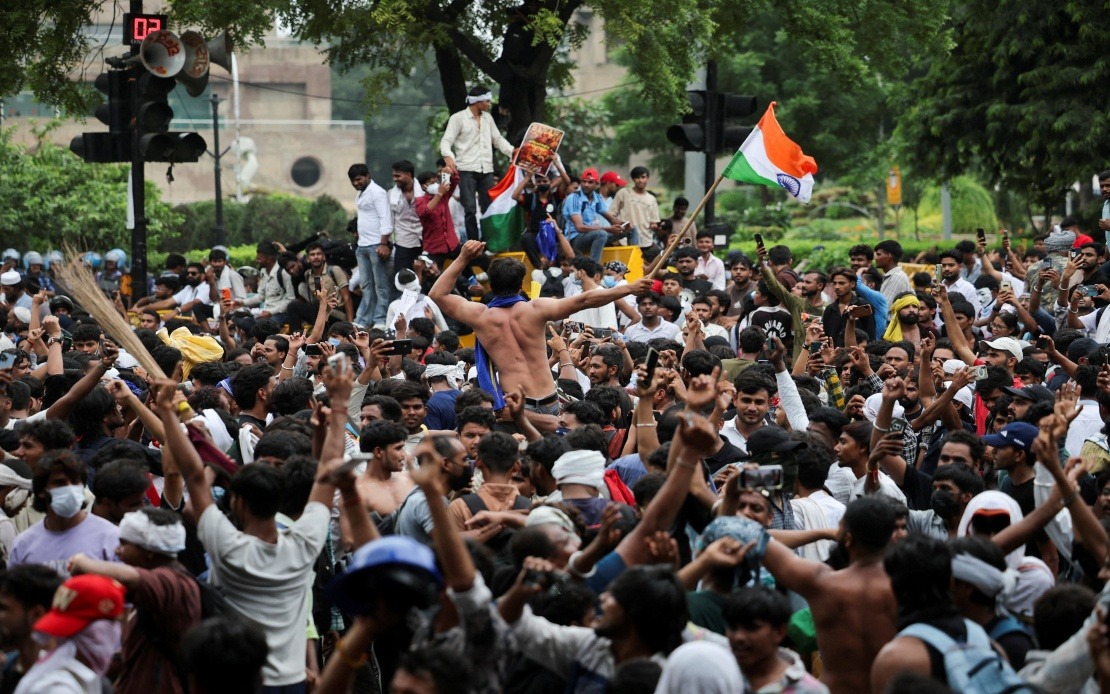
India's Education Minister Dharmendra Pradhan stepped down from his position on Saturday, citing the need to preserve national unity amid escalating youth demonstrations demanding sweeping changes to the nation's education system. In a statement posted on social media, Pradhan informed Prime Minister Narendra Modi of his decision, attributing the move to the volatile situation surrounding ongoing protests and his concern that prolonged unrest could benefit anti-national interests and jeopardise students' academic futures.
The resignation marks a significant political moment in New Delhi, where thousands of young people have established protest camps demanding structural reforms to India's examination processes and educational infrastructure. The catalyst for the demonstrations was the leak of a national medical entrance examination in May, an incident that exposed vulnerabilities in the country's testing mechanisms and triggered broader questioning about the integrity of competitive examinations that determine entry to prestigious institutions across India.
Pradhan's departure reflects the government's assessment that the mounting pressure from organised youth activism has reached a critical juncture. His statement emphasised the potential legal complications facing students whose examination papers were compromised and stressed the importance of enabling them to focus on their studies without becoming entangled in investigations or disputes over the leaked examination. This framing suggests the government views the resignation as a necessary concession to restore confidence among younger voters and defuse escalating tensions.
The scale of the protests, particularly the encampments at Jantar Mantar in central New Delhi, demonstrates the depth of frustration among Indian students with how the education system currently functions. Beyond the immediate concern over the medical entrance exam leak, demonstrators have articulated wider grievances about examination pressure, the reliability of assessment mechanisms, and the need for educational policies that prioritise student welfare rather than purely competitive outcomes. These concerns resonate across India's sprawling education sector, which serves hundreds of millions of students navigating an intensely competitive landscape.
Recognising the seriousness of the situation, senior government figures have been actively engaged in negotiations with protest representatives. Ministers J.P. Nadda and Jitendra Singh, both influential members of Modi's cabinet, convened discussions with youth representatives to understand the specific demands animating the movement. This high-level engagement underscores how significantly the government takes the protests and the political risks posed by ignoring organised student activism in a country where youth voters constitute an increasingly important electoral constituency.
The examination paper leak itself has broader implications for how India manages its competitive testing systems. Medical entrance examinations determine access to coveted positions in India's medical colleges and subsequently shape career trajectories for thousands of aspiring physicians. A compromise in examination security therefore carries consequences that extend far beyond individual students, affecting the perceived credibility of the entire selection process and the institutions that rely on these examinations to identify qualified candidates.
For Malaysia and Southeast Asia, India's education protests offer instructive lessons about the interconnected challenges facing the region's education systems. India's struggle with examination integrity, student workload, and the psychological burden of high-stakes testing resonates across Southeast Asian societies where similar competitive pressures shape student experiences. The willingness of Indian students to mobilise and demand systemic change illustrates how education policy increasingly becomes a flashpoint for youth activism and intergenerational tensions about opportunity and fairness.
The government's decision to accept Pradhan's resignation suggests a pragmatic recognition that dismissing legitimate student concerns about examination security and educational reform carries political costs. In democracies with large youth populations, student movements have historically catalysed broader policy shifts. By accepting the resignation, the Modi government signals responsiveness to youth grievances while attempting to reclaim the narrative around education policy and demonstrate commitment to addressing systemic vulnerabilities.
Pradhan's exit creates an opportunity for the government to appoint a new education minister potentially tasked with implementing meaningful reforms addressing the concerns that mobilised protesters. Such reforms could include enhanced examination security protocols, curriculum revision, and policies aimed at reducing excessive examination pressure on students. The appointment of a successor may reveal whether the government intends to implement substantive changes or adopt a more defensive posture focused on containing the immediate political fallout.
The broader political context matters considerably. Student activism in India occurs against a backdrop of economic anxiety, competition for limited positions in prestigious institutions, and concerns about employment prospects in a rapidly evolving job market. Examination leaks symbolise systemic failures that young Indians feel undermine their chances at securing futures they have been conditioned to pursue through relentless academic competition. When institutional mechanisms fail, as they did with the medical examination breach, public trust erodes quickly among populations already sceptical about fairness in access to opportunity.
As the situation develops, observers across South and Southeast Asia will watch how New Delhi addresses the substantive education reforms that catalysed the protests. Whether the resignation represents a turning point toward meaningful systemic change or merely a tactical political manoeuvre remains uncertain. What is clear is that India's education minister has learned that in an era of organised youth activism and social media connectivity, institutional stability sometimes requires acknowledging that old approaches no longer suffice and that transformative change has become essential rather than optional.

