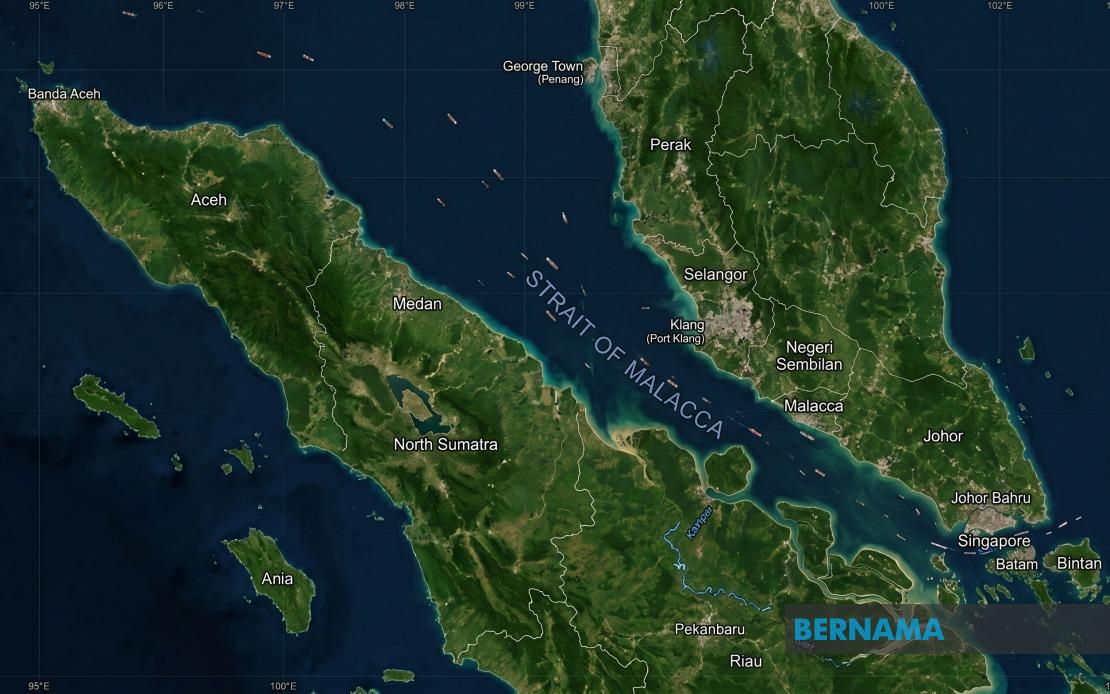
During high-level talks in Jakarta on Monday, Indonesian President Prabowo Subianto and Singapore Prime Minister Lawrence Wong underscored their nations' shared resolve to maintain security and stability in the Strait of Malacca, one of the world's most critical maritime corridors. The commitment comes as the two Southeast Asian neighbours prepare to celebrate six decades of diplomatic relations next year, signalling deepening ties even as regional tensions and shifting geopolitical dynamics reshape the strategic landscape around the waterway.
The bilateral discussions, held during the annual Indonesia-Singapore Leaders' Retreat at the Istana Merdeka, reflect the strategic importance both capitals attach to the 550-kilometre sea passage that links the Indian Ocean to the South China Sea. For Indonesia and Singapore, which directly border the strait, maintaining its openness and security is not merely a matter of commercial interest but a cornerstone of regional stability. President Prabowo emphasised that both countries remain committed to upholding the principles enshrined in the 1982 United Nations Convention on the Law of the Sea, which provides the international legal framework governing maritime activities and disputes resolution.
Beyond bilateral coordination, the two leaders stressed the imperative of working closely with Malaysia and Thailand, the other nations with direct interests in the strait's management. This multilateral dimension underscores an understanding that safeguarding one of Asia's most congested and economically vital waterways requires sustained dialogue and harmonised policies among all stakeholders. The partnership model reflects Southeast Asia's tradition of addressing transnational maritime challenges through consultation and consensus-building rather than unilateral action.
The security concerns afflicting the Strait of Malacca extend well beyond conventional border disputes or territorial disagreements. President Prabowo outlined a comprehensive agenda encompassing pollution control, the prevention of maritime accidents, and the suppression of piracy—all persistent threats that continue to undermine confidence in the waterway's safety. These challenges, he noted, represent vital interests to all bordering nations and demand coordinated preventative measures and rapid response mechanisms. The emphasis on such practical security issues signals a pragmatic approach grounded in protecting legitimate maritime commerce and the livelihoods of fishing communities dependent on the strait.
The retreat itself marks the second gathering between Prabowo and Wong since the Indonesian leader assumed office, demonstrating the regularity and institutional character of bilateral engagement at the highest levels. This consistency in leadership dialogue has become particularly significant given the rapidly evolving security environment in Southeast Asia, where unresolved maritime disputes and the activities of extra-regional powers generate uncertainty. The special relationship between Jakarta and Singapore, rooted in geographical proximity and shared economic interests, provides a foundation for addressing both immediate tactical challenges and longer-term strategic questions affecting the entire region.
Prabowo indicated that the agenda extended far beyond the Strait of Malacca to encompass broader bilateral, regional, and global issues relevant to both nations. This expansive scope suggests that the two leaders seized the opportunity to align positions on matters such as the South China Sea disputes, the evolving great-power competition between the United States and China, and ASEAN's role in maintaining regional equilibrium. By discussing these interconnected challenges in a single forum, Indonesia and Singapore are attempting to achieve comprehensive strategic coordination that addresses immediate flashpoints while preparing their partnership for future contingencies.
A central theme emerging from the joint press conference was ASEAN's principled commitment to resolving all regional disputes through peaceful dialogue and diplomacy rather than coercion or military confrontation. Both leaders reaffirmed this position while emphasising the importance of open communication, particularly when misunderstandings or misperceptions threaten to escalate tensions. This rhetorical emphasis on dialogue carries real significance for Southeast Asia, where several territorial disagreements remain unresolved and where the risk of miscalculation has increased alongside military buildups and competing claims in disputed waters.
The 60-year milestone that Indonesia and Singapore will reach next year provides symbolic occasion for reflecting on the trajectory of their partnership and projecting confidence into the future. President Prabowo expressed optimism that sustained cooperation would continue generating tangible benefits for regional stability, economic growth, and broad-based prosperity. This forward-looking perspective counterbalances occasional short-term frictions between the two nations and suggests a commitment to managing differences constructively while maximising opportunities for mutual gain across multiple domains including trade, investment, and security cooperation.
The Strait of Malacca's geopolitical significance has only intensified as global energy markets remain dependent on hydrocarbon flows through the passage and as technological advances make maritime commerce more competitive yet simultaneously more vulnerable to disruption. For Malaysia, the reaffirmation of commitment by its two major neighbours carries implications for its own position as the third riparian state and as a country with substantial maritime interests in the region. The multilateral framework endorsed by Indonesia and Singapore creates space for Malaysian participation in coordinated security arrangements while respecting sovereignty and the principle that bordering nations bear primary responsibility for the waterway's protection.
Thailand's inclusion in the strategic conversation, while less prominent in the public statements, underscores the integral nature of northern maritime approaches to the strait. The four-nation framework involving Indonesia, Singapore, Malaysia, and Thailand reflects recognition that effective security governance requires participation from all relevant stakeholders rather than dominance by any single power. This inclusive approach stands in contrast to proposals advanced by external actors seeking to internationalise Strait of Malacca security through mechanisms that might dilute the authority and preferences of riparian states.
The timing of this reaffirmation, coming amid international speculation about shifting strategic priorities and concerns about maritime incidents, carries reassuring implications for the broader business and shipping community that depends on predictable passage through Southeast Asia's most critical waterway. By visibly recommitting to security cooperation, Indonesia and Singapore are attempting to signal stability and competent governance to investors, insurers, and international shipping operators. This confidence-building function of high-level diplomatic engagement should not be underestimated, particularly in an era when perception of risk can translate into rerouting decisions that impose significant economic costs on the region.

