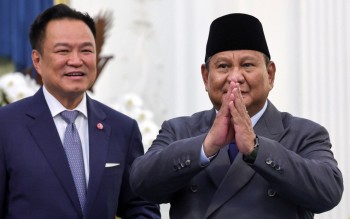
Indonesia and Thailand are positioning themselves as regional economic anchors through an ambitious new strategic partnership framework, with both nations expressing confidence they can more than double their bilateral trade volumes within the next six years. During Thai Prime Minister Anutin Charnvirakul's first official visit to Indonesia since assuming office in September 2025, the two countries formally adopted the Indonesia-Thailand Strategic Partnership Roadmap 2026-2030, establishing a comprehensive blueprint for deepened economic and political cooperation. The framework sets a target of US$20 billion in bilateral trade by 2030, reflecting both leaders' conviction that the current trading relationship, while substantial, remains far below the potential offered by their combined economic heft and complementary strengths.
President Prabowo Subianto characterised the second Leaders' Consultation between the two nations as a watershed moment for regional integration, emphasising that the roadmap provides the institutional architecture necessary for sustained cooperation beyond the political cycle. Notably, Anutin's visit marked the first official visit by a Thai prime minister to Indonesia in 15 years, underscoring the symbolic importance both governments attach to revitalising their partnership. The meeting at Merdeka Palace resulted in concrete commitments across multiple economic sectors, signalling that this is not merely another aspirational regional agreement but rather a framework with measurable deliverables and institutional mechanisms to enforce accountability.
Central to the partnership is the establishment of the Indonesia-Thailand Joint Trade Commission, a body that will operate at the commerce minister level and serve as the primary mechanism for identifying business opportunities and dismantling trade barriers. This represents the first such formal structure in the bilateral relationship, suggesting that previous cooperation, while cordial, lacked systematic institutional support. Prabowo emphasised during the joint press conference that enhanced market access and expanded investment flows would form the backbone of achieving the ambitious trade target. The JTC's inaugural meeting will be hosted by Thailand, signalling Bangkok's eagerness to demonstrate commitment to the initiative and potentially use the platform to advance specific Thai commercial interests.
Food security emerged as a cornerstone of the partnership, reflecting both the geopolitical importance of agricultural supply chains in Southeast Asia and the immediate relevance to millions of Malaysian and regional consumers. Thailand has offered itself as a stable supplier of high-quality rice to Indonesia, while simultaneously pressing for greater market access for Thai agricultural products, meat, dairy, and agricultural machinery. The negotiations also touched on fertiliser, with Thailand expressing interest in substantially increasing imports of Indonesian urea fertiliser from the current baseline of approximately 60,000 tonnes annually to several hundred thousand tonnes. This arrangement suggests complementary production capabilities, where Indonesia's natural resource advantages in fertiliser production can be leveraged to support Thailand's agricultural sector, creating a mutually reinforcing trade dynamic.
Energy cooperation constitutes another pillar of the roadmap, with both nations committing to convene an Indonesia-Thailand Energy Forum designed to strengthen energy security across Southeast Asia and accelerate the transition towards sustainable energy sources. This initiative carries particular significance given the region's heavy reliance on fossil fuels and the international pressure to decarbonise rapidly. By establishing a government-business collaboration framework, the two nations are positioning themselves to develop renewable energy projects that could benefit the wider region, potentially creating export opportunities for clean energy technologies and expertise. The emphasis on sustainable energy transition also signals Jakarta and Bangkok's alignment with global climate commitments while managing the complex economic imperatives of their developing economies.
The digital economy dimension of the partnership addresses modern trade challenges and competitive positioning in an increasingly technology-driven global marketplace. Both nations have agreed to strengthen cooperation in this sphere, with particular emphasis on promoting local currency transactions to improve the efficiency of bilateral trade and investment. By reducing reliance on third-country currencies, Indonesia and Thailand can lower transaction costs, reduce foreign exchange exposure, and gradually build the infrastructure for regional financial integration. This initiative, while modest in scope, represents a meaningful step towards reducing dependence on external financial systems and building Southeast Asian economic resilience.
The halal industry merits special attention as a growth area for both Muslim-majority nations and an avenue for developing regional value chains that can compete globally. Prabowo highlighted the potential for leveraging respective strengths in this sector, while Anutin specifically called for renewal of the mutual recognition agreement on halal certification before its November expiration. For Malaysia, which has positioned itself as a global halal standards setter, this cooperation between two large ASEAN economies could create either complementary opportunities or competitive pressures depending on how standards and certification frameworks develop. The ability of Indonesia and Thailand to coordinate on halal certification could strengthen regional standards-setting capacity and potentially challenge Malaysia's preeminence in this domain.
The bilateral relationship also advanced through agreements on education and human capital development, sectors often overshadowed by trade discussions but crucial for long-term partnership sustainability. The memorandum of understanding on education reflects recognition that skilled workforces and research capacity are foundational for industrial competitiveness. Additionally, private sector agreements on tourism connectivity and organic waste processing demonstrate that the strategic partnership extends beyond government-to-government arrangements to encompass commercial collaboration. TransNusa's involvement in tourism connectivity and Bio-Axel's participation in waste processing projects illustrate how formal diplomatic agreements can catalyse business-to-business partnerships.
For Malaysia and the broader ASEAN region, this Indonesia-Thailand partnership recalibration carries important implications. As the two largest Southeast Asian economies after Indonesia itself pursue deeper integration, they are creating a powerful bloc that could influence regional trade rules, standards, and investment flows. Their focus on food security, energy, and digital economy reflects the same strategic priorities that Malaysia emphasises, suggesting potential areas for trilateral or multilateral cooperation. However, Malaysia must also recognise that an increasingly integrated Indonesia-Thailand axis could alter competitive dynamics within ASEAN, potentially affecting market access for Malaysian agricultural exports, energy projects, and digital services.
Anutin's characterisation of Indonesia as Thailand's fourth-largest trading partner within ASEAN, coupled with his assertion that bilateral trade should be significantly higher given the two nations' economic scale, suggests that considerable untapped potential remains. The US$20 billion target by 2030, while ambitious, is arguably conservative when one considers that Indonesia's total external trade exceeds US$600 billion annually. Achieving this target would require annual bilateral trade growth of approximately eight to ten percent, a rate that is achievable given improving infrastructure, regulatory harmonisation, and business confidence stemming from high-level political commitment. The success of this partnership will partly depend on whether both governments can sustain implementation momentum through potential political transitions and ensure that the JTC becomes an effective problem-solving mechanism rather than a ceremonial body.
The strategic roadmap also reflects a broader regionalism agenda within ASEAN, where major economies are seeking to deepen sub-regional partnerships as a complement to, rather than substitute for, wider ASEAN cooperation. By establishing clear bilateral frameworks with measurable targets, Indonesia and Thailand are demonstrating that regional integration can proceed pragmatically through sequenced, achievable milestones. Other ASEAN members may view this approach as a template for their own bilateral relationships, potentially accelerating overall regional integration. The emphasis on institutional mechanisms, sector-specific cooperation, and business involvement suggests that future ASEAN partnerships may adopt similarly structured approaches, moving away from purely political declarations towards more operational frameworks.
The timing of this partnership recalibration carries geopolitical significance as well. With global supply chains reassessing their dependencies and strategic partnerships becoming increasingly central to national security strategies, Indonesia and Thailand's commitment to deeper integration positions both nations more advantageously within evolving regional and global power structures. By demonstrating that ASEAN economies can forge substantive partnerships based on complementary strengths and shared interests, Jakarta and Bangkok are offering a regional model of cooperation that contrasts with more competitive or zero-sum approaches evident elsewhere in the global system. For Malaysian policymakers and businesses, the key challenge will be identifying how to engage constructively with this partnership while protecting and advancing national interests in overlapping sectors such as agriculture, energy, and digital commerce.

