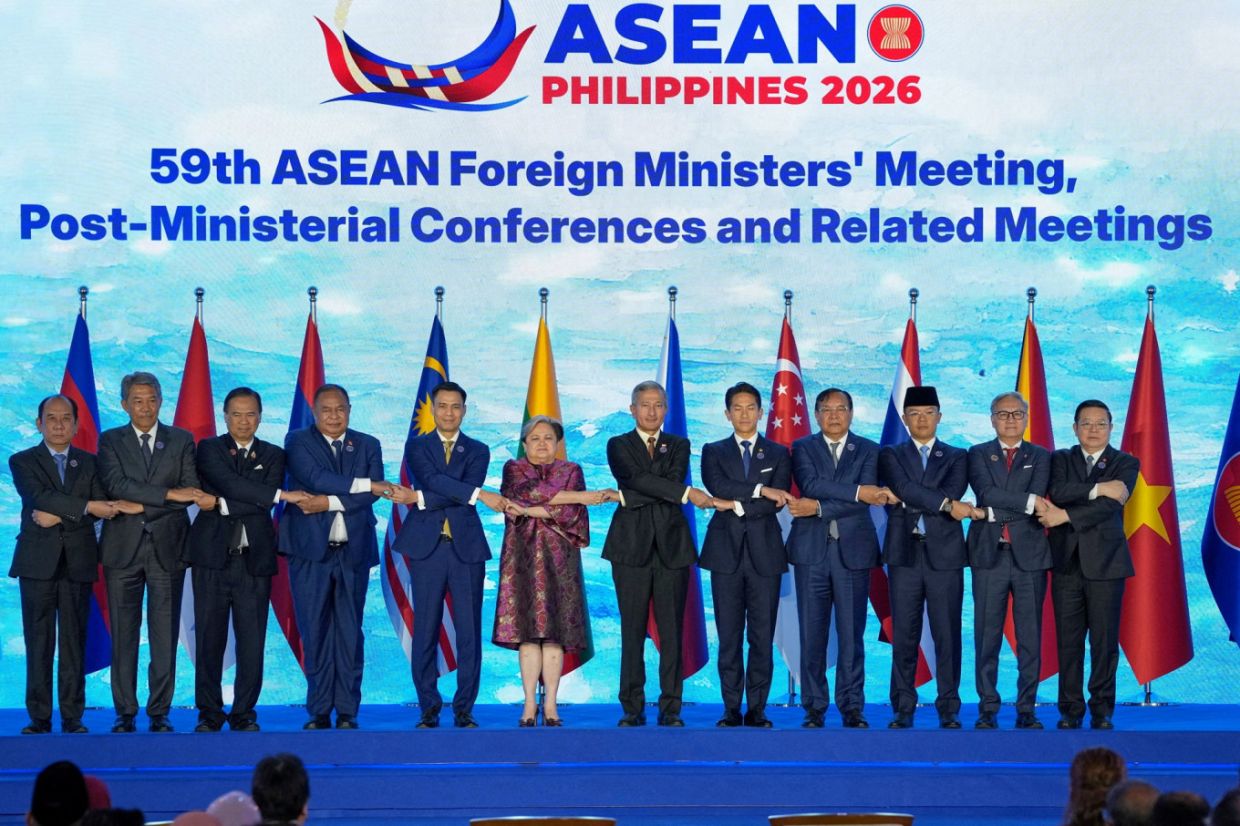
Indonesia has challenged the Association of Southeast Asian Nations to convert its formal commitments into concrete achievements, signalling deep concern about the organisation's ability to navigate an increasingly treacherous regional landscape. The urgent plea came during Tuesday's diplomatic meetings in Manila, where foreign ministers from all 11 member states assembled to establish unified positions before engaging with external partners the following day. The gathering underscored mounting anxiety about Asean's relevance and cohesion at a moment when multiple crises—from the Middle East conflict to territorial disputes and the Myanmar political impasse—are testing the bloc's foundational principles and strategic resolve.
Indonesian Foreign Minister Sugiono articulated a pointed question that has become impossible to ignore: Can Asean actually deliver on what it promises? Speaking at the 59th Asean Foreign Ministers Meeting, Sugiono reminded his counterparts that recent global upheavals have exposed the organisation's vulnerabilities and that the window for demonstrating effective regional leadership is narrowing rapidly. He referenced Asean's May summit achievements, particularly the charter amendment that formally welcomed Timor-Leste as the 11th member, to illustrate that the bloc possesses the capacity for bold decision-making when circumstances demand it. Yet the gap between such symbolic victories and substantive progress on longstanding disputes remains cavernous, threatening to erode confidence in Asean's institutional legitimacy.
The Middle East conflict has injected fresh urgency into discussions by exposing economic fragility across Southeast Asia. Joint ministerial statements acknowledged grave concerns about the conflict's economic spillover effects, the welfare of regional nationals in affected zones, and the broader implications for diplomatic stability. However, rhetoric alone provides scant comfort to member states already bracing for supply chain disruptions and energy price volatility. The conflict has indirectly reshaped regional negotiating dynamics in ways that fundamentally disadvantage Asean. Several member nations, particularly the Philippines which currently chairs the bloc, have dramatically increased reliance on Chinese energy alternatives following Middle East disruptions, a strategic shift that inevitably weakens Asean's collective bargaining position on other contentious issues.
This energy dependency emerging from the Middle East crisis intersects dangerously with Asean's long-stalled negotiations on the Code of Conduct governing the South China Sea. For nearly a quarter-century, member states have struggled to finalise rules that would regulate conduct in one of the world's most strategically vital and contested waterways. Sugiono's stark declaration—that regional populations have waited 24 years for maritime governance rules and should not endure further delays—reflected mounting frustration about this glacial progress. His assertion that a rules-based region proves stronger than one subject to power politics carries particular resonance for smaller Asean nations anxious about Beijing's expanding strategic influence. Yet the very energy vulnerabilities the Middle East conflict has created may paradoxically undermine Asean's collective resolve to complete the Code of Conduct, since member states increasingly depend on Beijing's cooperation on energy security.
Data patterns illustrate this troubling realignment starkly. The Philippines' imports of Chinese solar panels more than doubled during the first five months of this year compared with the identical period previously, a metric that extends beyond mere commercial trends to reflect shifting geopolitical dependencies. When individual member states pursue bilateral accommodation with major powers to address immediate domestic energy needs, the foundation for unified Asean positions disintegrates. This fragmentation particularly threatens efforts to establish meaningful constraints on Beijing's maritime activities, since a collective negotiating front requires precisely the solidarity that energy crises incentivise member states to abandon.
The Myanmar crisis occupied substantial attention during Tuesday's discussions, with ministers dedicating an entire retreat session to assessing implementation of the Five-Point Consensus, Asean's diplomatic roadmap for restoring stability in Nay Pyi Taw. Philippine Foreign Secretary Theresa P. Lazaro reported that ministers had agreed to reassess how progress on this roadmap should be measured and contemplated potential modifications to Asean's annual special envoy mechanism for Myanmar engagement. The bloc intends to complete this review ahead of November's leaders' summit, suggesting recognition that current approaches have yielded insufficient progress. However, the Myanmar challenge exemplifies Asean's structural constraint: deep divisions among member states regarding appropriate responses to military governments persistently frustrate efforts to forge unanimous positions.
Sugiono's characterisation of ministerial statements as reflecting "progressive" views represents diplomatic language masking persistent disagreement. Some member states favour stronger pressure on Myanmar's military leadership, whilst others advocate graduated engagement approaches prioritising dialogue over confrontation. This division mirrors broader Asean tensions between nations prioritising absolute non-interference in internal affairs and those increasingly convinced that tolerating deteriorating humanitarian situations abroad undermines regional credibility. The Five-Point Consensus itself represents a compromise that has proven insufficient to arrest Myanmar's political deterioration, yet member states struggle to develop alternative frameworks that command consensus.
The structural challenge facing Asean extends beyond individual crises to encompass the organisation's fundamental operating principle: consensus-based decision-making. This system, enshrined in the Asean Way, theoretically ensures that all members retain voice and agency, preventing powerful nations from dictating regional outcomes. Yet the approach simultaneously enables determined member states to block substantive action, reducing Asean to lowest-common-denominator positions that satisfy few participants. When facing crises of the magnitude currently confronting Southeast Asia—simultaneous Middle East economic disruptions, unresolved maritime disputes, and humanitarian emergencies—consensus-dependence transforms Asean from a solution-generating institution into a bureaucratic mechanism for formalising disagreement.
Sugiono's challenge implicitly acknowledges that Asean has entered a credibility crisis where the organisation risks becoming irrelevant precisely when regional circumstances demand effective multilateral coordination. The bloc faces a paradoxical situation: member states increasingly require collective action to navigate complex challenges, yet the conditions enabling such action have deteriorated as individual nations pursue bilateral accommodation with external powers. Indonesia's call for Asean to "deliver promises" should be understood not merely as rhetorical exhortation but as a warning that continued underperformance invites irrelevance and potentially accelerates regional fragmentation along great power lines.
The convergence of these challenges—Middle East energy disruptions, South China Sea stalemate, Myanmar deadlock, and deepening great power competition for regional influence—creates an inflection point for Southeast Asian multilateralism. Wednesday's expanded discussions with dialogue partners including the United States, China, and Russia will test whether external engagement strengthens or further complicates Asean's internal cohesion. The bloc's capacity to establish credible positions on major geopolitical questions depends fundamentally on resolving whether member states prioritise collective institutional strength or individual bilateral advantages. Indonesia's forceful articulation of this dilemma signals that leading voices within Asean recognise the stakes and the dwindling window for remedial action.

