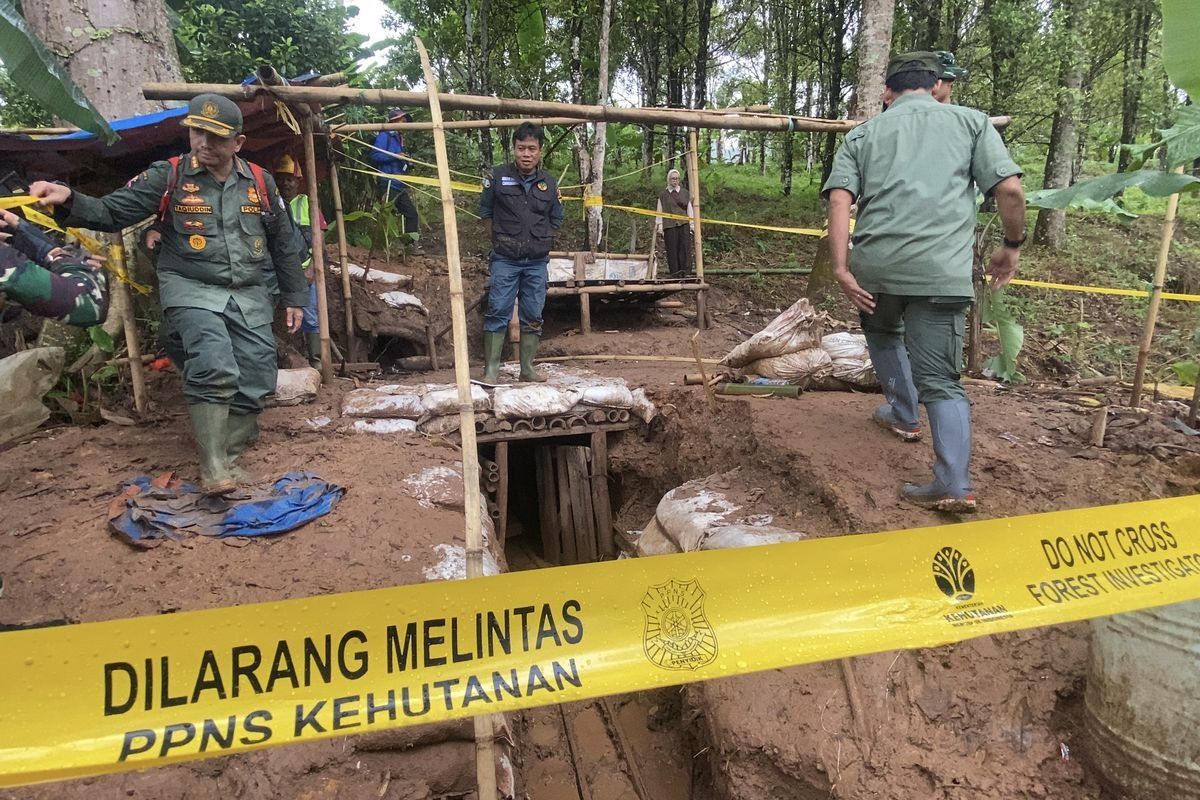
Indonesia's energy ministry has moved to prosecute 24 foreign nationals suspected of involvement in illegal gold mining activities across the Maluku region, marking another significant enforcement action against transnational mining operations. The charges, announced late Thursday by energy ministry official Jeffri Huwae, relate to allegations that the suspects participated in constructing and maintaining essential infrastructure to support clandestine mining operations in the Gunung Botak area.
The infrastructure allegedly developed by the accused foreigners extended beyond simple mining apparatus, encompassing the construction of roads and ore processing facilities that would have enabled large-scale extraction and refinement operations. Such comprehensive infrastructure development suggests the operation was substantially organised and required considerable capital investment and coordination across multiple technical domains. The presence of purpose-built facilities indicates this was not a small-scale opportunistic venture but rather a structured enterprise designed for sustained production.
Under Indonesian criminal law, those convicted of violating mining regulations face imprisonment terms reaching five years maximum, penalties intended to deter foreign participation in such schemes. However, the ministry has disclosed limited operational details about the case, declining to specify the nationalities of the charged individuals, the volume of gold produced, or other particulars that would provide fuller context for understanding the operation's scope and sophistication.
State news agency Antara reported in May that approximately 24 Chinese nationals working in the Gunung Botak locality under sponsorship of local company PT Harmoni Alam Manise had been detained for investigation. This detail suggests a structural pattern whereby foreign workers operate under nominal domestic company arrangements, potentially obscuring ownership and control lines while providing local legal cover for otherwise prohibited activities. The relationship between the foreign workers and their supposed Indonesian sponsor warrants careful examination in determining whether the local company functioned as a genuine independent operator or merely as a front organisation.
The current enforcement action reflects a split situation regarding the suspects' location and custody status. Twelve of the charged foreigners remain detained within Indonesian jurisdiction and available for prosecution, whilst the remaining twelve have escaped Indonesian territory and currently reside beyond the country's legal reach. This geographical disparity complicates prosecution efforts, as the absent individuals cannot be tried in absentia under many circumstances and may face practical barriers to extradition depending on their current location and existing bilateral agreements.
Alongside the 24 foreign nationals, Indonesian authorities have also charged two domestic suspects in connection with the same operation. The involvement of local personnel raises significant questions about complicity within Indonesia's own regulatory and administrative structures. Without identification of these two Indonesians' roles and positions, observers cannot fully assess whether they functioned as government officials compromised by corruption, as local facilitators providing land access and community relations, or as operators of the purported sponsoring company.
This case represents only the latest in a recurring pattern of foreign-national involvement in Indonesian illegal mining. The Maluku region, located in eastern Indonesia's resource-rich archipelago, has proven particularly attractive for such operations, likely owing to its geographical remoteness from central enforcement capacity and the presence of substantial gold reserves. The targeting of this region reflects broader patterns observed throughout Southeast Asia, where foreign mining syndicates have established operations in peripheral areas with weaker state presence.
Comparable enforcement actions have previously occurred in Papua, Indonesia's easternmost region, where police arrested four Chinese nationals in Senggi district during the preceding year. The recurrence of Chinese national involvement in these schemes suggests either structured networks facilitating such activities or that Chinese mining companies and workers possess particular expertise and capital that make them disproportionately represented among illegal operators. Understanding whether these represent independent criminal actors or coordinated enterprise networks remains critical for effective deterrence.
For Malaysia and broader Southeast Asia, this Indonesian enforcement initiative carries instructive implications. Similar illegal mining operations have affected Malaysian states and other regional jurisdictions, where foreign workers and syndicates have engaged in unregulated precious metal extraction. The Indonesian approach of prosecuting foreign nationals under domestic criminal statutes offers one enforcement model, though its effectiveness depends substantially on capacity for investigation, international cooperation, and preventing future recruitment by the same networks. Malaysia's enforcement agencies monitoring domestic illegal mining operations should consider whether comparable foreign participation structures exist within their own jurisdiction, and whether enhanced bilateral coordination with Indonesia and other affected nations might improve detection and prevention capabilities across the region's shared geological and maritime boundaries.

