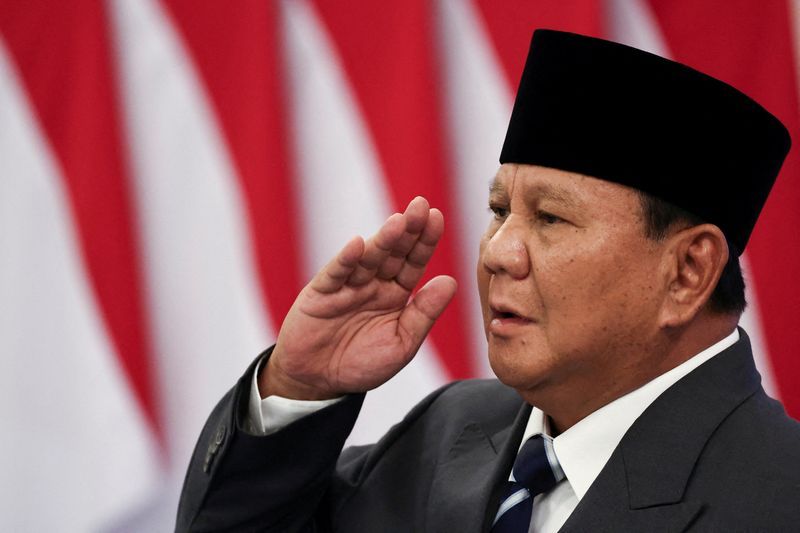
President Prabowo Subianto is preparing to sign a sweeping regulation that would embed artificial intelligence throughout Indonesia's government machinery, marking an attempt to leapfrog the nation into the ranks of regional tech leaders. The presidential regulation, currently awaiting signature, outlines how ministries and local authorities will adopt AI technologies between 2026 and 2029, with the stated objective of achieving double-digit economic growth through smarter deployment of public resources. The initiative represents Indonesia's most comprehensive effort yet to harness AI, though it arrives at a moment when neighbouring Singapore and Malaysia have already secured billions in investment from global technology firms seeking to establish development hubs across Southeast Asia.
The most prominent application outlined in the regulation concerns the government's much-troubled free meals programme, a cornerstone of Prabowo's administration that carries a $15 billion price tag. Rather than simply scaling up food distribution, the new approach would deploy AI systems to customise menus according to regional dietary preferences and nutritional needs, monitor kitchen hygiene standards through automated systems, forecast demand patterns to minimise waste, identify anomalies that might suggest mismanagement or fraud, and cross-reference health data to provide early warning of potential public health emergencies. This technological intervention arrives as the scheme grapples with mounting scrutiny following a series of scandals that have severely dented public confidence.
The free meals initiative has faced a cascade of embarrassments that underscore the governance challenges the AI integration is meant to address. Earlier this month, the programme's leadership was dramatically removed from office and arrested amid investigations into irregularities in kitchen construction and operation. Even more damaging were last year's incidents where tens of thousands of schoolchildren suffered food poisoning, exposing gaps in safety protocols and emergency response mechanisms. Beyond these operational failures, lawmakers and budget watchdogs have raised concerns about wasteful expenditure at a time when Indonesia's fiscal position offers limited room for inefficiency. The AI safeguards outlined in the regulation suggest the government views technology as a potential counterweight to the institutional weaknesses that have undermined the programme's credibility.
Beyond the meals programme, the regulation envisions AI applications across Indonesia's public health infrastructure. The draft specifically mentions utilising artificial intelligence to analyse health screening data and enhance tuberculosis testing programmes, potentially accelerating diagnosis and improving resource allocation. These applications reflect a broader confidence among policymakers that AI can enhance precision and reduce human error in service delivery, though they also raise questions about data privacy and algorithmic bias that remain largely unaddressed in the current regulatory framework.
The economic ambitions embedded in this regulation are substantial. According to the draft, successfully implementing AI across priority government programmes could expand Indonesia's gross domestic product by as much as 12 percent, translating to approximately $366 billion in additional output by 2030. Such projections align with global narratives about AI's transformative potential, though they rest on assumptions about implementation quality and market conditions that many analysts view as optimistic given Indonesia's current technological position. The Indonesian government framed the regulation as essential to maintaining regional competitiveness, particularly as Singapore and Malaysia consolidate their positions as preferred destinations for foreign technology investment.
Several multinational technology firms appear to have shaped the regulatory framework. Meta Platforms, IBM and Microsoft all contributed to drafting the regulation according to Wahyudi Djafar, a technology analyst who worked on the document and serves on the government's AI task force. Microsoft's substantial 2024 commitment to invest $1.7 billion in expanding cloud and AI infrastructure across Indonesia demonstrates that major technology companies view the nation as a significant market despite its developmental challenges. However, the involvement of foreign firms in crafting domestic AI policy raises governance questions that observers have not yet thoroughly explored in public debate.
Yet significant obstacles stand between aspiration and realisation. Professor Derwin Suhartono of Bina Nusantara University in Jakarta points out that Indonesia lacks the foundational elements necessary to function as an AI developer rather than merely a consumer of foreign technology. Critical infrastructure gaps include insufficient semiconductor fabrication capacity, inadequate cloud computing facilities, and a workforce chronically short of personnel with advanced AI expertise. These shortcomings suggest that Indonesia's role in the coming years will remain that of adopting and implementing solutions designed elsewhere, rather than pioneering its own AI innovations.
Suhartono's assessment extends beyond technical limitations to governance capacity. While he acknowledges that a structured, organised roadmap could enable the government to effectively deploy AI in its programmes, he contends that implementation has so far remained largely rhetorical rather than substantive. This observation carries weight given Indonesia's patchy record in executing complex technological initiatives and the persistent gaps between policy announcements and on-ground delivery that have characterised previous government programmes.
The regulation also addresses risks inherent in widespread AI adoption. Accompanying the AI deployment roadmap is a separate draft regulation requiring government agencies to monitor and report on AI-related dangers, including unauthorised use of biometric data, violations of intellectual property rights, and the creation and circulation of deepfake content. These provisions suggest policymakers recognise that accelerated AI adoption without adequate safeguards could expose citizens and institutions to novel forms of fraud, surveillance, and manipulation. However, the mechanisms for enforcing these protections and the institutional capacity to respond to emerging threats remain unclear.
The regulatory framework builds upon groundwork laid down in an earlier white paper issued last year, indicating that AI integration has been on Indonesia's policy agenda for some time. The new regulation crystallises these earlier aspirations into specific timelines and institutional responsibilities. Notably, the framework includes provisions for a sovereign AI fund, to be administered primarily through Danantara Indonesia, the government's newly established wealth fund, alongside proposed fiscal incentives for AI researchers and initiatives to address talent shortages in the field.
The timing of the regulation's signature remains uncertain. Prabowo's office has not provided a timeline for formalising the document, and analysts suggest that the president's calendar of other priorities may delay implementation. For observers tracking Indonesia's digital transformation, the regulation represents an important statement of intent, even if questions persist about whether the nation possesses the institutional coherence, technical capacity, and budgetary resources necessary to execute such an ambitious agenda effectively.