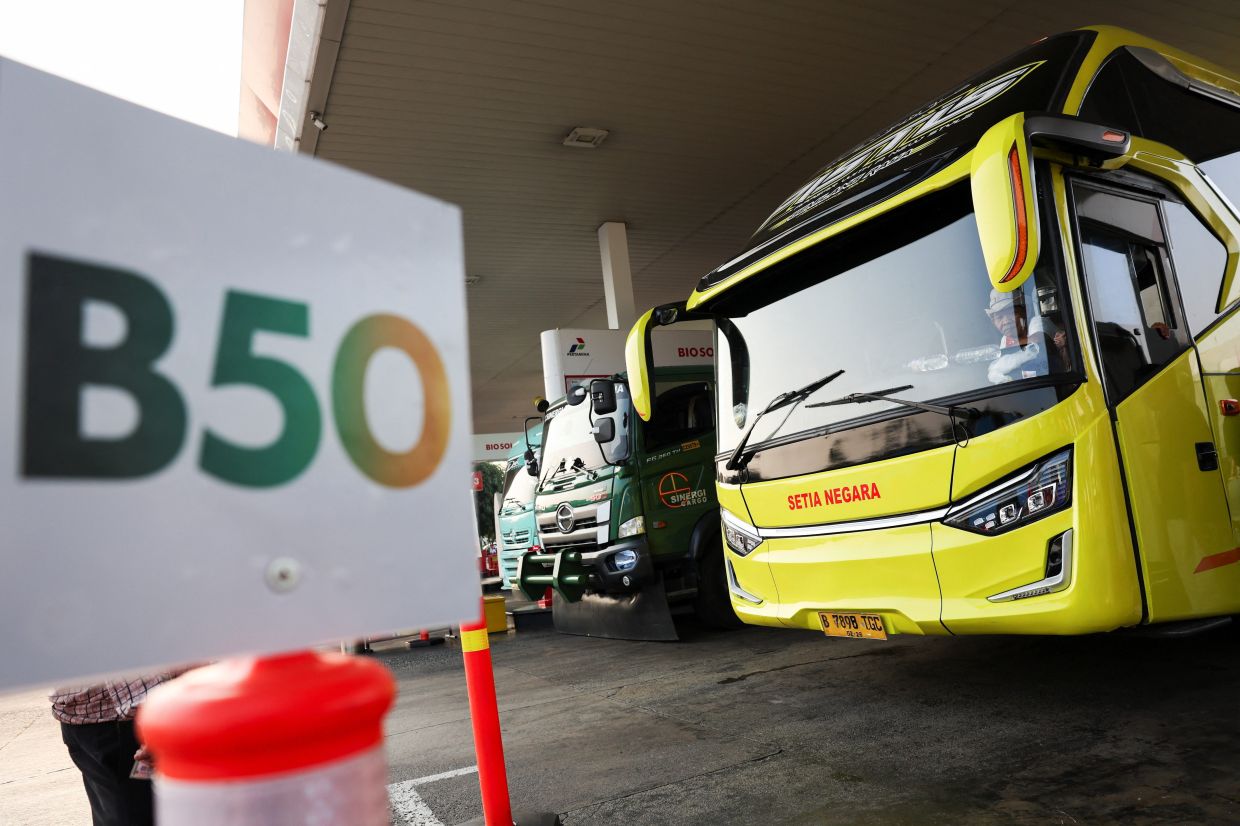
Indonesia has intensified its commitment to biodiesel consumption by implementing a new B50 mandate that will substantially increase domestic palm oil utilization in the fuel sector. Energy Minister Bahlil Lahadalia announced at a ceremony in Karawang, West Java, attended by President Prabowo Subianto, that the upgrade from the current B40 standard will drive crude palm oil consumption upwards to between 16.3 million and 17 million metric tons annually, compared with the present 15.2 million tons. This represents a deliberate government strategy to maximize the commercial value of the nation's vast agricultural resource base while simultaneously addressing energy security concerns.
The initiative positions Indonesia at the forefront of mandatory biodiesel blending globally, reflecting the country's determination to leverage its status as the world's leading palm oil producer. By mandating a higher percentage of locally-produced biodiesel in the national fuel supply, the government aims to dramatically curtail the need for imported diesel, a persistent drain on foreign reserves. The financial implications are substantial: implementing the B50 blend this year alone is projected to save approximately 170 trillion rupiah, equivalent to $9.41 billion, far exceeding the estimated 133 trillion rupiah in savings achieved during 2025 under the previous B40 framework.
President Prabowo articulated an even more ambitious vision during the Karawang event, indicating that he had initially advocated for a full B100 mandate requiring pure palm oil biodiesel. However, government ministers counseled that a 50 percent blend would suffice to eliminate diesel imports entirely while remaining technically feasible for existing infrastructure and vehicle compatibility. Rather than accepting B50 as a final destination, Prabowo signaled that pursuing a 60 percent blend remains a medium-term objective, demonstrating the administration's inclination toward progressive intensification of the programme.
The government has tasked its energy ministry with commencing research and development activities focused on transitioning toward a 60 percent biodiesel formulation, indicating that the B50 mandate represents an intermediate step rather than an endpoint. Energy Minister Bahlil confirmed that preparatory work on technological and logistical requirements for such an upgrade is already underway, reflecting the broader strategic direction of Indonesia's energy policy framework. This forward-looking approach suggests that biodiesel mandates will continue escalating in the years ahead, provided that supply chains and production capacity can accommodate increased volumes.
President Prabowo connected the biodiesel initiative to broader environmental narratives, characterizing Indonesia's push as part of global efforts to mitigate carbon emissions and combat climate change. This framing allows the government to present what is fundamentally an agricultural protectionist and import-substitution policy as a contribution to international sustainability objectives. For Southeast Asian observers, the rhetorical positioning is instructive: environmental concerns and economic nationalism increasingly overlap in how developing nations justify domestic industrial policies.
Implementing the B50 standard necessitates a dramatic expansion in biodiesel supply. Under the previous B40 framework, Indonesia allocated 15.64 million kilolitres of biodiesel during this fiscal year, a 4.68 percent increase over the 14.94 million kilolitres consumed in the prior year. The transition to B50 will require between 16.7 million and 18 million kilolitres of fatty acid methyl ester, commonly abbreviated as FAME, the chemical compound that forms the basis of biodiesel fuel. This scaling up represents a substantial logistical undertaking, requiring coordination across production facilities, distribution networks, and petroleum retail infrastructure throughout the archipelago.
A notable bureaucratic gap currently exists in the implementation architecture: the government has not yet released formal quotas allocating specific production responsibilities to individual biodiesel manufacturers and palm oil processors. This administrative lag suggests that despite the public announcement, the programme's operational mechanics remain under development. Stakeholders in the biodiesel and palm oil industries are awaiting clarity on their respective production obligations and volume allocations, creating uncertainty during a transitional period.
The transition from B40 to B50 will unfold gradually rather than instantaneously. Businesses have been granted a grace period extending through the end of September to deplete their existing stocks of B40-compliant biodiesel before the new B50 standard becomes fully operative. This phased approach acknowledges practical realities: petroleum retailers across Indonesia cannot simultaneously switch formulations, and forcing immediate compliance would create supply disruptions. The extended timeline also provides additional months for the government to finalize quota allocations and for producers to adjust their manufacturing processes.
For Malaysia and other Southeast Asian nations, Indonesia's accelerating biodiesel programme carries significant implications. As a fellow major palm oil producer and exporter, Malaysia observes Indonesia's policy direction with considerable interest, particularly regarding whether similar mandates might enhance domestic value addition and bolster import substitution. Additionally, Indonesia's commitment to substantially expanding domestic biodiesel consumption will reduce availability of palm oil for export markets, potentially supporting global vegetable oil prices at a time when commodity price volatility affects food security across the region. The programme's environmental claims merit scrutiny from conservation advocates concerned about continued tropical forest conversion to palm plantations.
The broader context reveals how Indonesia leverages its natural resource endowments to pursue simultaneous objectives: reducing fiscal pressure from fuel imports, supporting domestic agricultural constituencies, maintaining strategic autonomy in energy procurement, and presenting industrial policy as environmental stewardship. Whether the B50 and prospective B60 mandates prove technically viable at scale remains to be tested once the programme moves from announcement to widespread implementation across Indonesia's geographically dispersed population and complex supply chains.

