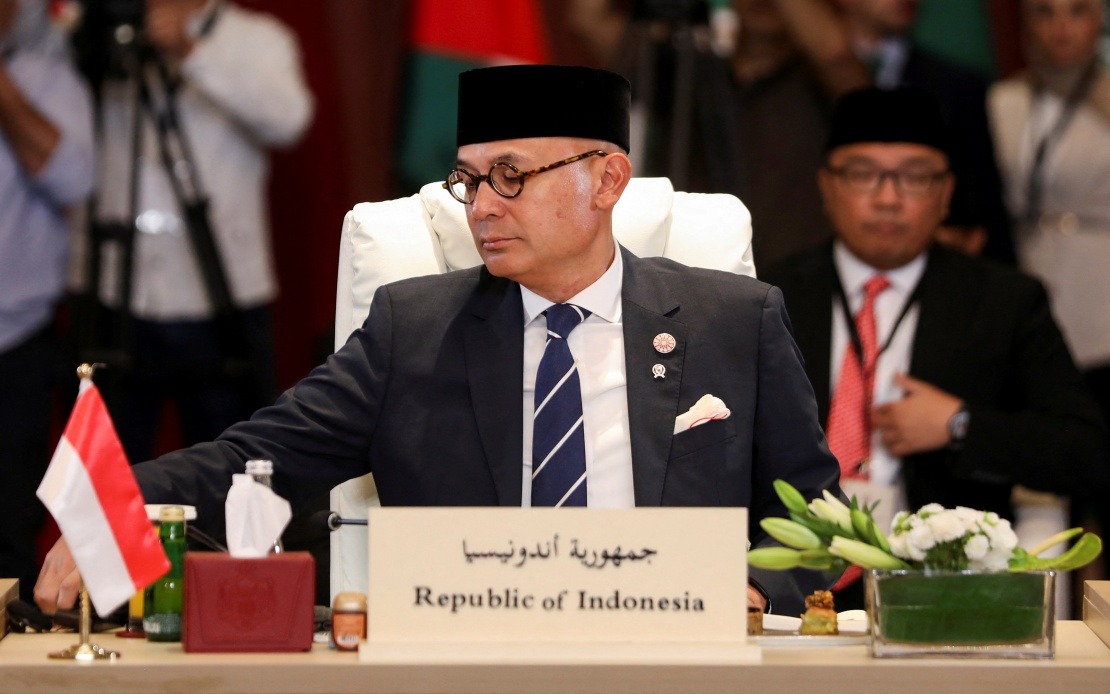
Indonesia has made a forceful appeal for the international community to establish a coordinated and comprehensive coalition backing the Palestinian cause, positioning the issue as a matter of universal concern that transcends religious boundaries. Speaking on behalf of Foreign Minister Sugiono at the Ministerial Meeting on Jerusalem in Amman, Jordan, Deputy Foreign Minister Arrmanatha Nasir articulated Jakarta's position that outdated diplomatic frameworks have repeatedly failed to prevent Israeli violations or generate meaningful consequences. The timing of Indonesia's intervention underscores how Southeast Asian nations continue to wield diplomatic influence within broader Middle Eastern affairs, despite geographical distance from the immediate conflict.
Arrmanatha's central argument hinges on a diagnosis of fragmentation as strategic weakness. He stressed that fractured international responses have historically allowed Israel to exploit divisions among nations and constituencies that ostensibly support Palestinian interests. This framing reflects Indonesia's reading of diplomatic history in the region, where competing regional interests, divergent approaches between Arab states, and selective engagement by Western powers have diluted the effectiveness of previous international initiatives. The Deputy Foreign Minister's emphasis on unity as a prerequisite for policy effectiveness carries particular weight given Indonesia's experience navigating competing interests within the Non-Aligned Movement and Islamic world.
To galvanize this broader coalition, Indonesia presented five specific policy proposals designed to create interlocking mechanisms of international support. The first pillar involves developing a common strategic framework grounded in principles of unity, suggesting that participating nations must align their diplomatic messaging and policy objectives rather than pursuing parallel tracks. This reflects a sophisticated understanding that rhetorical commitment without coordinated action yields minimal results in international relations. The second component emphasizes rigorous adherence to international law and implementation of International Court of Justice rulings, attempting to anchor Palestinian support within established legal frameworks that carry presumptive legitimacy among democratic and rule-based governance advocates.
The third proposed measure focuses on expanding formal international recognition of Palestine, a seemingly straightforward objective complicated by the fact that recognition remains politically charged across different regions and domestic constituencies. Indonesia's emphasis on broadening recognition suggests an effort to normalize Palestinian statehood aspirations as the default international position rather than a contested claim. The fourth element targets protection of Al Aqsa Mosque specifically, elevating a site with profound religious significance for Muslims worldwide while also addressing concerns about preservation of the status quo in Jerusalem. This measure appeals directly to Islamic constituencies and states that view themselves as custodians of Islamic interests.
The fifth proposal concerning Gaza reconstruction acknowledges that sustainable Palestinian development requires physical infrastructure investment alongside political recognition. Reconstruction represents a less immediately contentious policy area than territorial disputes or settlement expansion, potentially offering diplomatic space for broader coalition participation including states hesitant to engage in more confrontational approaches. Indonesian officials also emphasized support for Palestinian national unity and backing for UNRWA's mandate, recognizing that fractious Palestinian political divisions have historically weakened negotiating positions and international advocacy effectiveness.
Indonesia's analysis of the deteriorating regional landscape directly connects these five measures to contemporary strategic realities. Arrmanatha identified multiple interconnected crises reshaping the Middle East: proliferation of illegal Israeli settlements throughout the West Bank, ongoing military operations in Gaza with spillover effects across Syria and Lebanon, and escalating tensions between the United States and Iran. This mapping suggests that the Palestinian issue cannot be isolated as a discrete bilateral problem but rather represents one manifestation of broader structural instability engulfing the region. For Southeast Asian observers, this analysis carries implications beyond Middle Eastern politics, suggesting potential for wider regional destabilization affecting maritime trade routes, energy security, and international counterterrorism cooperation.
The Ministerial Meeting itself represented significant diplomatic coordination, bringing together representatives from Malaysia, Algeria, Saudi Arabia, Iraq, Egypt, Türkiye, Tunisia, Somalia, Pakistan, Morocco, Palestine, Qatar, and the League of Arab States. This assemblage demonstrates that support for Palestinian issues transcends sectarian lines within Islam and extends to secular Arab governments despite their diverse strategic orientations. The meeting's joint statement adopted specific positions rejecting unilateral relocation of diplomatic missions to Jerusalem as violations of international law, coordinating media campaigns to publicize Israeli actions and their consequences, and endorsing institutional strengthening in Palestinian territories.
Indonesia's particular emphasis on Jordan's custodianship over holy sites reflects nuanced theological and diplomatic considerations. By reaffirming the Hashemite Custodianship over Al Haram Al Sharif and other Jerusalem holy sites, Indonesia avoids suggesting that Palestinian governance should unilaterally control these religiously significant locations. This positioning acknowledges competing claims and historical arrangements while still fundamentally supporting Palestinian statehood alongside international safeguards for sites sacred to multiple religious communities. Such formulations seek common ground enabling broader coalition participation from states with varying concerns about religious freedom and minority protection.
For Malaysia and other Southeast Asian nations monitoring this diplomatic initiative, Indonesia's activism raises questions about regional consistency. Malaysia has historically maintained strong rhetorical support for Palestinian causes while balancing pragmatic economic relationships with nations including Israel and the United States. Indonesia's push for concrete coalition mechanisms may pressure Southeast Asian capitals toward more explicit positioning, potentially complicating diplomatic flexibility. However, Indonesia's emphasis on international law and ICJ rulings rather than rhetorical absolutism provides frameworks that accommodate diverse national interests within a seemingly unified coalition.
The substantive challenge facing any coalition built on these principles involves translating agreement into consequential policy outcomes. International law and ICJ rulings carry moral authority but limited enforcement mechanisms absent major power commitment. Media campaigns can shape narrative frames but rarely alter fundamental geopolitical interests. Palestinian institutional strengthening requires sustained financial and technical support from coalition members, a commitment that fluctuates with domestic political cycles in contributing nations. Gaza reconstruction necessitates security conditions and international coordination that have repeatedly proven elusive despite rhetorical commitment from numerous states.
Indonesia's initiative nevertheless reflects Jakarta's continuing investment in positioning itself as a bridge between Islamic constituencies and global governance institutions. By framing Palestinian support as requiring sophisticated institutional and legal architecture rather than emotional appeals or religious identity politics, Indonesia demonstrates how Muslim-majority nations can engage Middle Eastern issues through multilateral frameworks. This approach may appeal to nations seeking to balance humanitarian concerns with institutional legitimacy and legal consistency. However, sustained effectiveness depends on whether participating states translate diplomatic agreements into concrete resource commitments and policy consistency over extended timeframes.

