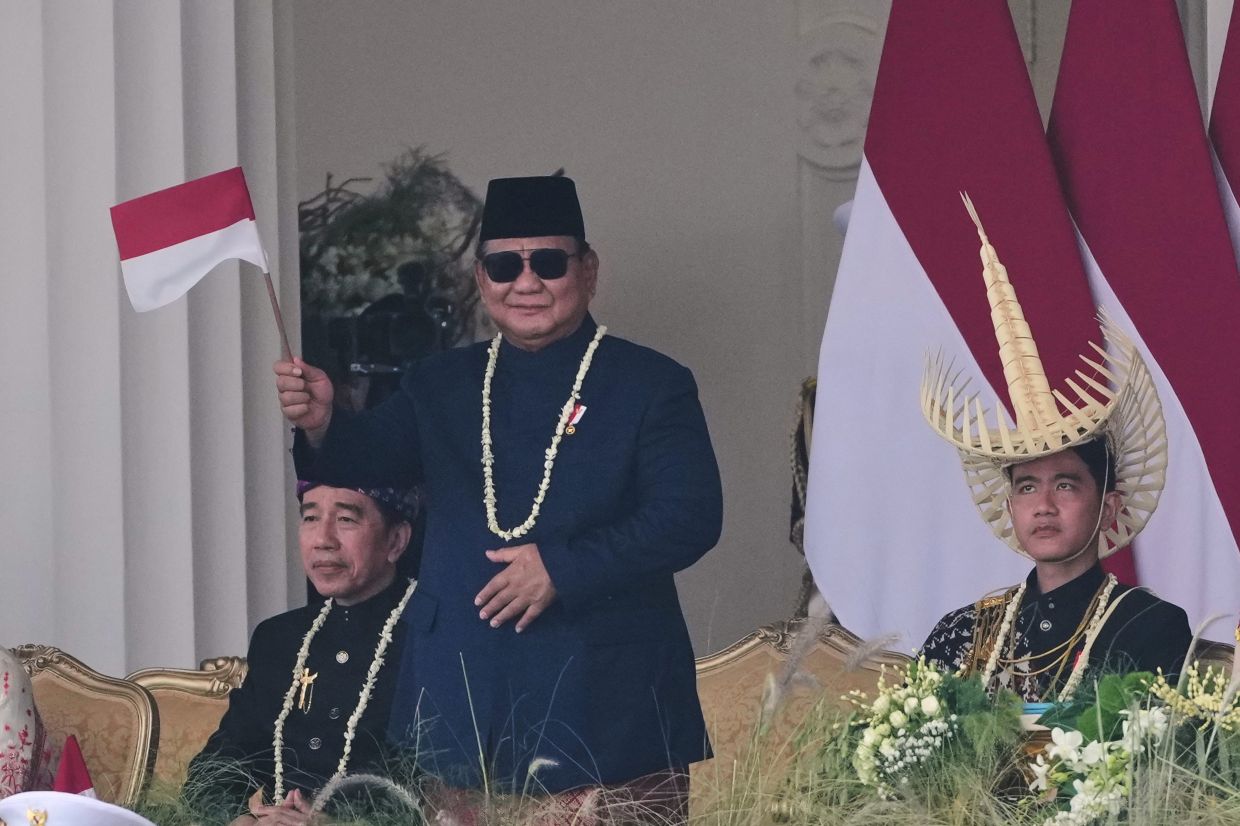
President Prabowo Subianto presided over Indonesia's 81st Independence Day commemoration in Jakarta on Monday, conducting the flag-hoisting ceremony at Merdeka Palace while the nation grappled with the aftermath of a catastrophic earthquake that struck the island of Flores in East Nusa Tenggara province just days earlier. The formal observance, punctuated by solemn moments of silence for national heroes and disaster victims alike, underscored the complex backdrop against which Indonesians marked their freedom from colonial rule—a moment tempered by contemporary tragedy and the urgent demands of crisis management.
The president, dressed in traditional attire comprising a navy beskap jacket, black peci cap, and jasmine garland, oversaw an elaborate ceremonial programme that included cultural performances, parades, and the symbolic procession of the national flag replica and original Proclamation document from the National Monument to the presidential palace. A mounted honour guard comprising 114 cavalry troops and 45 military police officers on motorcycles provided security throughout the spectacle, reflecting the ceremonial grandeur typically afforded to Indonesia's most significant national observance.
The timing of this year's Independence Day celebration acquired particular poignancy given the unfolding humanitarian crisis in the eastern archipelago. A powerful 7.7-magnitude earthquake struck Flores early on Saturday morning, claiming 53 lives and destroying hundreds of residential structures and public buildings across the region. The initial tremor triggered nearly 1,000 aftershocks of varying magnitudes, creating an environment of sustained danger and uncertainty for affected populations. By Monday morning, as independence ceremonies commenced in the capital, another significant 5.8-magnitude earthquake jolted the region, with its epicentre located approximately 39 kilometres offshore at a depth of 10 kilometres, according to Indonesia's Meteorology, Climatology and Geophysics Agency.
The scale of displacement resulting from the seismic activity underscored the severity of the disaster. Approximately 5,400 residents abandoned their homes in the immediate aftermath of the initial quake, seeking refuge in safer locations. Medical authorities reported that more than 130 people sustained injuries, many involving fractures and other trauma requiring hospitalisation. Such figures represented not merely statistical abstractions but represented real families separated from their homes and livelihoods, facing uncertain futures as aftershocks continued to rattle the island.
Recognising the gravity of the situation, the government responded by deploying several senior ministers to the disaster zone rather than keeping them present at the Jakarta ceremony. State Secretary Prasetyo Hadi explained that the absence of key cabinet members, including Coordinating Minister for Human Development Pratikno, Home Minister Tito Karnavian, Public Works Minister Dody Hanggodo, and Deputy Health Minister Benjamin Paulus Octavianus, reflected their commitment to overseeing relief and recovery operations. This strategic allocation of ministerial attention signalled the administration's prioritisation of disaster response over ceremonial protocol, a pragmatic acknowledgement that national solidarity during Independence Day encompassed not merely historical commemoration but active stewardship of citizens in crisis.
Prasetyo articulated this sentiment explicitly, noting that Independence Day observances could not be separated from the responsibility to ensure suffering citizens received adequate support. The statement reflected broader considerations about the symbolic dimensions of national commemoration in a country historically vulnerable to natural disasters. For Malaysian readers familiar with similar challenges across the region, the Indonesian government's balancing act between ceremonial tradition and crisis response illustrates the ongoing tension between national ritual and immediate humanitarian need that characterises Southeast Asian governance.
When pressed about whether President Prabowo would undertake a personal visit to Flores to assess conditions and provide visible reassurance to victims, Prasetyo adopted a cautious stance, indicating that decisions remained pending pending ongoing assessment of the situation. The absence of an immediate presidential visit raised questions about appropriate leadership conduct during disaster response, particularly given that ministerial presence at the scene might be deemed sufficient, at least temporarily. Such calculations often involve practical considerations: the potential disruption caused by presidential security protocols, the resource demands of a high-level visit, and the possibility that direct presidential engagement might occur once immediate rescue operations stabilised.
This Independence Day observance occurred within a broader context of crisis management that extended beyond the earthquake itself. The preceding weekend had witnessed unrest during commemorations marking the anniversary of the Aceh peace accord, suggesting that Indonesia faced multiple simultaneous governance challenges requiring presidential and ministerial attention. The Aceh peace anniversary incident, though less detailed in available reporting, indicated that stability and commemoration concerns extended across the archipelago, not merely to disaster-affected regions.
For regional observers, particularly those in Malaysia where seismic activity and disaster preparedness represent ongoing policy concerns, the Indonesian government's response methodology offers instructive parallels. The deployment of ministerial resources, the integration of disaster response into national commemoration, and the pragmatic recalibration of ceremonial priorities all reflect mature institutional capacity to manage multiple demands simultaneously. Indonesia's handling of the earthquake response during Independence Day celebrations demonstrates how government systems navigate the intersection of symbolic national importance and immediate human welfare—a balance that remains perpetually challenging for any nation-state.
The earthquake's intersection with Independence Day commemorations also carried psychological dimensions worth considering. National celebrations serve important functions in reinforcing collective identity and shared historical memory, yet they acquire different resonance when portions of the national community face active suffering. The juxtaposition of presidential ceremonies in air-conditioned venues with civilians sleeping outdoors in earthquake-affected areas creates inherent symbolic tensions that responsible governments must acknowledge and address, as the Indonesian administration attempted through moments of silence and ministerial deployment.
As of Monday evening, the full extent of recovery needs remained unclear, though the scale of structural damage and displacement suggested that reconstruction would extend considerably beyond the immediate crisis period. The government's mobilisation of human development, home affairs, public works, and health ministry resources signalled recognition that earthquake recovery involved multiple dimensions—physical reconstruction, displaced population management, injury treatment, and psychological support—requiring coordinated multi-sectoral response. For Indonesians in Flores, Independence Day 2024 would likely be remembered less for presidential ceremonies in Jakarta than for the personal struggles of rebuilding lives amid continuing seismic uncertainty.

