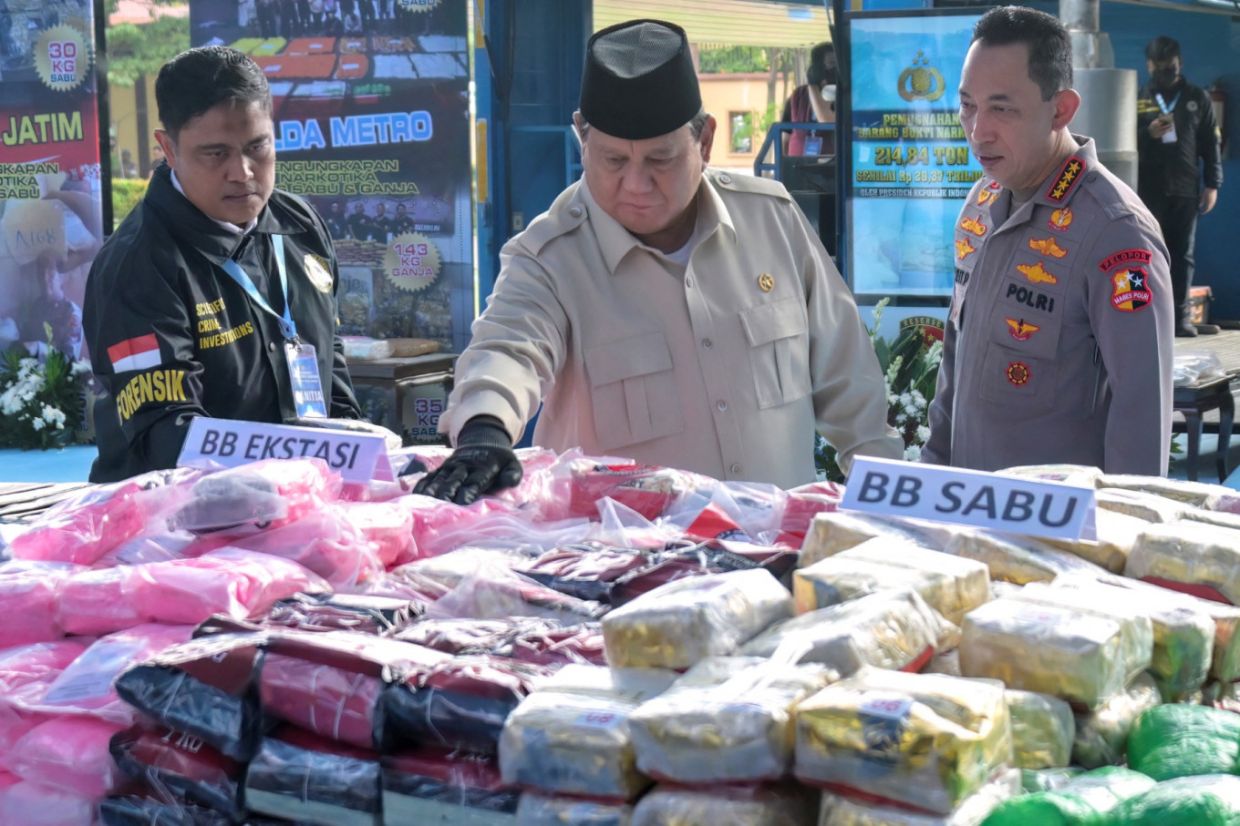
Indonesia's National Narcotics Agency has scored a significant victory in its ongoing battle against transnational drug trafficking, announcing the seizure of 2.6 tonnes of liquid methamphetamine from a vessel operating under a false identity off the coast of Riau province. The operation, conducted jointly with customs authorities, resulted in the arrest of 10 crew members, all Myanmar nationals, and has been classified among the country's most substantial narcotics interceptions in recent memory. The discovery underscores both the scale of drug smuggling operations targeting Southeast Asia and the region's persistent vulnerability to maritime trafficking routes that connect major production areas with lucrative consumer markets.
The interception of the MV Rain Maker, which was sailing under a false flag designation, occurred late on August 17 near Bengkalis following weeks of intelligence gathering by the National Narcotics Agency. According to Roy Hardi Siahaan, a senior official at the agency, investigators had received credible information suggesting that a cargo vessel departing from Sarawak in Malaysia and transiting through the Andaman Sea was destined for Indonesian ports with prohibited substances on board. The intelligence-driven approach highlights a shift toward more proactive interdiction strategies that rely on cross-border information sharing and maritime surveillance capabilities in waters that remain notoriously difficult to patrol comprehensively.
Upon boarding and inspection of the vessel, authorities discovered the methamphetamine ingeniously concealed within eight standard water barrels and a water tank, a concealment method that reflects the increasing sophistication of trafficking organisations in disguising contraband as legitimate cargo. The liquid form of the drug represents a particular challenge for law enforcement, as it complicates detection and requires specialised laboratory analysis to confirm its composition and purity. Beyond the primary seizure, authorities deployed sniffer dogs that identified more than 1.5 million illegal cigarettes secreted aboard the vessel, indicating that the trafficking operation was diversified to maximise returns across multiple prohibited commodities.
This latest bust represents the second major interception of a Tanzanian-flagged vessel in Indonesian waters within the space of a fortnight, suggesting a deliberate pattern whereby traffickers utilise ships registered under flags of convenience to obscure their true operational ownership and origin. Just ten days prior, on August 8, Indonesian customs and narcotics officials had seized 1.3 tonnes of ketamine from another vessel operating in the waters surrounding the Riau Islands, an area that sits strategically between major regional ports and serves as a crucial transit point for maritime commerce. That operation resulted in the arrest of eight crew members, comprising seven Myanmar nationals and one Taiwan national, demonstrating that drug syndicates frequently employ multinational crews to complicate attribution and reduce the likelihood that any single nationality bears the full legal consequences of trafficking activities.
The concentration of major drug seizures within a compressed timeframe and in close geographic proximity points to structural vulnerabilities within Indonesia's maritime border security infrastructure. While Indonesia possesses one of the world's most extensive coastlines and operates within waters claimed or managed by several jurisdictions, the sheer volume of vessel traffic and the limited resources available for comprehensive monitoring create persistent gaps that organised trafficking networks exploit with calculated precision. The Andaman Sea and the waters east of Peninsular Malaysia have emerged as preferred trafficking corridors precisely because they offer multiple approach vectors and numerous islands and coastal inlets where cargo transfers or surveillance evasion can occur.
The nationalities of those detained in both the August 8 and August 17 operations point to the involvement of regional trafficking networks with established supply chains and distribution capabilities across Myanmar, Taiwan, and multiple Southeast Asian markets. Myanmar has long been identified as a primary methamphetamine manufacturing hub, with clandestine laboratories in border regions benefiting from weak governance and porous international boundaries. The involvement of Taiwan nationals in drug trafficking operations reflects the role that actors from across the Asia-Pacific region play in financing, organising, and distributing illicit narcotics, suggesting networks that operate with remarkable operational efficiency across national boundaries.
Indonesia's response to these trafficking challenges must be understood within the context of the country's exceptionally stringent anti-drug legislation, which includes capital punishment for large-scale traffickers and distributors. Although Indonesia has maintained an informal moratorium on executions for several years, the legal framework remains among the world's most severe and reflects the government's commitment to disrupting drug supply chains at every level. The National Narcotics Agency's capacity to conduct successful interdictions and secure prosecutions has improved incrementally, though sustained growth in seizure volumes suggests that supply-side pressures continue to outpace enforcement efforts.
The August 17 seizure must also be positioned against Indonesia's historical drug enforcement record, particularly the country's previous largest single bust recorded in the preceding year, which had involved two tonnes of crystal methamphetamine discovered aboard a fishing vessel transiting from the Andaman Sea toward Batam Island. While the current seizure of 2.6 tonnes of liquid methamphetamine exceeds that previous record in tonnage, the rapid succession of major interdictions indicates that trafficking volumes may be expanding, suggesting that enforcement successes are not yet producing meaningful deterrent effects on supply-side operations.
For Malaysia, which sits in the direct path of trafficking flows originating from Myanmar and heading toward Indonesian and regional markets, these seizures carry substantial implications. The Sarawak origin point highlighted in the narcotics agency's intelligence assessment suggests that Malaysian ports and territorial waters continue to serve as embarkation or transshipment points for international drug trafficking, necessitating enhanced cooperation between Malaysian and Indonesian authorities on maritime interdiction and intelligence sharing. Enhanced coordination could potentially identify trafficking networks before vessels depart Malaysian jurisdictions, shifting the enforcement burden upstream rather than relying exclusively on interception in Indonesian waters.
Broader regional security implications extend beyond bilateral Malaysia-Indonesia concerns to encompass the entire Southeast Asian maritime environment, where weak governance in certain jurisdictions, insufficient naval resources, and the legitimate demands of facilitating regional trade create inherent tensions with drug interdiction objectives. The sophistication of recent trafficking operations, evident in the use of false vessel registrations and concealment methodologies, suggests that traffickers are continuously adapting their techniques to counter law enforcement innovations. Sustained regional cooperation through mechanisms such as ASEAN maritime forums and bilateral intelligence networks will remain essential for degrading the operational effectiveness of transnational trafficking syndicates that exploit geographic proximity and weak maritime governance to move commodities across national borders.

