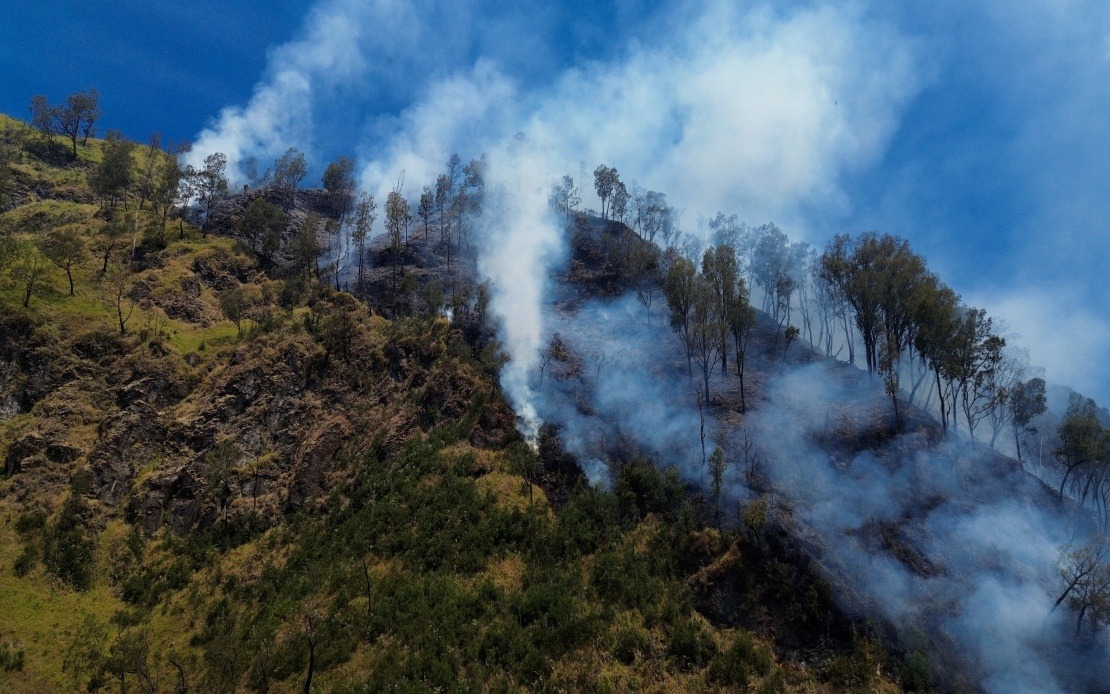
Indonesia's celebrated Mount Bromo has been shut to the public following the rapid spread of a destructive forest fire across the Bromo Caldera in East Java, marking a significant disruption to one of the country's most visited natural attractions. The Bromo Tengger Semeru National Park authority implemented the comprehensive closure starting at 10 pm on Saturday, suspending all visitor access and tourism-related activities until the wildfire situation improves and emergency responders determine it is safe to resume operations.
The decision encompasses all five primary access points to the park, cutting off routes through Cemorolawang in Probolinggo Regency, Wonokitri in Pasuruan Regency, Jemplang and Coban Trisula in Malang Regency, and Senduro in Lumajang Regency. By restricting access across these multiple entry gates, park authorities aim to create a clear zone for firefighting operations while preventing civilian casualties in what has become an increasingly volatile environment. The measure underscores the severity of the situation and reflects coordination between park management and emergency services tasked with containing the blaze.
Tourists who had already secured tickets through online booking systems face temporary disappointment but retain flexibility in their travel plans. The park authority has announced a straightforward arrangement allowing visitors to either reschedule their visits for a later date once operations resume, or pursue full refunds through the online ticketing platform. This accommodation acknowledges the inconvenience while maintaining clear communication with affected visitors about their options.
The wildfire, which ignited on Monday, has consumed vegetation across a significant area spanning two regencies. Abdul Muhari, head of the National Disaster Management Agency's Disaster Data, Information, and Communication Centre, confirmed that the flames had destroyed approximately 176.20 hectares of forest and grassland across Probolinggo and Malang regencies by Saturday evening. Despite ongoing firefighting efforts, active hotspots continued emitting substantial smoke, suggesting the fire remained uncontained and capable of spreading further, particularly concerning given moderate wind conditions that could accelerate the flames' movement through remaining vegetation.
The Indonesian government has committed considerable resources to suppressing the Mount Bromo fire, deploying two water-dropping helicopters capable of carrying 1,000 litres of water each. This aerial support represents a significant response mechanism, though it also highlights the challenges authorities face in tackling mountainous terrain where ground-based firefighting efforts have proven insufficient. The continued monitoring by disaster management teams suggests a protracted containment operation rather than imminent resolution, with personnel maintaining vigilance despite challenging environmental conditions.
The Mount Bromo situation was not isolated, as East Java simultaneously contended with a separate forest fire affecting Mount Rinjani National Park in East Lombok Regency. That blaze, concentrated in the Sembalun Resort area, consumed approximately 30 hectares before emergency teams brought it under control at approximately 1:30 am on Saturday after it started Friday evening. The rapid suppression of the Rinjani fire contrasted with the ongoing struggle at Mount Bromo, suggesting varying difficulty levels in combating fires across different volcanic regions and terrain types.
Investigators have not yet determined the underlying causes of either conflagration, leaving open questions about whether the fires resulted from human activity, natural ignition sources, or other factors. For Malaysian travellers and regional tourism operators, understanding the fire's origins may prove relevant to assessing future risk and the timeline for normal operations to resume. The investigations themselves may take considerable time, particularly if evidence has been consumed by the flames or dispersed across difficult-to-access mountainous areas.
The closure of Mount Bromo carries implications extending beyond individual tourists. The volcano generates substantial economic activity for surrounding communities, with guides, accommodation providers, transportation services, and vendors all depending on steady visitor flows. A prolonged shutdown during peak tourism season would create economic hardship for thousands of people whose livelihoods depend directly or indirectly on access to the park. Regional economies in East Java that have come to rely on tourism revenue from this singular attraction face uncertainty about when normal operations might resume.
For Malaysian tourists accustomed to visiting Mount Bromo—long a popular regional destination due to its accessibility and spectacular volcanic landscapes—the closure represents a temporary setback to travel plans. Malaysian travel agencies and tour operators who regularly include Mount Bromo in itineraries across East Java will need to adjust bookings and develop alternative activities for clients during this period. The incident also raises broader questions about the preparedness of major tourist destinations across Indonesia and Southeast Asia for managing natural disasters that disrupt visitor access.
The wildfire at Mount Bromo reflects broader environmental challenges facing Indonesia's volcanic and forested regions, where climate conditions, vegetation density, and fire management capacity intersect to create seasonal risks. The dry season in East Java coincides with periods of elevated fire danger, a pattern that recurs annually and requires sustained prevention and rapid response mechanisms. As climate patterns continue to evolve, such incidents may become more frequent or more severe, necessitating enhanced preparedness among park authorities and disaster management agencies.
The Mount Bromo closure also demonstrates the interconnection between natural disaster management and tourism infrastructure in Indonesia. A single environmental crisis can swiftly eliminate access to facilities that serve thousands of visitors monthly and support extensive supply chains of local businesses. For travellers and tourism stakeholders throughout Malaysia and the broader region, the situation serves as a reminder of the importance of flexible travel arrangements and awareness of environmental risks that may affect popular destinations during certain seasons. Tourists planning visits to Indonesian attractions should monitor official updates from park authorities and disaster management agencies before finalising travel plans.

