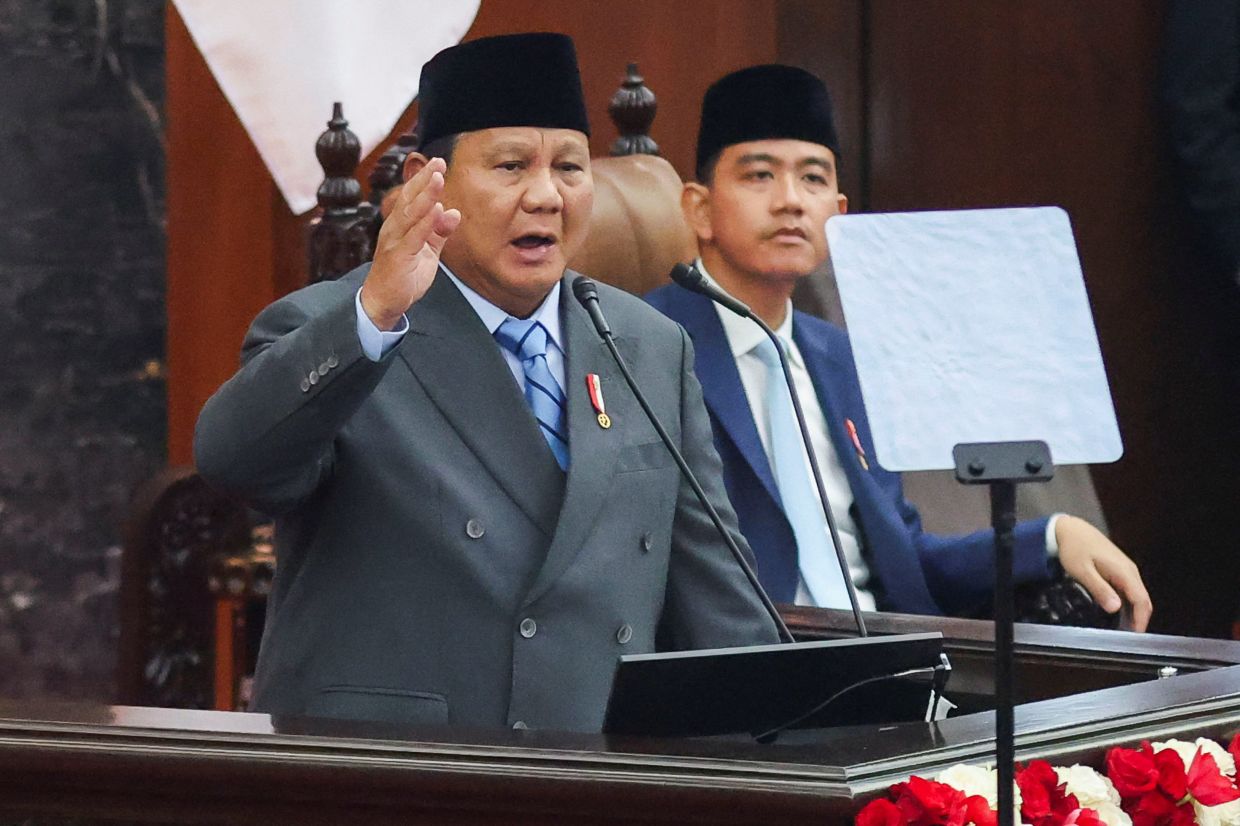
Indonesia is embarking on an unprecedented corporate restructuring, with President Prabowo Subianto committing to close more than 750 state-owned enterprises before the year concludes, in what he describes as potentially the largest organisational overhaul of its kind globally. Speaking to parliament during his state of the nation address this month, the president outlined an aggressive plan to trim Indonesia's bloated public sector, which has long been viewed as a repository for inefficiency and corrupt practices.
The scale of the problem became apparent only recently, when Indonesia established the Danantara sovereign wealth fund to consolidate management of state assets. Officials discovered the existence of 1,074 state-owned enterprises scattered across the economy—far exceeding the president's prior estimate of between 300 and 400 entities. This revelation underscores how fragmented and uncontrolled Indonesia's public sector had become, with many enterprises operating with minimal accountability to national interests or fiscal discipline. The discovery itself signals how disconnected the government had been from the true extent of its own institutional machinery.
To date, 290 enterprises have already been eliminated, leaving approximately 784 more to be wound down before December 31 if Prabowo's target is achieved. The president aims to retain no more than 300 state-owned enterprises by the close of 2025, retaining only those demonstrating genuine productivity and generating measurable value for Indonesian citizens. This represents a radical departure from Indonesia's historical approach to state ownership, where political patronage and vested interests often trumped rational economic assessment.
The financial benefits of this restructuring have already begun materialising. Closure and consolidation efforts have generated savings of approximately 50 trillion rupiah—roughly $2.8 billion—by eliminating redundant management positions, cutting directors' and commissioners' salaries, and reducing expenditure on office space, vehicle fleets, and executive travel. The government targets additional savings exceeding 70 trillion rupiah throughout the current year. These figures, if accurate, would represent substantial resources that could be redirected toward social programmes or debt reduction, though analysts remain cautious about official Indonesian economic data.
Improved management of remaining state-owned enterprises has also yielded stronger financial returns. Prabowo reported that aggregate profits surged more than 75 percent from 2024 to reach 326 trillion rupiah last year, suggesting that consolidation and stricter oversight mechanisms are generating tangible results. However, sceptics in the analyst community have repeatedly questioned the reliability of Indonesia's official economic statistics, casting some doubt on whether such dramatic improvements reflect genuine operational efficiency or accounting adjustments.
Beyond operational restructuring, Prabowo has flagged the possibility of establishing a special court to investigate management conduct and board decisions at state-owned enterprises spanning the past three decades. This investigative mechanism would examine patterns of fictitious profit reporting, misappropriation, and negligent stewardship that allegedly characterised many state firms. The president's reference to reviewing a 30-year period suggests awareness that corruption and mismanagement have been systemic and entrenched, rather than isolated incidents.
Yet Prabowo has simultaneously proposed offering some form of special amnesty for those willing to acknowledge wrongdoing and reform their practices. This carrot-and-stick approach reflects the political calculation that pursuing exhaustive legal accountability could prove destabilising, whilst offering conditional forgiveness might encourage cooperation and facilitate smoother institutional transitions. The balance between deterrence and pragmatism remains delicate, and the ultimate design of any amnesty programme will signal whether the initiative prioritises genuine reform or merely provides cover for powerful actors.
Indonesia's low score of 34 out of 100 on Transparency International's 2025 Corruption Perceptions Index illustrates the magnitude of the integrity challenge confronting the nation. Despite legislative strengthening, establishment of specialised investigative bodies, and high-profile arrests, graft remains deeply embedded within Indonesia's public and private sectors. Corruption has emerged as a focal point for public grievance, particularly as citizens grapple with rising living costs amid regional economic pressures stemming from Middle Eastern geopolitical tensions and volatile energy prices.
Prabowo's signature free school meals initiative has drawn particular scrutiny regarding programme administration and cost-effectiveness. The president acknowledges the need for improvements and enhanced efficiency but remains committed to the initiative, citing the alarming statistic that one in four Indonesian children suffer from stunting—a manifestation of chronic malnutrition. This commitment to social investment alongside fiscal discipline represents an attempt to address the underlying prosperity gap that fuels both public discontent and corruption vulnerabilities.
Despite global economic headwinds and acknowledged structural challenges, the president expressed confidence that Indonesia will achieve six percent GDP growth by the end of 2026. Current performance has proven softer, with second-quarter growth reaching 5.3 percent following 5.6 percent in the first quarter. Prabowo emphasised that growth targets matter less than genuine improvements in living standards, job creation, and quality of life for ordinary Indonesians, particularly those at the bottom of the income distribution. This rhetorical pivot toward distributional outcomes reflects awareness that headline growth figures carry diminishing political weight when citizens experience economic pressure.
For Malaysia and other Southeast Asian economies, Indonesia's corporate restructuring experiment offers both cautionary lessons and potential models. The discovery of over 1,000 overlooked state enterprises raises uncomfortable questions about whether comparable hidden institutional layers exist across the region. Malaysia's own experience with state-owned enterprise reform—spanning from Khazanah Nasional's consolidation efforts to periodic reviews of GLICs—suggests that asset management remains challenging. Indonesia's willingness to embrace large-scale institutional closure, despite political costs, may embolden similar initiatives elsewhere, or conversely, demonstrate the friction such restructuring generates.
The Indonesian government's emphasis on investigating past mismanagement whilst offering selective amnesty also resonates within the Southeast Asian context, where managing accountability against the imperatives of political stability remains contested. Whether Prabowo's framework produces genuine institutional reform or represents merely cosmetic reorganisation will depend heavily on implementation rigour, political will, and the degree to which the special investigative court operates with genuine independence rather than selective targeting.

