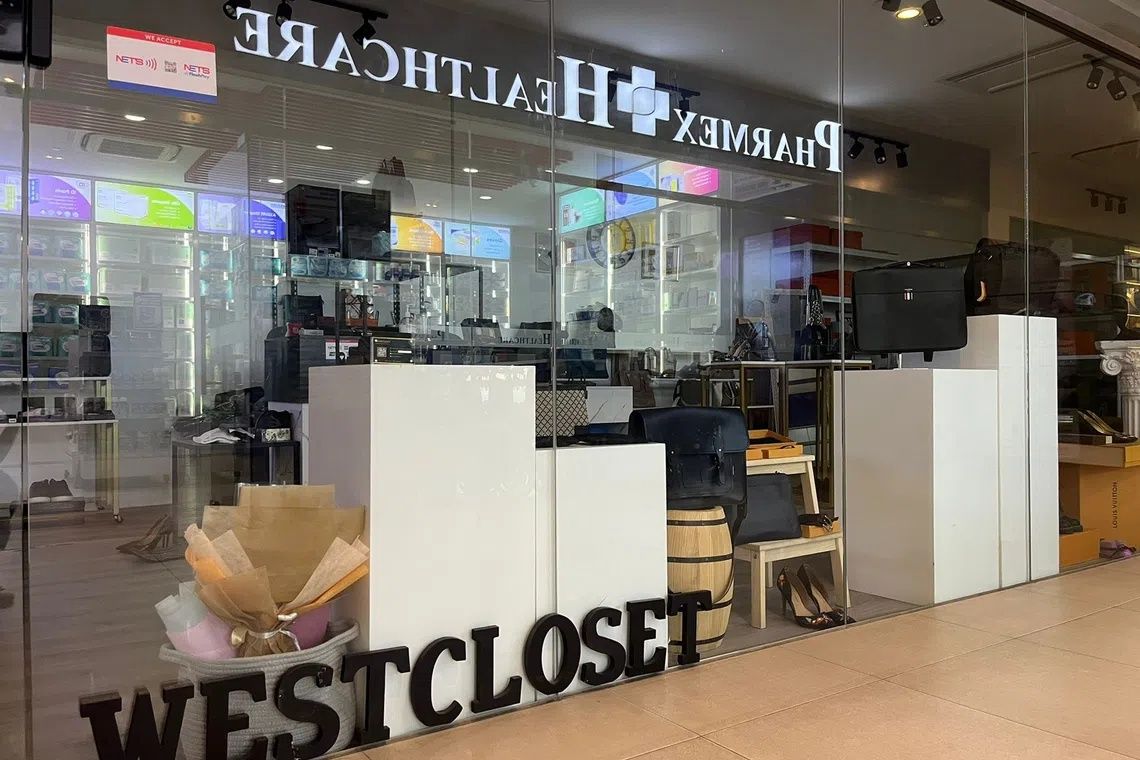
A luxury goods consignment scheme collapsed when its operator diverted customer proceeds into her own pocket, resulting in the Indonesian entrepreneur facing eight months behind bars. Ringga Dwi Rizky Irianto, 36, who owned and managed West Closet at Singapore's OUE Downtown Gallery shopping mall, systematically misappropriated funds from five clients who had entrusted high-value designer handbags to her business. The District Court imposed the jail sentence on Thursday, August 13, alongside a compensation order that could extend her incarceration by an additional 24 days if unpaid.
The consignment model that West Closet employed appeared straightforward to customers browsing through its Carousell and Instagram advertisements. Sellers would deposit their luxury bags at the storefront for a 60-day holding period, with the threat of a S$60 penalty should they reclaim items early. West Closet would then facilitate sales and extract a commission ranging from S$200 to S$900 depending on the item's value. This arrangement attracted individuals seeking to liquidate designer pieces without the hassle of private sales, yet the system's vulnerability lay entirely in the operator's trustworthiness—a foundation that ultimately crumbled.
Ringga's criminal methodology emerged with striking consistency across her victims' experiences. In one particularly egregious instance documented during court proceedings, a customer consigned two Hermès bags and a Chanel piece to West Closet with a guaranteed sale price of S$51,000. The business provided explicit written assurance that payment would reach the customer's bank account within seven days of sale completion. When Ringga successfully sold all three items for the promised amount, she withheld the entire proceeds, instead redirecting the money toward fulfilling a separate customer's order—a sleight of hand that transformed customer funds into operational capital for her own purposes.
This pattern replicated across multiple transactions with alarming similarity. A second victim, who had consigned a Hermès bag through West Closet, discovered S$33,500 missing when settlement time arrived. A third customer lost S$23,500 in identical circumstances, each believing their designer goods had been properly liquidated and funds secured. The three counts to which Ringga pleaded guilty involved these three victims and totalled S$108,000 in misappropriated funds. Two additional charges relating to the remaining victims and amounts were considered during sentencing but do not appear to have resulted in separate convictions, suggesting prosecutorial discretion in presenting the most defensible charges.
The mechanics of Ringga's deception reveal how digital platforms have expanded opportunities for fraud while simultaneously creating audit trails that law enforcement can exploit. West Closet's social media presence and Carousell listings generated customer traffic and credibility, yet the same channels that attracted business became evidence of premeditation. The business operated with sufficient legitimacy to process genuine sales transactions, which enabled Ringga to perpetuate the scheme longer than might have been possible with entirely fictitious operations. She maintained the appearance of normalcy by actually selling some items while systematically stealing proceeds from others.
Investigators apprehended Ringga in September 2022, though charges were not formally filed until 2024—a delay that reflects the complexities of financial crime prosecution in jurisdictions managing high caseloads. She remained free on S$15,000 bail pending trial, a condition that allowed her to reside in Singapore while the legal process unfolded. The sentencing framework for criminal breach of trust, under which she was convicted, permits imprisonment of up to seven years, fines, or both, meaning the eight-month sentence represents a relatively lenient application of available judicial discretion, presumably influenced by her guilty plea and demonstrated cooperation.
The restitution arrangements underscore both the limitations of criminal penalties and their practical inadequacy in addressing victim losses. Ringga has already repaid S$41,000 toward the S$140,000 total loss, and the court ordered compensation of S$91,950 through an investigation officer managing her case. Should she fail to satisfy this obligation, she faces an additional 24 days of incarceration—a provision that essentially attempts to coerce payment through extended detention. For victims of consignment fraud, this arrangement means recovering approximately 70 percent of losses at best, with the remaining gap representing an uncompensated loss absorbed by those who placed trust in an operator who betrayed it.
For Southeast Asian readers and businesses, the West Closet case illuminates vulnerabilities within the consignment economy that has flourished across the region. Malaysia, Singapore, and other countries have witnessed explosive growth in peer-to-peer luxury goods resale platforms, driven by younger consumers seeking authentic designer pieces at discounted prices and sellers seeking to monetize wardrobes. These platforms operate across a spectrum from fully regulated intermediaries to loosely supervised independent operators, creating an environment where scams proliferate. The case demonstrates that even in Singapore's relatively rigorous regulatory environment, individual actors can operate with sufficient legitimacy to attract significant transaction volumes before law enforcement intervention becomes possible.
The digital facilitation of such schemes presents particular challenges because transaction verification occurs post-sale. Unlike retail transactions where customer and merchant simultaneously verify product authenticity and payment, consignment models require temporal separation between handover and settlement. Ringga exploited this unavoidable gap by claiming sales had occurred, funds would arrive, and then simply not delivering. The absence of formal escrow mechanisms or third-party payment intermediaries in her operation left customers entirely dependent on her honour. Many consignment platforms now incorporate such protections, yet boutique operators can still circumvent them by maintaining direct customer relationships and cash-based dealings.
Ringga's nationality as an Indonesian citizen raises questions about the transnational dimensions of such fraud. Her ability to operate a Singapore-based business despite residing as a foreign national indicates gaps in business registration oversight or enforcement. For Malaysian and regional businesses, this signals the importance of platform operators implementing identity verification, business license validation, and customer fund protection mechanisms. The regulatory burden increasingly falls on platforms hosting these transactions to police their users, a responsibility that intermediaries like Carousell and Instagram continue to navigate with varying degrees of commitment and effectiveness.
The sentencing occurred as Ringga prepared to begin her jail term in October, having been held on bail for several months following the August 13 court appearance. Her case will likely circulate as a cautionary tale within Southeast Asia's consignment community, though whether it materializes as systemic reform or merely a footnote in individual risk assessment remains unclear. For customers considering consignment transactions, the West Closet precedent reinforces that luxury goods sales intermediaries warrant the same due diligence previously reserved for traditional retail operations, including verification of business legitimacy, insurance coverage, and transparent fund handling procedures that exceed the minimal protections offered by informal operators.

