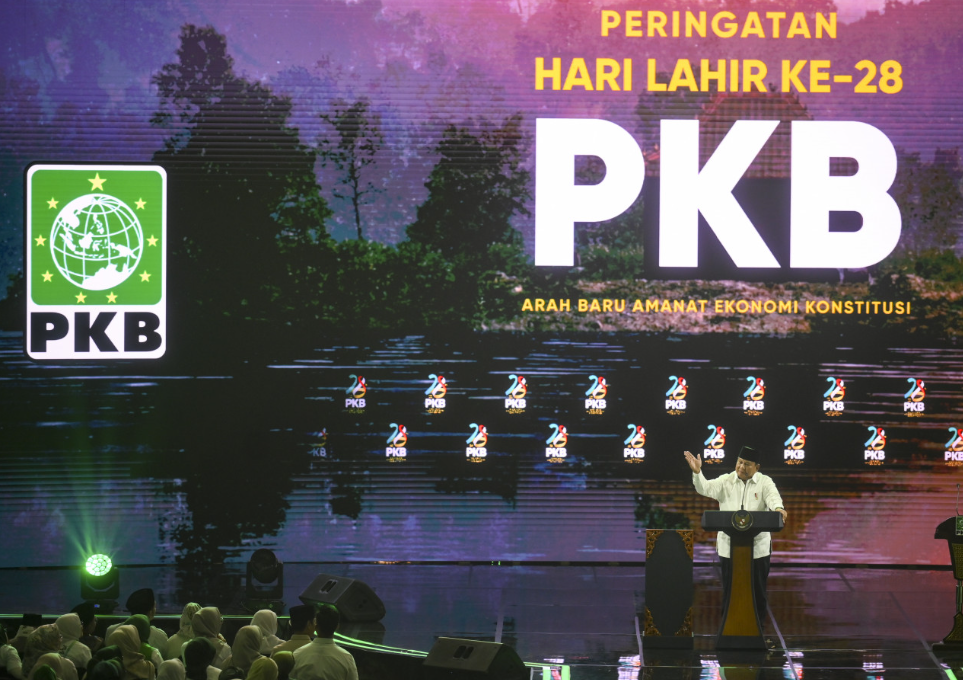
Indonesian press unions comprising six major organisations have lodged a formal complaint against President Prabowo Subianto, demanding he retract and apologise for derogatory comments made during a political party speech. The rebuke centres on Prabowo's use of the term londo ireng to characterise certain journalists, analysts, and civil society figures, which the unions argue constitutes an unacceptable attack on the profession and a threat to democratic principles enshrined in Indonesian law.
The coalition of media organisations—including the Alliance of Independent Journalists (AJI), the Journalists Association of Indigenous Peoples of the Archipelago (AJMAN), Alternative Media Coalition (KOMA), Society of Indonesian Environmental Journalists (SIEJ), Indonesian Photojournalist Association (PFI), and Archipelago Media Development Society (PPMN)—contends that Prabowo's remarks at the National Awakening Party's 28th anniversary gathering on Thursday evening carry far graver implications than a simple linguistic misstep. According to AJI chairwoman Nany Afrida, the characterisation was deliberately designed to delegitimise journalism as a profession by linking it to disloyalty and foreign allegiance, concepts that resonate powerfully in Indonesia's postcolonial consciousness.
The historical weight of the term londo ireng—literally meaning black Dutchman in Javanese—amplifies the offence taken by press representatives. Originally applied to West African mercenaries enlisted by the Dutch colonial military (KNIL) during the aftermath of the devastating Diponegoro War of 1825 to 1830, the phrase evolved into a pejorative label for indigenous Indonesians accused of collaborating with colonial administrators during the independence struggle. By employing this loaded terminology, critics argue, Prabowo implicitly charges journalists with betraying the nation, an accusation they say violates press freedoms guaranteed under Indonesia's Press Law No. 40 of 1999.
During his speech, Prabowo acknowledged that his government welcomed constructive criticism while simultaneously alleging that certain Indonesians remained loyal to foreign powers rather than the nation. He specifically identified journalists, reporters, analysts, and non-governmental organisations as potential carriers of this alleged foreign loyalty, stating that modern-day londo ireng operated within these sectors. The comments appeared designed to justify heightened scrutiny of media organisations and civil society groups perceived as critical of his administration, raising concerns among press advocates about a chilling effect on investigative reporting and government accountability journalism.
The timing and context of Prabowo's remarks warrant examination in light of his own family history, which encompasses both colonial and independence-era complexities. Through his maternal lineage, Prabowo descends from Captain Benjamin Thomas Sigar, a KNIL officer instrumental in the capture of Prince Diponegoro—a figure revered in Indonesian historical memory as a resistance hero against Dutch occupation. On his paternal side, the president lost two uncles during the 1946 Lengkong incident in Tangerang, when they perished in a skirmish against Japanese forces during the transitional period between colonial and independence eras. This personal background may inform Prabowo's sensitivity regarding questions of national loyalty, yet press unions contend it does not justify attacking journalists collectively.
Nany emphasised that the AJI and allied unions view Prabowo's characterisations as part of a broader pattern of hostility toward the media profession. She referenced previous instances in which the president instructed journalists to vacate venues during public addresses, interpreting such actions as indicative of a government fundamentally resistant to press scrutiny rather than committed to democratic governance. The cumulative effect of such incidents, the AJI chair argued, paints a troubling picture of a state moving toward media repression rather than fostering the plural information ecosystem essential to democratic accountability.
Central to the unions' response is an assertion that journalists operate within explicit legal and ethical frameworks designed to protect both public interest and journalistic integrity. Indonesian journalists function under a formal Code of Ethics and operate subject to Press Law provisions that establish clear boundaries for responsible reporting. When government figures attack the profession broadly rather than engaging with specific reporting deemed inaccurate or unfair, the unions maintain, such leaders undermine the very institutional frameworks through which democratic societies manage the tension between transparency and security.
The press organisations have formulated concrete demands extending beyond a simple apology. They call upon Prabowo and his entire administration to cease stigmatising and criminalising the work of journalists, media outlets, policy analysts, and civil society organisations. Additionally, the unions insist that the government must provide active safeguards for journalist security, eliminating any possibility of intimidation, harassment, or legal persecution targeting journalists for their critical coverage. These demands reflect broader concerns about shrinking press freedom across Southeast Asia, where governments increasingly employ legal mechanisms and reputational attacks to constrain media independence.
Nany's statement articulated a conception of journalism that frames critical reporting as a democratic service rather than acts of disloyalty. Journalists engaged in scrutinising government policies do so, she argued, to catalyse governance improvements and ensure public accountability—a function distinct from and incompatible with foreign allegiance. The suggestion that critical journalism serves foreign interests rather than domestic publics, from this perspective, fundamentally misrepresents the profession's orientation and purpose. This framing positions the dispute as one between competing visions of the presidency: one that welcomes accountability mechanisms and another that views scrutiny as inherently suspect.
The incident arrives at a consequential moment for Indonesian media freedom. Prabowo's presidency began in October 2024 following a closely contested election, with international observers noting concerns about media access and political polarisation. Press union responses to his statements will likely establish parameters for government-media relations throughout his administration. Should the unions achieve substantive concessions—whether an apology, explicit commitments to press freedom, or both—the precedent may strengthen institutional protections for journalism. Conversely, if the government dismisses these concerns, Indonesia may experience escalating confrontations between media organisations and state authority, with consequences extending beyond Indonesia to regional standards for press freedom and democratic governance throughout Southeast Asia.

