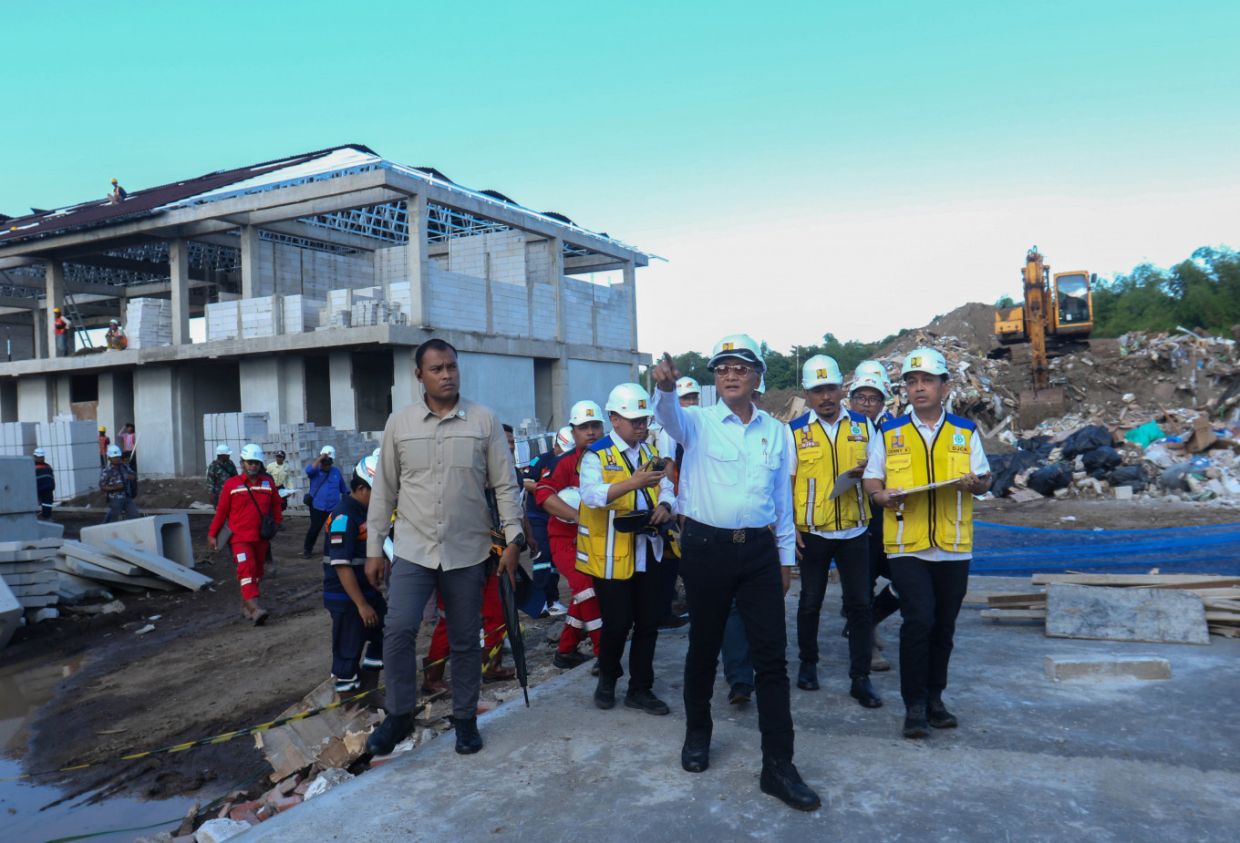
Public Works Minister Dody Hanggodo finds himself at the centre of a mounting controversy involving what critics view as an inappropriate blending of family travel with official state business. The firestorm ignited when an internal ministry document circulating widely across social media revealed that the minister's wife, Irma Hermawati, and daughter, Aurellia Tsabitha Meidirama, had been formally registered as members of an eight-person delegation scheduled to visit New York between July 13 and 19. The letter, authenticated by Ministry Secretary-General Apri Artoto on June 29, has transformed a seemingly routine administrative matter into a test of governance standards and political accountability in Indonesia.
The delegation's stated purpose is unambiguously official: participating in the High-level Meeting on the Midterm Review of the New Urban Agenda, a significant United Nations gathering convened by the General Assembly and orchestrated by UN-Habitat. This meeting, scheduled for July 16 and 17 in Manhattan, represents precisely the type of international forum where Indonesia would legitimately want senior representation to discuss urban development policy. Yet the composition of the delegation has muddied what should have been a straightforward diplomatic engagement, shifting public attention away from the substantive policy work and toward questions about ministerial conduct and proper governance.
The document itself distinguishes the family members' travel documentation in ways that have fuelled speculation and concern. Irma would travel using a diplomatic passport—a credential typically reserved for government officials conducting state business—while their daughter would use a standard passport. This differentiation, rather than clarifying the nature of their participation, has deepened scrutiny and invited questions about whether such arrangements comply with regulations governing the use of diplomatic credentials. The decision to formally list them in official ministry correspondence, rather than treating their potential participation as a private matter entirely separate from the delegation manifest, appears to have been the critical error that transformed a family travel arrangement into a governance concern.
The ministry's initial response attempted to address the most pressing allegation: misuse of public funds. Apri stated unequivocally that no state budget would finance the family members' expenses, insisting that any participation would be entirely self-funded. He further argued that including the names in the formal document served the practical administrative purpose of expediting visa applications through the Foreign Ministry, suggesting the listing was procedural rather than substantive. Additionally, he maintained that issuing a diplomatic passport to the minister's wife fell within established regulatory frameworks, implying that the arrangement operated within proper legal boundaries.
Yet this explanation has proven insufficient to satisfy either public opinion or Indonesia's institutional watchdogs. Maneger Nasution, a member of the Indonesian Ombudsman, articulated concerns that extended well beyond the narrow financial question. He demanded comprehensive transparency regarding not only the rationale for including Dody's family members but also concrete mechanisms ensuring that state facilities, resources, and publicly financed infrastructure would not be deployed—directly or indirectly—to support their participation. This framing reflected a sophisticated understanding that impropriety might manifest through means other than direct budgetary allocation, such as the provision of government vehicles, security details, accommodation services, or logistical support that could indirectly underwrite family travel.
The Ombudsman's intervention represents a broader institutional concern about standards of conduct and the separation between private and public interests. Nasution emphasised that the ministry must affirmatively demonstrate that the family members' participation is legitimate under law, free from conflicts of interest, and devoid of any abuse of official authority for personal gain. This language suggests that mere compliance with narrow budgetary rules does not satisfy the expectations for governmental probity, and that officials must be prepared to justify their decisions against a more expansive standard of public accountability and institutional integrity.
The timing and context of this controversy compound its significance for Indonesia's political environment. The incident emerges against the backdrop of President Prabowo Subianto's publicly announced austerity campaign, an initiative designed to signal fiscal discipline and renewed commitment to efficient governance. By including family members in official delegations—even with personal funding—Hanggodo arguably undermines the broader messaging of a government pledging restraint and responsible resource management. The optics become particularly delicate when measured against promises to prioritise public welfare and demonstrate that state resources serve collective rather than individual interests.
Background details concerning Hanggodo's business connections add another layer of complexity to the unfolding situation. Before his transition into electoral politics with the Democratic Party, the 60-year-old minister maintained business relationships with South Kalimantan entrepreneur Andi "Haji Isam" Syamsuddin Arsyad, whose commercial portfolio encompasses firms involved in President Prabowo's ambitious food estate initiative in Merauke, South Papua. These pre-political business ties, while not necessarily improper, create potential perception concerns about conflicts of interest and raise questions about whether networks and relationships formed through commercial channels might influence ministerial decision-making.
Hanggodo has previously articulated concerns about what he characterises as a "deep state" apparatus operating against him. After an internal audit document from his ministry was leaked, the minister claimed that influential actors sought to implicate him in corruption allegations. This narrative of embattled officials facing institutional opposition from shadowy networks, while common in Indonesian political discourse, can paradoxically amplify public concern when combined with incidents like the current family delegation arrangement. Rather than demonstrating reform and transparency, such incidents risk confirming suspicions that ministerial circles operate according to different standards than those applied to ordinary officials.
For Malaysian observers and the broader Southeast Asian region, the Hanggodo controversy illuminates persistent governance challenges across the archipelago. Indonesia, as the region's largest economy and most populous nation, faces ongoing struggles to establish robust institutional norms distinguishing official from private interests. The incident also demonstrates the important role that civil society institutions like the Ombudsman can play in enforcing standards and demanding accountability, particularly when media scrutiny and public concern combine to create pressure for transparent explanations. Whether the ministry can ultimately satisfy these demands through concrete reforms and enhanced disclosure will significantly influence perceptions of the Prabowo administration's commitment to the austerity and governance standards it has publicly promised.
The resolution of this affair carries implications extending beyond Hanggodo's ministerial standing. It will signal to Indonesia's bureaucracy, diplomatic corps, and wider public sector whether the new administration intends to enforce consistent standards of conduct across its cabinet, or whether individual ministers can maintain private arrangements with official implications without serious consequence. These institutional signals, transmitted through how individual controversies are resolved, shape long-term governance culture far more significantly than policy announcements alone. Southeast Asian governments attempting to restore public confidence in state institutions and civil administration will be watching carefully to observe whether Indonesia's leadership responds with substantive reforms or allows the matter to fade from public view.

