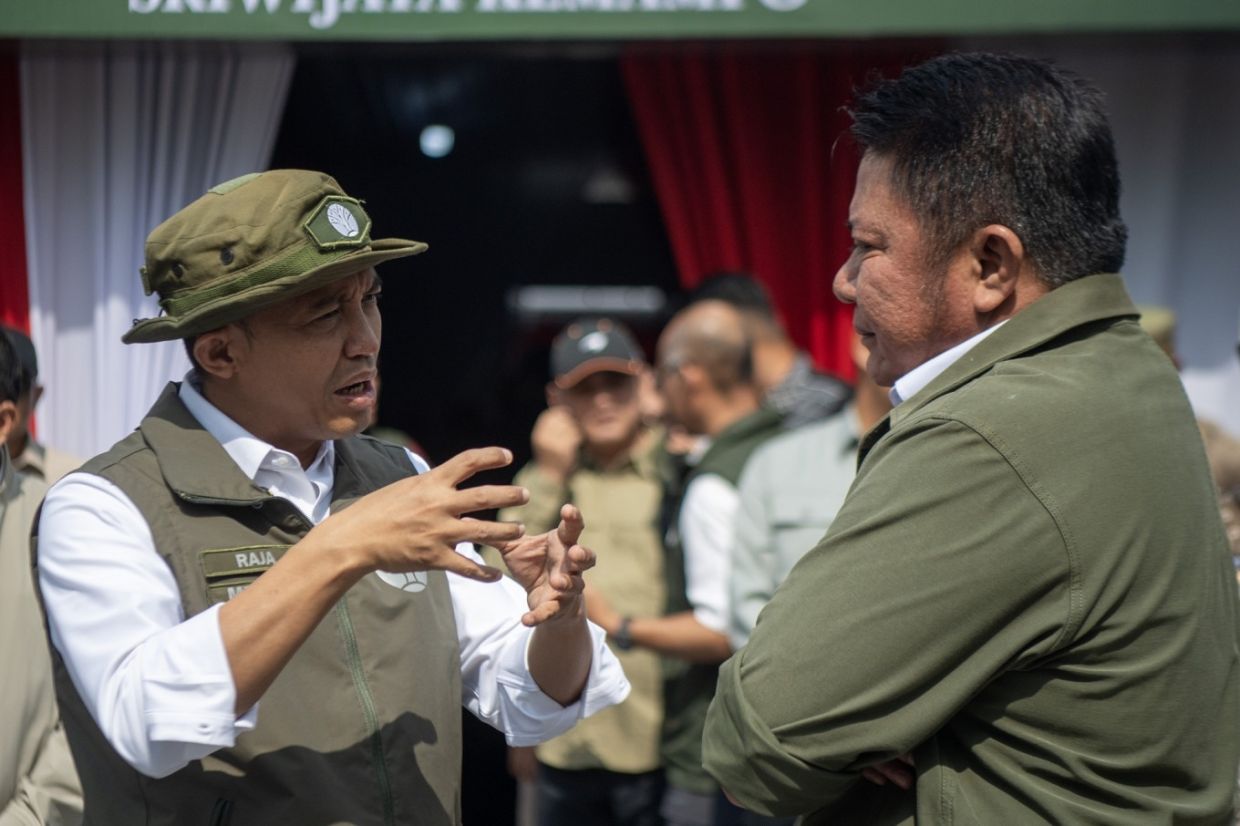
Indonesia's Corruption Eradication Commission (KPK) has reopened investigations into Forestry Minister Raja Juli Antoni, suspecting the senior official may not have fully returned kickbacks allegedly offered by Suhardiman Amby, the regent of Kuantan Singingi in Riau province. The development marks an escalation in a graft case that has already ensnared a high-ranking regional administrator and now threatens to implicate a cabinet-level minister heading a strategically important portfolio overseeing the nation's vast forest resources.
According to KPK spokesperson Budi Prasetyo, investigators are examining discrepancies between the amount of illicit money that Raja Juli reported receiving and the total value of funds allegedly transferred during their June 2 meeting between the Forestry Ministry and the Kuantan Singingi administration. The alleged transfer involved an envelope containing Singapore dollars, initially valued at S$14,000 (approximately US$10,919), which forms the core of the investigation. Separately, other ministry officials are accused of receiving kickbacks totalling S$12,500 from various Kuantan Singingi officials, suggesting a broader pattern of alleged graft centred on ministry business.
The timeline of events adds complexity to the investigation. Raja Juli reported the bribery attempt to the KPK on July 3, claiming he had rejected the envelope and returned it on June 12 at the Kuantan Singingi Police headquarters, just ten days after the initial meeting. However, under Indonesian law, improper gifts received in connection with a public office position must be reported directly to the KPK within thirty days of acceptance, not to police authorities. This procedural discrepancy may itself form part of the inquiry, as the manner of reporting can have legal implications for whether charges are ultimately filed.
The underlying purpose of these alleged payments appears connected to forest policy decisions. Investigators are examining whether the kickbacks were linked to requests from the Kuantan Singingi administration seeking to reclassify more than 1,800 hectares of limited production forest (HPT) into categories permitting different land uses. For Southeast Asian readers, such forest conversion decisions carry significant weight given the region's environmental sensitivity and the political economy surrounding natural resource management. The Forestry Ministry holds substantial discretionary authority over state forest reclassification, making it an attractive target for those seeking to alter land-use designations for commercial or developmental purposes.
An emerging pattern of contact between the two officials strengthens the investigation's scope. Budi revealed that beyond the June 2 meeting, Raja Juli and Suhardiman had met at least three additional times across April, May, and June, though investigators have not yet disclosed whether all these meetings shared a common purpose. This frequency of engagement between a sitting regent and a cabinet minister suggests either significant administrative matters or a relationship conducive to the alleged financial arrangements. The repeated contact provides prosecutors with potential evidentiary material regarding intent and understanding between the parties.
Suhardiman himself faces separate corruption charges after his arrest in late June. The Gerindra Party politician, who belongs to the same party as President Prabowo Subianto, stands accused of receiving kickbacks from the regency's secretary Zulkarnain in exchange for appointment to a senior administrative position. The KPK subsequently expanded its investigation from this original case into the parallel allegations involving the Forestry Ministry, effectively linking multiple layers of alleged corruption within Kuantan Singingi's administration and its dealings with the national government.
Raja Juli's position as both Forestry Minister and secretary-general of the Indonesian Solidarity Party (PSI) amplifies the political dimensions of this investigation. When the case erupted into public view, members of the House of Representatives Commission IV, which oversees forestry policy, demanded clarification from the minister. However, Raja Juli's absence from a July 14 meeting with Commission IV, attributed to an umrah pilgrimage, drew criticism and further public scrutiny. The absence itself became a political issue, with opposition figures questioning whether the minister was avoiding legislative oversight during a sensitive period.
The legal stakes are substantial. Officials found guilty of accepting improper gifts in violation of Indonesia's anti-corruption statutes face maximum sentences of twenty years imprisonment and fines of Rp 1 billion (approximately US$55,867). For a cabinet minister, such penalties would represent career-ending consequences and would set a significant precedent regarding high-level official accountability. The severity of potential punishment underscores the seriousness with which Indonesian authorities are treating the case and the KPK's determination to pursue investigations regardless of suspects' positions within government.
The Forestry Ministry's formal response has emphasized cooperation with the KPK while defending its decision-making record. In a statement released to the press, ministry officials affirmed their commitment to supporting the antigraft body's investigation and pledged to provide any requested documentation or information. The ministry also clarified that no forest reclassification approvals had been granted to Kuantan Singingi to date, with recent proposals either rejected or remaining under verification. This defensive posture seeks to contain potential damage to the ministry's institutional reputation while suggesting that any alleged bribery had not succeeded in influencing actual policy outcomes.
The broader implications of this case extend beyond individual culpability. Forest policy and natural resource management remain contentious issues across Southeast Asia, with environmental groups and regional observers closely monitoring how Indonesia's government addresses corruption allegations in the forestry sector. The fact that a serving cabinet minister faces investigation signals institutional willingness to pursue high-level cases, though critics may question whether sufficient pressure exists to ensure thorough and impartial outcomes. The case also reflects ongoing tensions between developmental pressures favouring forest conversion and environmental protection mandates, with corruption allegations potentially masking deeper policy disagreements about land use.
For Malaysia and other regional nations, the Indonesian case offers instructive lessons about the vulnerabilities in forest governance when regulatory authority concentrates within single ministries and when regional administrators seek to circumvent national environmental standards. The alleged use of kickbacks to facilitate forest reclassification demonstrates how corruption can undermine environmental protection mechanisms and distort rational resource allocation. As ASEAN nations increasingly coordinate on transboundary environmental concerns, the integrity of each country's forestry administration bears relevance to regional stability and sustainability efforts.

