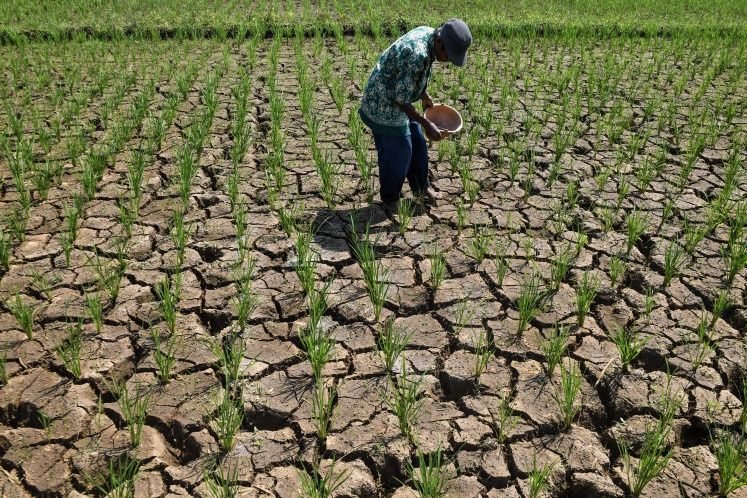
The spectre of severe water scarcity looms across Indonesia as meteorological conditions linked to El Niño intensify what authorities are characterising as an potentially catastrophic dry season. Fresh additions to the growing roster of water-stressed regions—Gunungkidul in Yogyakarta, Semarang in Central Java, and Jember in East Java—underscore how rapidly the crisis is expanding beyond initially affected areas. The National Disaster Mitigation Agency has now registered approximately 7,800 households struggling to obtain adequate clean water supplies, a figure that continues climbing as the phenomenon progresses deeper into the year.
Regional administrations have begun mobilising emergency response protocols to address immediate humanitarian needs. Tanker trucks now traverse drought-hit areas delivering water to communities that have endured weeks without meaningful rainfall. However, the distribution operations represent merely a stopgap measure rather than a comprehensive solution to the underlying crisis. Central Java's Cilacap, Klaten, and Jepara districts, alongside Bantul in Yogyakarta and multiple West Javanese regencies including Karawang, Tasikmalaya, and Sukabumi, have all activated emergency water delivery systems. The island of Seram in Maluku, geographically distant from Java's urban centres, similarly faces acute water access challenges that demand continued trucked deliveries.
Several jurisdictions have declared 90-day drought alert statuses to facilitate accelerated emergency interventions and resource mobilisation. Gunungkidul initiated such measures in June, whilst West Java followed suit this month. West Lombok in Nusa Tenggara Barat escalated its response further, declaring an outright drought emergency on June 15 after roughly 3,600 households experienced water supply disruptions. Banten remained in an assessment phase as of early July, deliberating whether to implement a province-wide alert mechanism that would streamline water distribution protocols. These administrative escalations reflect the institutional recognition that conditions warrant moving beyond routine drought management toward crisis-level resource allocation.
The meteorological underpinnings of this crisis stem from El Niño, the climate oscillation characterised by elevated Pacific Ocean sea surface temperatures that fundamentally reshape precipitation patterns across the Indo-Pacific region. Indonesia's Meteorology, Climatology and Geophysics Agency has issued stark warnings that the current dry season could prove exceptionally severe, potentially triggering cascading failures in agricultural productivity and extended periods of below-normal moisture conditions. By mid-June, more than one-third of Indonesia's climate zones had officially transitioned into the dry season, whilst nearly half the entire nation was already experiencing rainfall deficits relative to historical averages. The agency projects that by the peak period spanning July through September, precipitation below normal levels will affect more than 80 percent of the archipelago—an extraordinarily broad geographic footprint.
The agricultural implications of prolonged drought represent perhaps the gravest threat to national interests, particularly given Indonesia's vulnerability to food supply disruptions. Agriculture Minister Amran Sulaiman has acknowledged the ministry's proactive stance toward anticipated deterioration, announcing an acceleration of drought mitigation strategies centred on irrigation pump deployment to preserve water availability and sustain agricultural output. The government maintains that national rice reserves have reached historically elevated levels and remain adequate to satisfy demand through the following calendar year, though such reassurances require scrutiny given the interconnections between domestic production shortfalls and price stability. The House of Representatives' Commission IV has pressed for intensified governmental assistance in vulnerable agricultural communities, demanding expanded provision of improved seed varieties, fertiliser allocations, modern farming implements, and livestock feed stocks.
Climate agency officials have articulated a comprehensive mitigation framework that transcends immediate water trucking operations. Ardhasena Sopaheluwakan, the Meteorology, Climatology and Geophysics Agency's deputy for climatology, has emphasised the necessity for rapid implementation of adapted planting schedules, cultivation of drought-tolerant and early-maturing crop varieties, and diversification of food crop portfolios across vulnerable regions. Such measures acknowledge the reality that even when emergency water supplies arrive, agricultural systems designed for higher moisture availability remain inherently fragile under sustained dry conditions. The prescriptive nature of these recommendations reflects expert consensus that technological and logistical adaptations represent the most feasible pathway for minimising harvest losses during the projected extreme dry season peak.
Beyond the immediate emergency response framework, policy analysts increasingly highlight the necessity for substantial, long-term infrastructure investments particularly targeting drought-susceptible regions with chronically constrained clean water access. Bagas Yusuf Kausan, representing the water policy research institution Yayasan Amerta Air Indonesia, has advocated for prioritised development of dependable piped water systems operated through regional water utilities, with government subsidisation ensuring affordability for vulnerable populations. This perspective underscores that emergency tanker distribution, whilst providing crucial short-term relief, perpetuates the structural inadequacy that renders particular Indonesian communities perpetually vulnerable to climatic fluctuations. The absence of reliable municipal water infrastructure essentially transforms recurring meteorological events into recurring humanitarian emergencies.
Underlying the episodic nature of Indonesia's drought crises lies a constellation of human-generated environmental stressors that amplify climatic vulnerability. Land conversion processes, particularly the transformation of water catchment zones for commercial purposes, have systematically degraded the hydrological foundations upon which water security depends. Simultaneously, intensive groundwater extraction in many regions has depleted subsurface reserves that traditionally buffered against seasonal precipitation variability. These anthropogenic pressures operate independently from El Niño effects, meaning that even as global climate oscillations drive temporary precipitation deficits, human activities have already substantially compromised Indonesia's inherent water retention and recharge capacities. The cumulative effect renders affected communities susceptible to drought impacts that are simultaneously more frequent and more severe than pre-degradation baselines would suggest.
Expert commentary increasingly frames El Niño episodes as potential catalysts for enhanced environmental governance rather than merely climate disasters to be endured. Researchers have proposed that governments should leverage the political urgency accompanying drought crises to implement strengthened restrictions on land conversion activities, particularly within water-critical catchment areas. Such policy recalibration would simultaneously address short-term crisis management whilst initiating longer-term environmental restoration. The logic operates straightforwardly: regions experiencing acute drought impacts demonstrate tangible vulnerability to water supply disruptions, thereby creating political constituencies for conservation measures that might otherwise face resistance from commercial interests. Translating this theoretical possibility into actual policy implementation requires governmental commitment to environmental protection that has historically proven elusive in Indonesia's development context.
The current drought episode carries particular significance for Malaysia and other Southeast Asian nations given regional hydrological interdependencies and shared climate exposure. Transboundary river systems that service multiple nations, including Malaysia's engagement with Indonesian water flows through Sabah and Sarawak, create mutual vulnerabilities during periods of precipitation deficit. Indonesia's agricultural production difficulties generate potential food price pressures that propagate throughout regional supply chains, affecting consumer prices in neighbouring economies. Additionally, drought-induced forest and land fire risks, which Indonesian authorities have specifically emphasised, generate transboundary air quality impacts that Malaysian populations directly experience during haze episodes. The Indonesian government's drought response effectiveness thus carries consequences extending well beyond national borders.
Moving forward, the convergence of El Niño-driven climatic stress with pre-existing infrastructure deficiencies and human-induced environmental degradation suggests that Indonesia faces a multidimensional water security challenge requiring coordinated responses across temporal scales. Immediate humanitarian imperatives demand continuation of emergency water distribution to affected communities whilst agricultural adaptation measures take effect. Medium-term requirements necessitate substantial investments in piped water infrastructure, particularly in chronically vulnerable regions currently reliant upon episodic emergency interventions. Longer-term solutions demand genuine commitment to restricting land conversion in water-critical zones, restoring degraded catchment areas, and managing groundwater extraction rates compatible with natural recharge processes. The Indonesian government's capacity to navigate these multiple requirements simultaneously will substantially determine both national resilience and regional stability across Southeast Asia.

