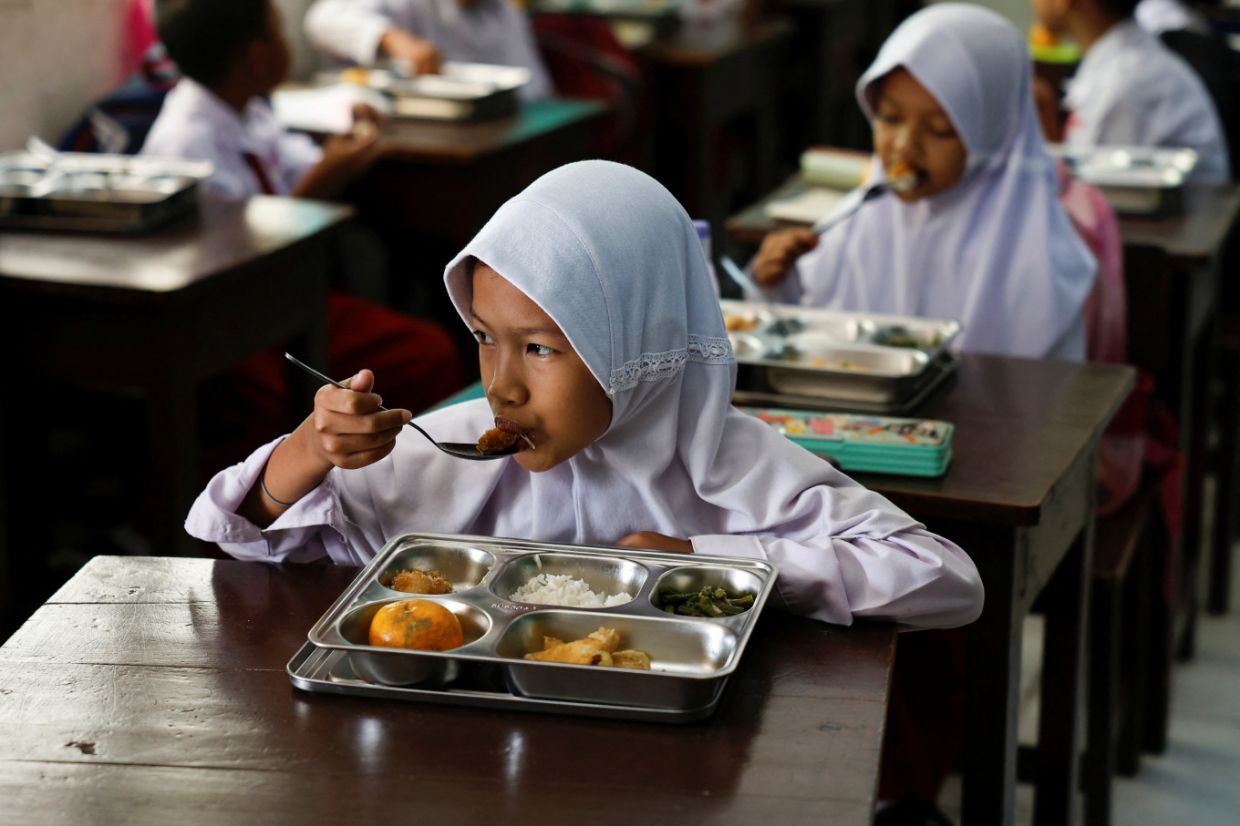
Indonesia's push to revise its foundational education system law has sparked alarm among teacher unions and civil society organisations, who fear the legislative changes could resurrect funding for the nation's multitrillion-rupiah free nutritious meal program through the education budget. The concern centres on language in the draft bill that observers worry could be interpreted broadly enough to classify meals as a legitimate education expense, thereby undoing a significant Constitutional Court ruling issued just months earlier.
The dispute traces back to a landmark July 30 court decision that rejected President Prabowo Subianto's flagship free meals initiative as ineligible for financing from education allocations. At stake are vast sums: this year alone, approximately Rp 223 trillion of the Rp 769 trillion education budget—nearly 29 percent of mandatory education spending—has been directed toward the meal program. Under Indonesian constitutional provisions, the state must dedicate a minimum of 20 percent of annual budget allocations to education, money intended specifically for schooling purposes.
The Indonesian Teachers Association, known as P2G, has identified the core problem in the draft bill dated July 8. A provision states that when managing education, "the government and society provide health services, including those concerning mental health, at educational institutions in a manner that is integrated with the national health policies as well as the national education goals." P2G national coordinator Satriwan Salim contends this language creates dangerous ambiguity. He worries authorities could recharacterise the free meals scheme as a health service mandate embedded within education policy, thereby legitimising its funding from education budgets under a different legal guise.
The vagueness inherent in the proposed article represents more than a technical drafting concern. Satriwan warned that the provision "could be translated into applying health policies at educational institutions," which would effectively enable the free meals program to be reconstituted "as a manifestation of national health policy" and eventually "become a core component of education." This interpretation would essentially nullify the Constitutional Court's finding by accomplishing through legislative recharacterisation what the court explicitly prohibited through direct funding mechanisms.
Constitutional law expert Feri Amsari reinforces the gravity of this concern by clarifying that the court's norms apply universally across all legislation, not merely to budget laws. He stated unequivocally that "the program cannot be funded from the education budget again under any name or in any other form." This principle means the court's ruling establishes a constitutional barrier that no subsequent legislative manoeuvre can legitimately circumvent, regardless of how lawmakers restructure the provision or rename the expense category.
The MBG Watch civil society coalition, which supported the original petitioners challenging the free meals funding, has similarly warned against what it views as likely legal circumvention. Agus Sarwono of Transparency International Indonesia, a coalition member, cautioned that "any attempt to maintain education funding for the free meals program through changes in budget nomenclature, budget engineering or regulatory adjustments would amount to a denial of the ruling." This concern reflects deeper anxieties about institutional compliance with judicial decisions in Indonesia's democratic system.
Historical precedent fuels these worries. The government has previously delayed implementing other Constitutional Court rulings despite their theoretically binding nature. Most recently, a December 2025 ruling prohibiting active-duty police officers from holding concurrent government positions has not been fully executed. This pattern of implementation delays raises questions about whether authorities might similarly drag their feet on education budget compliance, or worse, attempt legislative workarounds during the interim period.
House Commission X chairman Hetifah Sjaifudian, a Golkar Party lawmaker overseeing the education system amendment deliberations, acknowledged that concerns have reached the commission's attention. She stated the bill "was not yet ready for publication" and pledged that provisions would be "drafted carefully so it does not leave room for multiple interpretations or conflict with the spirit of the Constitution." Sjaifudian committed the commission to ensuring education budgets serve "the education sector's primary needs, particularly improving learning quality, teacher welfare and education service, and not to fund programs outside the main function of education."
The stakes of this legislative process extend well beyond accounting mechanics. Teacher welfare ranks among the key issues under discussion, with lawmakers considering explicit regulations governing adequate teacher salaries and allowances. Strengthening protections for students against violence also features prominently in the revision agenda. If education budgets continue subsidising health or nutrition programs, resources for these core educational improvements could remain constrained, perpetuating long-standing challenges in Indonesia's school system.
The timing of this legislative push creates additional complications. The revision process is unfolding in real time, with the Constitutional Court's education budget ruling still fresh and political momentum potentially favouring swift passage. Yet Hetifah indicated the commission welcomes public input and that the bill remains subject to modification throughout deliberations. This openness suggests that civil society pressure and expert guidance could still shape the final text, though only if advocacy groups remain vigilant and mobilised.
For Malaysia and the broader Southeast Asian region, Indonesia's experience offers instructive lessons about institutional accountability and the tension between executive policy preferences and judicial constraints on resource allocation. As other nations in the region contemplate ambitious social programmes financed through existing budget categories, the Indonesian case demonstrates the importance of clear legal frameworks and the risks posed by ambiguous legislative language that enables future reinterpretation.
The coming weeks will test whether Indonesia's House of Representatives prioritises genuine compliance with constitutional limits on education spending or pursues legislative solutions that technically conform while substantively circumventing the court's underlying reasoning. The outcome carries significance not merely for Indonesia's education system but for public confidence in the rule of law and institutional checks on executive power across Southeast Asia.

