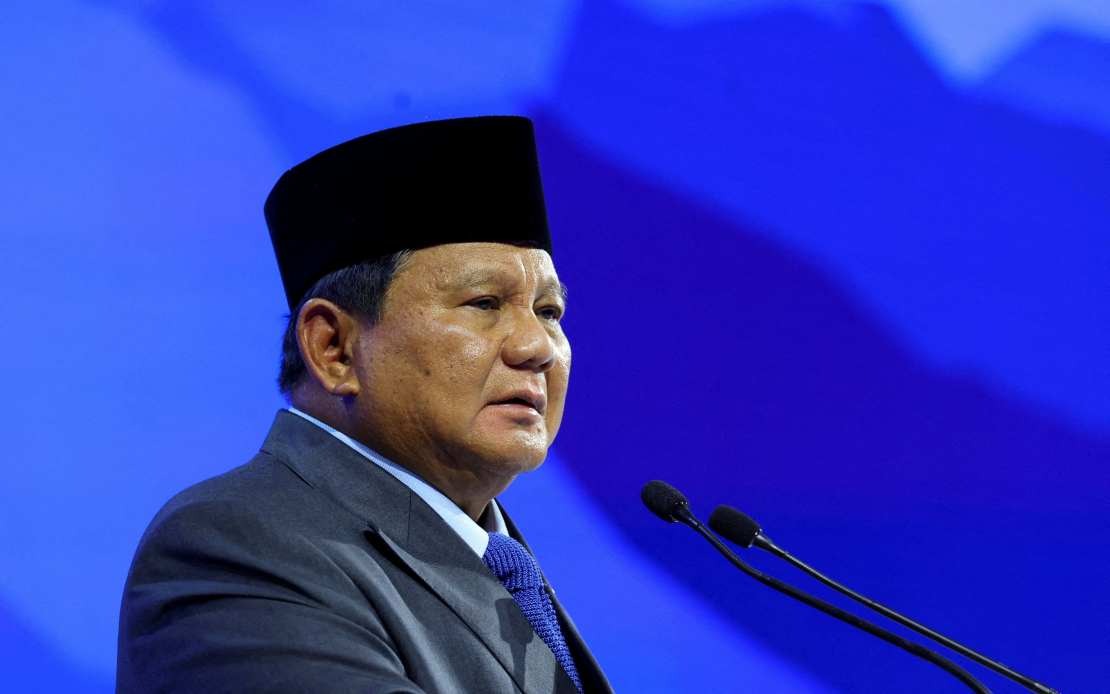
President Prabowo Subianto has indicated that Indonesia's ongoing forest and land fire crisis is gradually shifting from emergency mode to recovery, with several regions showing meaningful progress in containment efforts. Speaking at the launch of Indonesia's 100-gigawatt solar power initiative in Jembarna, Bali on Tuesday, the president expressed cautious optimism that the broader situation could be entirely brought under control within the next fortnight, though he acknowledged the scale of the challenge remains substantial.
The Indonesian government has committed formidable resources to combat the blazes, demonstrating the severity with which the leadership is treating the environmental crisis. The firefighting operation encompasses dozens of helicopters and more than a dozen fixed-wing aircraft for aerial suppression, hundreds of water wells and pumping systems positioned across affected territories, and several thousand personnel including military units, police forces, and professional firefighters deployed across multiple provinces. This mobilisation represents one of the country's largest emergency responses, reflecting the threat posed by uncontrolled fires spreading across critical ecosystems.
Prabowo's recent field visits to West and Central Kalimantan over the weekend, followed by an inspection of Sumatran operations on Monday, underscore the president's hands-on engagement with the crisis. During these visits, he observed coordination between regional administrations, national ministries, military and police forces, and the National Disaster Management Agency working in concert, a level of interagency cooperation that typically signals institutional readiness to manage the emergency effectively. Such presidential involvement also sends a strategic message about the government's commitment to addressing environmental disasters, particularly significant given regional concerns about Indonesia's forest management practices.
The timing of these fires coincides with an exceptionally strong El Niño weather pattern currently affecting Southeast Asia, forecast to rank among the most intense on record. This meteorological phenomenon typically correlates with reduced rainfall across Indonesia's equatorial regions, creating ideal conditions for fire spread once blazes ignite. Prabowo specifically acknowledged that this climatic pattern requires sustained vigilance and suggests the government anticipates continued fire risk through the remainder of the dry season, implying that the two-week timeline represents optimistic rather than guaranteed resolution.
Indonesia's fire challenges arrive amid concurrent seismic activity that has tested the government's disaster response capacity across multiple fronts. A magnitude 7.7 earthquake struck the Flores region in East Nusa Tenggara on August 15, resulting in 103 confirmed deaths and injuring 1,666 people. As of Tuesday afternoon, the National Disaster Management Agency reported that 185,131 individuals remained displaced from their homes, with 7,029 recorded aftershocks detected since the primary tremor. This compounding disaster scenario demonstrates the extreme vulnerability of certain Indonesian populations to environmental and geological threats.
The government's handling of the earthquake response in East Nusa Tenggara received positive assessment from Prabowo, who characterised the mobilisation as exceptionally rapid and comprehensive relative to the event's magnitude. He drew comparison with the government's disaster management performance in Aceh, suggesting that institutional lessons from previous catastrophes are being applied to current emergencies. This comparative framing appears designed to project competence in crisis management across different disaster typologies, an important consideration for public confidence in governmental institutions during emergencies.
For Malaysian and broader Southeast Asian observers, Indonesia's current fire crisis holds particular regional significance. Transboundary haze from Indonesian forest fires has historically affected air quality across Malaysia, Singapore, and Brunei, causing documented health impacts and economic disruptions. The success or failure of Indonesia's containment efforts therefore influences air quality and environmental conditions across the wider region. Malaysia's experience with recurring haze episodes during Indonesian fire seasons makes close monitoring of these containment efforts relevant to Southeast Asian environmental governance.
The deployment of aerial firefighting resources, particularly the commitment of dozens of helicopters and specialized aircraft, represents a substantial financial and logistical undertaking that reflects both the seriousness of Indonesia's forest fire threat and the expanding capacity of regional disaster response infrastructure. Such equipment, often expensive to operate and maintain, indicates that the government views forest fire management as sufficiently critical to justify major capital investments in emergency response capabilities.
The president's explicit acknowledgment that strong El Niño conditions require heightened alertness suggests the government is preparing contingency plans should the current fire situation worsen or new blazes emerge. The meteorological forecast of exceptionally strong El Niño conditions through coming months implies that even if current fires are contained within two weeks, the underlying conditions favouring new fire initiation will persist, necessitating sustained vigilance and resource availability.
Looking forward, the effectiveness of Indonesia's current firefighting operation will likely influence policy discussions regarding forest management, land-use planning, and pre-emptive fire prevention infrastructure. Successful containment could reinforce existing approaches, while difficulty controlling blazes might prompt calls for enhanced preventive measures. The government's visible commitment to resource deployment and presidential engagement signals that forest fire management remains a high-priority policy issue within Prabowo's administration, distinguishing it from periods when such disasters received minimal executive attention.

