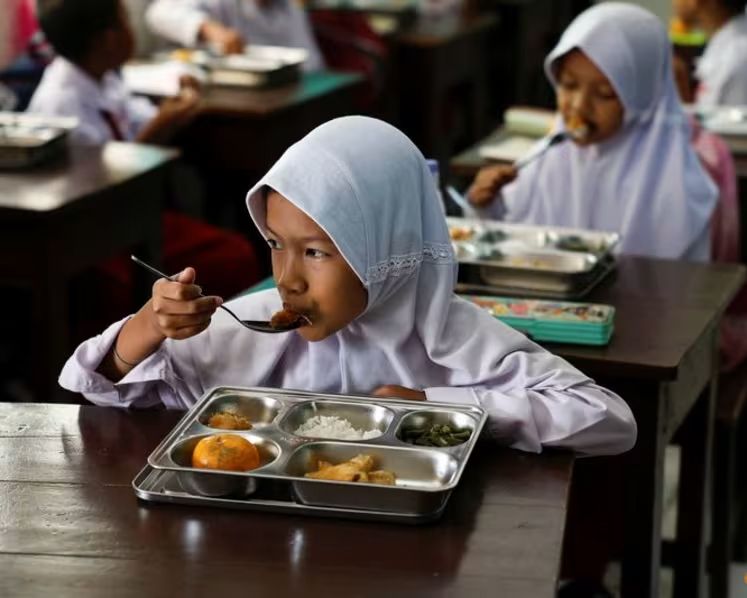
Indonesia's ambitious free meals programme, touted as President Prabowo Subianto's cornerstone policy, has suffered another significant blow with the resignation of the National Nutrition Agency's chief, Nanik Sudaryati Deyang, who cited health reasons for her departure announced Wednesday. Her stepping down represents the second major leadership transition at the embattled government body in little more than a month, underscoring deepening institutional turmoil within an initiative that was meant to demonstrate the administration's commitment to addressing childhood malnutrition across the archipelago.
Nanik, who assumed control of the National Nutrition Agency just this June, revealed through a Facebook statement that she was relinquishing her post to seek overseas medical treatment for a cardiac condition, with the president reportedly offering his blessing for her departure. In subsequent comments, she disclosed that her physician had warned of significantly blocked arteries, attributing the deterioration to extreme occupational stress. Her candid acknowledgement of health consequences from the role reflects the mounting pressures surrounding a programme that, despite its noble objectives, has become increasingly controversial and administratively chaotic.
The departure of the agency's leadership comes amid a cascade of operational and financial setbacks that have undermined confidence in the programme's execution. Beyond Nanik's health-related exit, her immediate predecessor was dismissed by Prabowo last month and subsequently arrested on corruption charges directly linked to management of the multibillion-dollar initiative. That earlier shake-up followed a search of the agency's premises, suggesting that personnel within the nutrition agency itself may have been implicated in financial irregularities or misappropriation connected to programme implementation.
Financial pressures have intensified dramatically, with budget allocations facing successive reductions that have fundamentally altered the scope of what the programme can achieve. The 2026 budget was slashed for a second occasion, declining from 268 trillion rupiah to 229 trillion rupiah, equivalent to approximately $12.79 billion USD. This latest reduction means the current budget sits more than 100 trillion rupiah below the original allocation of 335 trillion rupiah, representing a cumulative cut of nearly 30 percent from initial projections and raising questions about whether remaining funds can sustain adequate coverage.
For Malaysian observers and policymakers studying regional social welfare initiatives, Indonesia's budgetary challenges offer cautionary lessons about the fiscal pressures that can emerge when flagship programmes prove more expensive to implement than anticipated. The successive trimming of allocations indicates that either original cost estimates were substantially underestimated, or that competing budgetary demands elsewhere in the Indonesian government have forced reallocation of resources away from the nutrition initiative. Further budget reviews remain on the horizon, with officials acknowledging that additional cuts are possible, meaning the programme's final scope remains uncertain.
Operational difficulties have compounded administrative instability, with the free meals scheme encountering recurring logistical hurdles, food quality inconsistencies, and several troubling instances of mass food poisoning since its January 2025 launch. These challenges highlight the complexity of rolling out a nationwide feeding programme across Indonesia's geographically dispersed archipelago, where supply chain coordination, cold storage infrastructure, and food safety oversight present formidable obstacles. The incidents of contamination and illness have attracted public scrutiny and may be contributing to political pressure for budget reductions, as policymakers attempt to contain both fiscal and reputational damage.
Nanik's successor has not yet been formally identified, though she indicated that her replacement would emerge from among junior staff members already working within the agency. The lack of clarity regarding leadership succession represents another destabilizing factor for an organisation already reeling from multiple crises. Prabowo is reportedly considering establishing a supervisory board to oversee the agency's operations, suggesting that the president may be contemplating structural reforms to strengthen governance and prevent future malfeasance.
The programme itself was designed to provide free meals to 83 million Indonesians, encompassing children and pregnant women as priority beneficiaries. Before the latest budgetary review, the agency reported that it had already extended meal provision to 62.5 million people, indicating substantial operational reach despite the documented difficulties. However, falling short of the original target by approximately 21 million intended recipients raises questions about whether the substantially reduced budget can even maintain current coverage levels, let alone expand to reach remaining populations.
Prabowo has characterised the nutrition initiative as fundamentally apolitical, framing it as a targeted health intervention rather than a politically motivated campaign pledge, despite its prominence as his foremost electoral commitment. This framing suggests the president recognises that the programme has become a focal point for broader concerns about fiscal management and governmental capacity. For regional observers in Malaysia and Singapore, where social safety nets are often privatised or means-tested rather than universal, Indonesia's approach of providing free meals to more than 60 million citizens represents a notably expansive welfare commitment, though one that is proving administratively and fiscally challenging to maintain.
The programme's troubles occur within a wider context of concerns about Indonesia's macroeconomic health and government spending priorities. The visibility of corruption allegations, operational failures, and repeated budget cuts risks eroding public confidence not merely in the nutrition initiative itself, but in the broader competence of the Prabowo administration to execute its policy agenda. For investors and regional analysts monitoring Indonesian economic governance, the repeated difficulties surrounding what should theoretically be a straightforward logistics-and-procurement operation may signal broader implementation challenges across the government's wider policy portfolio.
The unfolding leadership crisis and financial retrenchment of the free meals programme reflects a common pattern in developing-country administration, where ambitious social policy initiatives encounter difficult trade-offs between universalist ambitions and fiscal constraints. Indonesia's experience demonstrates that even well-intentioned programmes designed to address genuine public health needs can become destabilised by institutional corruption, implementation bottlenecks, and competing budgetary pressures. As regional policymakers contemplate their own social spending priorities, the Indonesian experience offers sobering evidence that programme design and funding stability matter as much as policy intention.

