Indonesia's leading anti-corruption advocacy group has escalated its response to a widening graft scandal engulfing President Prabowo Subianto's flagship free meals initiative, calling not merely for reforms but for an outright suspension of the entire programme and dissolution of the agency running it. Indonesia Corruption Watch, a civil society organisation focused on promoting transparency and accountability across political, legal and economic sectors, has taken this hardline stance as authorities investigate mounting allegations of corruption within what was designed as a signature policy to tackle malnutrition and poverty across the archipelago.
The National Nutrition Agency, known locally as BGN, finds itself at the centre of the scandal following the detention of its former head Dadan Hindayana on corruption charges. Wana Alamsyah, who heads the law and investigation division at Indonesia Corruption Watch, argues that the agency should be disbanded entirely rather than reformed, given the scale of governance failures already evident in its brief operational history. The revelations represent a serious embarrassment for the new administration, which staked considerable political capital on delivering the sweeping initiative to a population struggling with malnutrition in many regions.
Beyond Dadan's case, authorities have apprehended four additional individuals connected to the programme, including two former deputies within BGN's leadership structure. What distinguishes Indonesia Corruption Watch's position is its insistence that the investigation must extend far beyond the executive tier. Wana contends that law enforcement agencies need to examine the full ecosystem of actors involved in delivering meals across the nation, specifically including vendors supplying materials and members of procurement committees tasked with selecting suppliers and monitoring expenditure. The breadth of complicity potentially extends to hundreds of organisations and thousands of individuals across the supply chain.
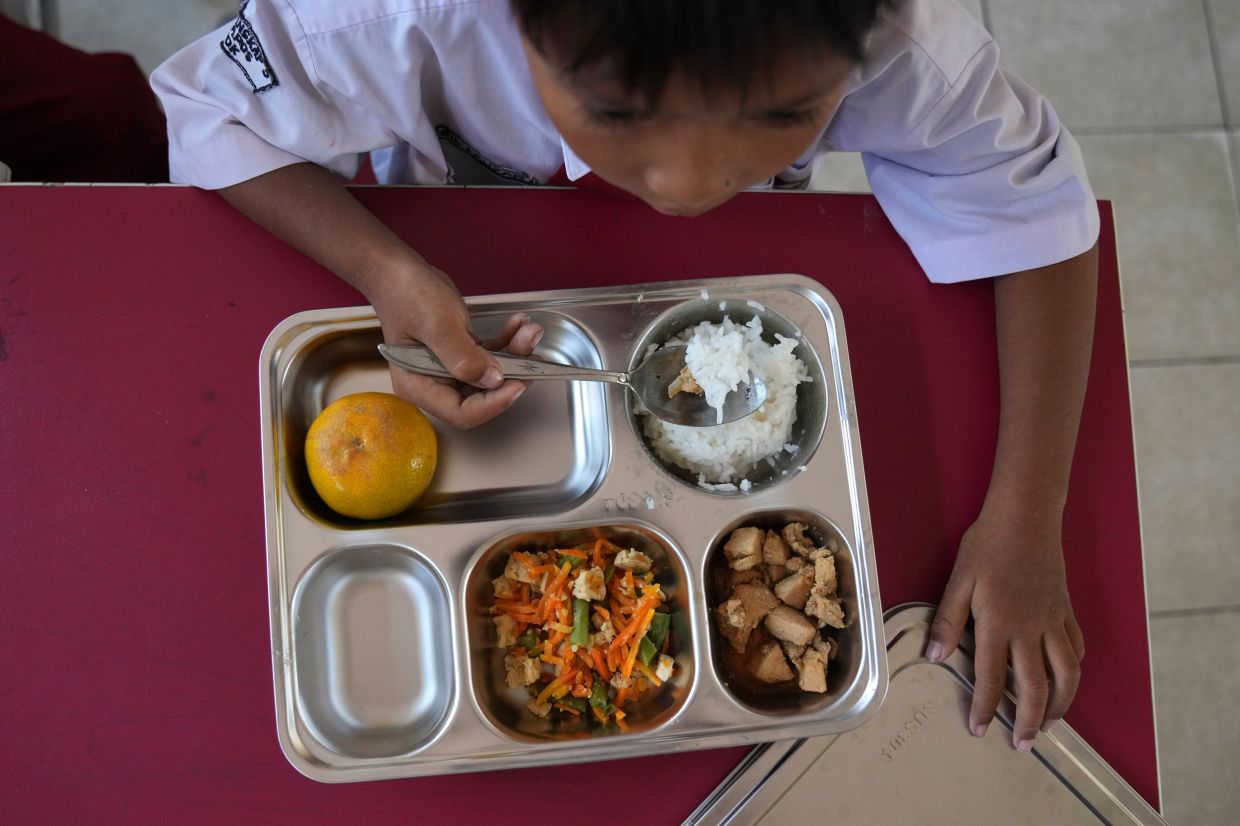
The US$15 billion nationwide programme, representing a substantial commitment of public resources, currently delivers food to more than 60 million Indonesians, making it a logistically complex undertaking. The speed of implementation appears to have created vulnerabilities that corrupt actors have exploited. Wana emphasises that the initiative was not only poorly conceived in its basic planning phases but was deployed with unseemly haste across the entire country without adequate safeguards or pilot testing in specific regions. This compressed timeline meant that necessary oversight mechanisms were either absent or non-functional when the scheme launched at scale.
The newly appointed head of BGN, Nanik S. Deyang, has attempted to salvage the programme by fundamentally recalibrating its ambitions and methodology. Rather than persisting with the original target of reaching 82.9 million recipients at a cost approaching 268 trillion rupiah annually, Deyang has signalled that the agency will prioritise quality over quantity, concentrating resources on remote and underserved areas where need is most acute. This represents a tacit acknowledgment that the original design was flawed, though officials frame it as an efficiency measure rather than a retreat. The revised approach intends to leverage existing school infrastructure like canteens rather than constructing new kitchen facilities, and has implemented a moratorium on establishing additional kitchens pending tighter vetting procedures.
President Prabowo has publicly declared his intolerance for corruption within the scheme, stating in an address to programme officials that he will not permit theft of public funds regardless of rank or position. Yet such pronouncements ring hollow when the fundamental architecture enabling corruption has not been dismantled. Indonesia Corruption Watch's analysis reveals that the kitchen network operating under the programme has become vulnerable to patronage dynamics and political capture. A comprehensive report examining 102 foundations managing kitchens across 38 provinces documented extensive connections between these organisations and politically-connected figures, including sitting politicians, military personnel, law enforcement officials and wealthy business networks.
Independent research reinforces these concerns. The Jakarta-based Centre of Economic and Law Studies found that nearly four-fifths of survey respondents identified potential conflicts of interest in how vendors were selected through direct appointment rather than transparent competitive processes. Earlier investigations warned of risks including unequal geographical distribution of resources, inconsistent meal quality, and fundamental inefficiencies in budget execution. Reports circulating on social media documented instances of food poisoning among beneficiaries and widespread complaints about ultra-processed or nutritionally inadequate meals, criticisms that governmental authorities appeared to ignore until formal corruption charges forced their hand.
Wana's assessment suggests a more cynical interpretation of the current crackdown. He proposes that budgetary pressures resulting from elevated fuel subsidy costs, themselves driven by regional geopolitical tensions, have forced the government to reassess fiscal commitments. By sacrificing prominent officials like Dadan, authorities may be manufacturing the appearance of serious anti-corruption action while proceeding with a modified version of the same fundamentally flawed programme. This approach allows the administration to claim decisive action and reform while avoiding the political costs of dismantling an initiative that, despite its failures, has become institutionally embedded and politically important to constituencies expecting continued meals.
The programme's implementation challenges reflect deeper questions about governance capacity in Indonesia. Rolling out a scheme of this magnitude to 82.9 million beneficiaries requires sophisticated logistics, rigorous monitoring and genuine commitment to transparent procurement standards. The programme was established less than two years ago yet already encompasses one of the government's most extensive direct-to-citizen initiatives. The absence of adequate institutional capacity combined with insufficient time for developing proper oversight systems created predictable opportunities for corruption. When combined with politicised vendor selection processes and weak accountability mechanisms, the result was inevitable.
Public confidence has been further eroded by inconsistent messaging around the programme's actual benefits. While government officials promised transformative employment, health and economic outcomes from the scheme, independent economists and research institutions have questioned whether these ambitious claims can be realised. The decision to implement the programme universally across all Indonesian schools rather than targeting it toward genuinely disadvantaged rural communities reflects a political prioritisation of breadth over effectiveness. This approach generated waste by providing subsidised meals to beneficiaries who could afford to pay, diverting resources from those facing genuine nutritional deficiency.
The programme's mounting difficulties have triggered public demonstrations, with student protesters in Jakarta and other major cities calling for the scheme's complete scrapping rather than reform. Police deployed over six thousand officers and military personnel to manage demonstrations on a single day, reflecting genuine public scepticism about the initiative's value. Investor nervousness about Indonesia's fiscal health has also intensified, with concerns that expanded social spending programmes are stretching government budgets during a period of elevated commodity costs and regional instability affecting fuel prices. This economic anxiety adds pressure on policymakers to demonstrate fiscal responsibility and sound resource management.
Indonesia Corruption Watch's call for a complete programme suspension rather than piecemeal reform reflects frustration that authorities waited until formal graft charges emerged before addressing corruption that had been evident to observers monitoring social media criticism and documented food quality problems throughout 2025. The group's position carries significant weight in Indonesian civil society and may shape how the public and policymakers interpret the ongoing scandal. The central tension remains unresolved: whether current reforms represent genuine institutional cleansing or merely cosmetic adjustment designed to preserve a politically important but fundamentally flawed initiative while sacrificing lower-level officials.