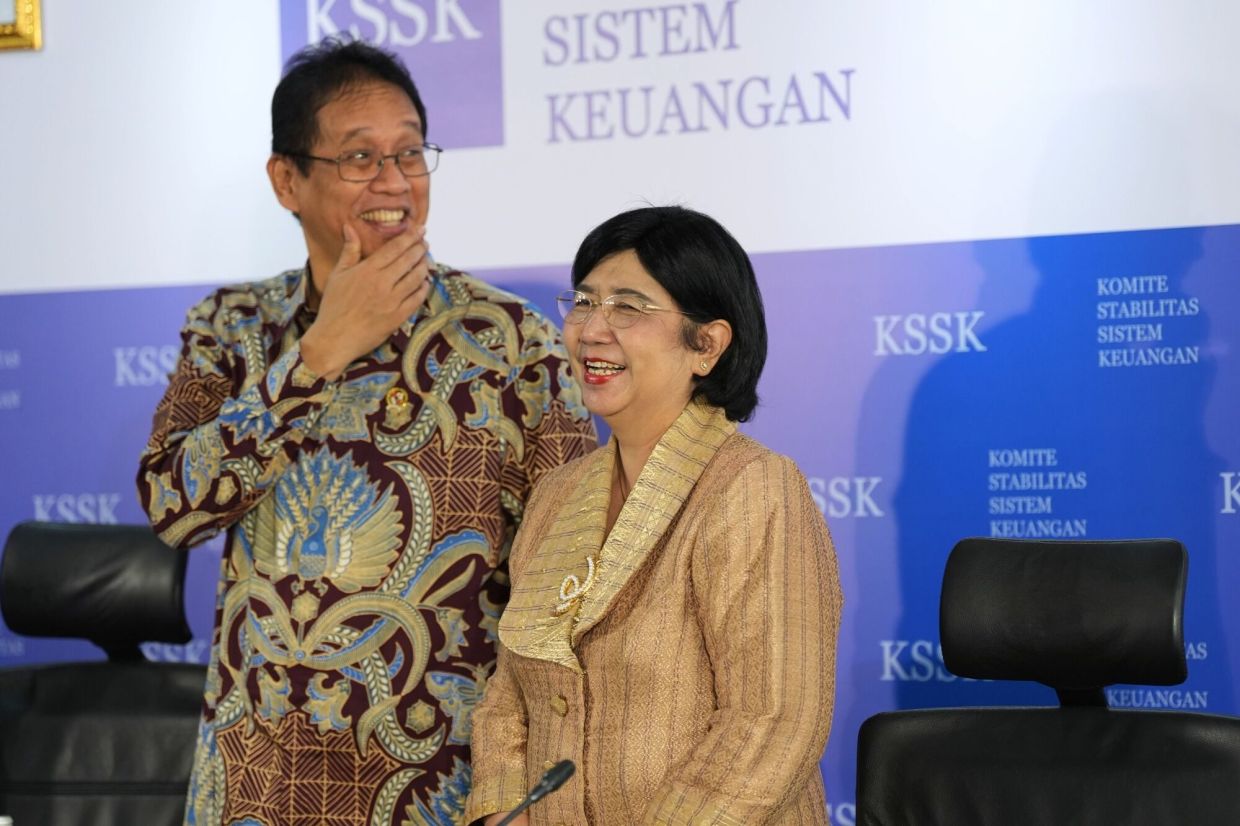
Destry Damayanti's elevation to acting governor of Bank Indonesia just two weeks ago signalled a subtle but significant shift in how the central bank may engage with the government. Her first official act included a visit to Finance Minister Purbaya Yudhi Sadewa's office before meeting President Prabowo Subianto, a deliberate move demonstrating her commitment to closer coordination between monetary and fiscal authorities. This collaborative tone contrasted sharply with her predecessor Perry Warjiyo, whose interactions with the finance ministry were typically conducted in formal settings at the presidential palace or through regulatory committees rather than intimate one-on-one sessions.
The relationship between a central bank governor and the finance minister carries profound implications for economic policy effectiveness and institutional credibility. Destry's approach of building rapport with Purbaya reflects an acknowledgment that modern economic management requires dialogue between independent but complementary institutions. Yet this openness to cooperation immediately raises questions about whether such familiarity might eventually compromise the central bank's decision-making autonomy, a concern that resonates deeply with investors who prize predictable, rule-based monetary policy insulated from short-term political pressures.
Prabowo's nomination of Destry as the sole candidate for the permanent governor position reflects his desire to secure leadership that understands both market dynamics and his administration's economic ambitions. The President has signalled his intention to accelerate growth toward 8% by 2029, a target that requires supportive conditions including stable financing costs and a robust rupiah. Destry's background as Warjiyo's deputy since 2019 provides reassurance of policy continuity, yet her willingness to build stronger relationships with the executive raises legitimate questions about the boundaries of that continuity.
Market reaction to Destry's appointment has been cautiously optimistic. The rupiah immediately strengthened to its best level in a month against the dollar and outperformed most regional peers, suggesting investors view her as a stabilising force capable of defending the currency. This positive reception reflects recognition of her credentials and experience rather than enthusiasm for policy changes. She brings impressive academic credentials including an economics degree from the University of Indonesia and a master's in regional science from Cornell University, alongside practical experience as chief economist at PT Bank Mandiri and commissioner at the Indonesia Deposit Insurance Corp.
However, the broader environment for Indonesian financial stability remains fragile. The rupiah has depreciated approximately 6% against the dollar this year, making it Asia's worst-performing currency. This weakness stems partly from global factors including higher US interest rates and dollar strength, but also reflects investor concerns about domestic policy direction. Both Fitch Ratings and Moody's have placed Indonesia's sovereign ratings on negative watch, citing policy uncertainty arising from President Prabowo's populist initiatives including free school meals and expanded state control over commodities. Only S&P Global maintained a stable outlook.
The policy dilemma facing Destry centers on managing multiple conflicting objectives simultaneously. Under Warjiyo, Bank Indonesia deployed a sophisticated array of tools including three interest rate increases since May, foreign exchange interventions to defend the rupiah, and non-rate instruments to support credit availability and economic activity. This balanced approach reflected the inherent tension between supporting growth and maintaining financial stability—a tension that intensifies when external pressures like global rate hikes simultaneously threaten both the currency and domestic borrowing costs.
Investor confidence will ultimately depend on whether Destry demonstrates willingness to prioritise monetary and financial stability over political objectives when the two conflict. Irman Faiz, chief economist at PT Bank Danamon, emphasised that while government coordination remains essential, monetary decisions must ultimately reflect the central bank's independent assessment of inflation, exchange rate stability, and systemic financial health. The critical test will come when rising global interest rates or capital outflows force difficult choices between supporting Prabowo's growth agenda and defending the rupiah or containing price pressures.
Destry's parliamentary confirmation remains pending, though her sole candidacy suggests smooth approval. Her familiarity to the investor and analyst community through regular policy engagement works in her favour, as does her track record of pragmatic economic thinking. Yet Southeast Asian investors know that institutional independence can erode gradually through subtle pressures and informal arrangements rather than dramatic policy reversals. The friendly chemistry between Destry and Purbaya visible in their joint press briefings reassures those seeking coordinated policymaking, but concerns those who recall how similar collegiality preceded policy missteps in other regional economies.
The rupiah's structural weakness poses perhaps the most immediate challenge Destry must address. Unlike some depreciation that reflects temporary capital outflows, the rupiah's persistent weakness reflects genuine uncertainty about Indonesia's policy direction and medium-term growth prospects. Supporting the currency without either excessive interest rates that choke growth or continued intervention that depletes foreign reserves requires skillful communication and credible commitment to price stability. Markets must believe that Bank Indonesia will tolerate neither currency collapse nor inflation acceleration, regardless of pressure from growth-focused colleagues in government.
Beyond near-term stabilisation, economists including Fakhrul Fulvian from PT Trimegah Sekuritas Indonesia argue that the central bank faces a broader mandate to translate recent stability achievements into healthier financial conditions. This involves normalising the yield curve, strengthening monetary transmission mechanisms so that policy rate changes effectively influence broader credit conditions, and rebuilding private-sector confidence in the banking system. These objectives require sustained commitment to institutional credibility that transcends electoral cycles and government administrations.
For Malaysian observers and investors, Destry's appointment carries regional significance. Indonesia's economic size and currency stability directly influence regional financial flows and risk sentiment across Southeast Asia. A Bank Indonesia under pressure to subordinate monetary stability to growth objectives could trigger currency volatility and capital outflows that ripple across the region. Conversely, a central bank that maintains independence while cooperating effectively with the government could become a model for regional institutional design, demonstrating that autonomy and coordination need not be mutually exclusive.
The months ahead will reveal whether Destry can navigate this delicate balance. Her challenge extends beyond technical competence—which her credentials amply demonstrate—to maintaining institutional independence while earning the trust of a President determined to accelerate growth and a market increasingly sceptical of Indonesia's policy direction. Success requires demonstrating that slower growth achieved with stable prices, a defended rupiah, and credible institutions ultimately serves Indonesia's interests better than the alternative of higher headline growth accompanied by currency instability and eroding investor confidence.

