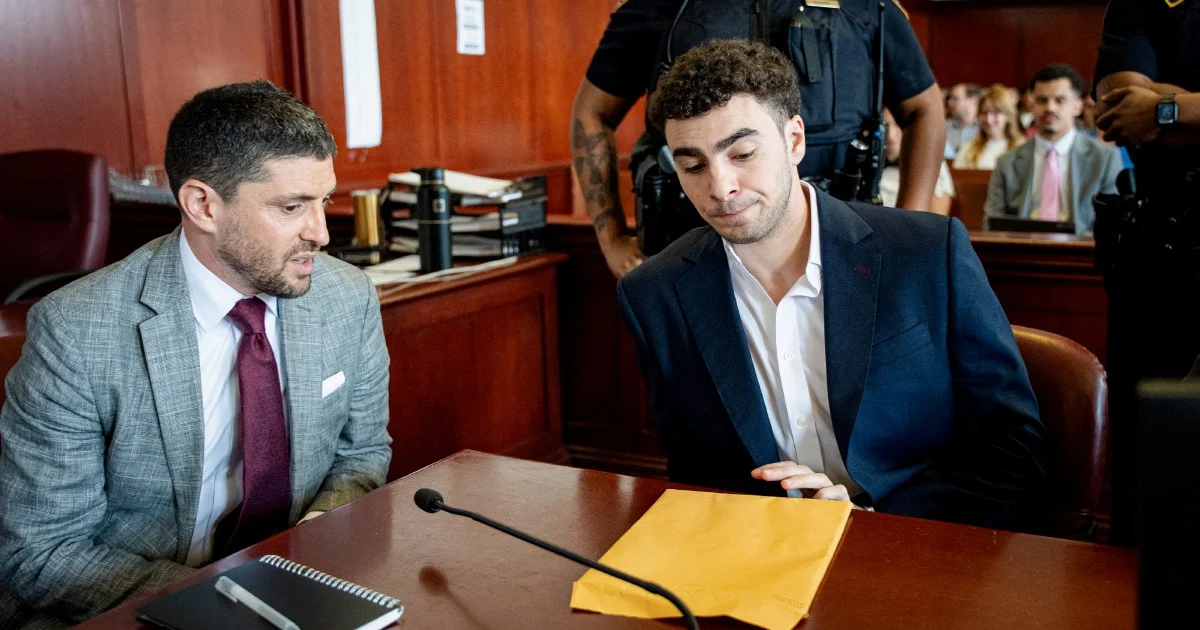
Luigi Mangione, the 26-year-old facing charges in connection with the death of UnitedHealthcare Chief Executive Officer Brian Thompson on a Manhattan street, has signalled a tactical shift in his legal approach by withdrawing his intention to present evidence of severe mental distress at his upcoming trial. The development, disclosed through a court filing on Friday, suggests his defence team is reconsidering their litigation strategy as proceedings advance in one of the year's most high-profile criminal cases.
The decision to shelve the mental health defence line, at least temporarily, represents a significant adjustment for Mangione's legal team. The withdrawal does not preclude the possibility that such evidence could be reintroduced at a later stage of the proceedings, according to legal documentation submitted to the court. This flexibility built into the filing indicates the defence retains options as new information emerges or circumstances shift during the judicial process.
The case has captured national attention since Thompson's killing on December 4 outside a Manhattan hotel where UnitedHealthcare was holding a major investor conference. Thompson, a prominent figure in the healthcare industry, was struck by gunfire in an incident that unfolded in broad daylight on a busy New York City street. Mangione was apprehended days later at a Pennsylvania bus station and subsequently extradited to New York to face multiple charges related to the shooting.
Thompson's death sparked significant public discussion about frustration with the American healthcare system, particularly regarding insurance claim denials. Many social media commentaries portrayed the case through the lens of healthcare industry criticism, though investigators have focused on establishing the facts surrounding the alleged perpetrator's motives and mental state at the time of the incident.
Mangione's background has drawn considerable scrutiny during the investigation and pre-trial proceedings. The case has involved examination of his personal circumstances, medical history, and psychological evaluations to understand potential motivations behind the alleged actions. Mental health evidence frequently plays a pivotal role in capital or high-profile murder cases, either as part of a diminished capacity defence or for mitigation during sentencing phases if a conviction is secured.
For Malaysian and Southeast Asian observers, this case underscores the complexities within the American criminal justice system, where defence teams must strategically navigate the presentation of evidence regarding mental health. Unlike jurisdictions that may apply psychological assessments more routinely, American courts require specific legal frameworks for introducing such evidence, and withdrawal of intended defences reflects careful calculation about trial prospects and jury perceptions.
The timing of this defence withdrawal suggests Mangione's legal team may be reassessing the strength of their position following preliminary hearings, discovery of additional evidence, or strategic considerations about jury composition and potential receptiveness to mental health mitigation arguments. The decision-making reflects the dynamic nature of criminal defence strategy, where lawyers must continuously adjust their approach based on evolving circumstances and prosecution evidence.
Prosecutors in New York have built their case methodically, with investigation and preparation now advanced to the point where defence teams make calculated decisions about which arguments to foreground or suppress. The withdrawal of the mental health avenue, at least provisionally, may indicate the defence believes other strategies offer better prospects, or conversely, that the prosecution's mental health related evidence is sufficiently strong that introducing their own may prove counterproductive.
Mangione remains in custody pending trial, with proceedings advancing through the American judicial system's formal stages. The case continues drawing international media attention, particularly given the victim's prominence in the healthcare sector and the public discourse surrounding insurance industry practices that the incident inadvertently catalysed.
For the regional audience, this case illustrates how even in wealthy, developed nations like the United States, healthcare system pressures generate profound social tensions. The international dimension of Mangione's apprehension—captured in Pennsylvania while potentially attempting interstate travel—demonstrates the coordination required among law enforcement agencies in managing high-profile cases across jurisdictional boundaries.
The legal proceedings ahead will determine whether prosecutors can establish guilt beyond reasonable doubt without the complication of defending against mental health evidence, while simultaneously maintaining that responsibility for criminal actions remains despite any psychological factors. Mangione's legal team evidently calculated that preserving strategic flexibility by temporarily withdrawing this defence line serves his interests better than committing fully to the mental health narrative at this stage of proceedings.
%22%2F%3E%3C%2Fpattern%3E%3C%2Fdefs%3E%3Crect%20width%3D%22100%25%22%20height%3D%22100%25%22%20fill%3D%22url(%23phb2gtg)%22%2F%3E%3Crect%20width%3D%22100%25%22%20height%3D%22100%25%22%20fill%3D%22url(%23phb2gtp)%22%2F%3E%3Ctext%20x%3D%2250%25%22%20y%3D%2250%25%22%20text-anchor%3D%22middle%22%20dominant-baseline%3D%22central%22%20fill%3D%22rgba(255%2C255%2C255%2C0.95)%22%20font-family%3D%22Georgia%2C%20'Times%20New%20Roman'%2C%20serif%22%20font-weight%3D%22700%22%20font-size%3D%22272%22%20letter-spacing%3D%22-0.02em%22%3EPerak%3C%2Ftext%3E%3C%2Fsvg%3E)