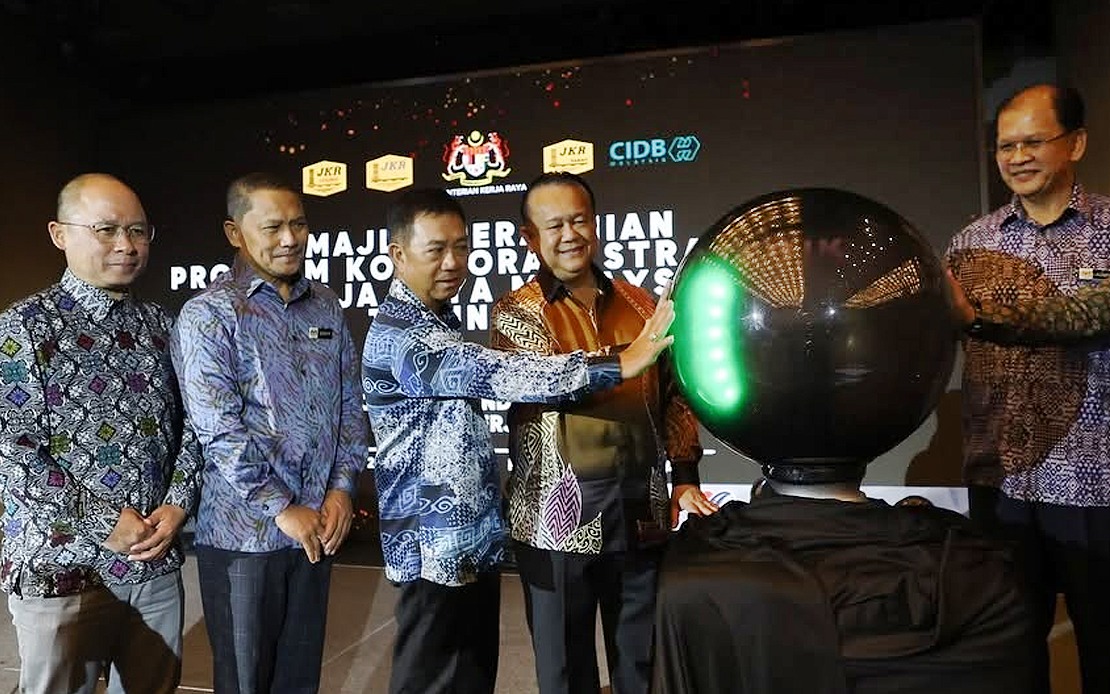
Addressing persistent infrastructure delivery challenges, Malaysia's Works Ministry is deepening its collaborative framework with the public works departments of Sabah and Sarawak to streamline project execution across the nation. Works Minister Datuk Seri Alexander Nanta Linggi unveiled the enhanced cooperation during an official ceremony in Kota Kinabalu on July 19, describing the coordinated approach as essential for resolving bottlenecks that have hampered completion timelines on major undertakings, notably the Pan Borneo Highway initiative.
The strategic collaboration programme creates a structured platform where federal and state-level agencies can openly discuss implementation hurdles and formulate unified responses. This recognition represents a significant acknowledgment that siloed decision-making between JKR Malaysia, JKR Sabah, and JKR Sarawak has previously contributed to inefficiencies. Nanta articulated this plainly to reporters, noting that while the collaborative framework has already yielded improvements since its inception, substantial work remains to ensure projects meet their contractual deadlines. The minister's candid assessment signals the government's willingness to confront systemic coordination problems rather than attributing delays solely to external pressures.
The scope of infrastructure under management by these three implementing agencies is substantial. Billions of ringgit in active projects span highways, local roads, and public buildings across Peninsular Malaysia, Sabah, and Sarawak. The Pan Borneo Highway alone represents a flagship commitment to transform connectivity in East Malaysia, but its execution has faced documented setbacks. By creating this dedicated coordination mechanism, the ministry aims to establish clearer communication channels and faster decision-making protocols that could accelerate project progression without compromising quality standards.
Nanta specifically highlighted the importance of the collaboration platform in identifying and resolving coordination constraints that have been identified as material factors in project delays. This framing positions the initiative not as blame-shifting but as a systematic diagnosis and remedy. The minister emphasised that once problems are identified through this shared forum, agencies can implement solutions more rapidly, creating what he termed a more efficient operational environment across the entire infrastructure development ecosystem.
In Sabah, the collaboration took concrete form through multiple formal agreements signed during the ceremony. Deputy Chief Minister I and Works and Utilities Minister Datuk Seri Dr Joachim Gunsalam witnessed the execution of a road asset data declaration involving the federal Works Ministry and Sabah's state counterparts in Works and Local Government. Additionally, memoranda of agreement were signed establishing MyBIM (Building Information Modelling) laboratories in both Sabah and Sarawak government facilities, jointly operated by JKR entities. These laboratory facilities represent technological infrastructure that can improve design coordination and reduce field-level conflicts during construction phases.
The MyBIM initiative carries particular significance for Southeast Asian infrastructure development. Building Information Modelling represents a sophisticated digital approach to project design and management, allowing multiple stakeholders to work within a unified virtual environment before physical construction commences. By establishing dedicated laboratories in state government premises, the collaboration extends advanced planning tools beyond federal agencies, potentially raising design and coordination standards across East Malaysia. This technological dimension suggests the government recognises that infrastructure delays stem not only from administrative coordination but also from technical and planning deficiencies that digital tools can address.
When questioned about specific features on the Pan Borneo Highway, such as U-turn construction placements, Nanta stressed that all structural decisions follow rigorous technical evaluation. He noted that each U-turn location undergoes assessment considering road geometry, sight distance parameters, and comprehensive safety analysis rather than being determined through ad-hoc decision-making. This explanation underscores that infrastructure quality standards remain a priority even as the ministry addresses coordination delays, a balance that is critical for public confidence in project integrity.
Gunsalam articulated a complementary vision emphasising that infrastructure investment represents a fundamental catalyst for economic expansion and competitive advantage in the region. His remarks positioned infrastructure development beyond mere physical construction, framing it as essential to community welfare, efficient government service delivery, and economic dynamisation. He stressed that strategic planning, quality execution, and sustainable asset management must accompany infrastructure investment, requirements that demand the kind of inter-agency coordination the collaboration programme facilitates.
Transparency and resource stewardship formed the third pillar of Gunsalam's framework. He emphasised that infrastructure projects must demonstrate value delivery to the public through governance practices characterised by openness and prudent financial management. This emphasis on continuous improvement culture reflects a maturing approach to public infrastructure in Malaysia, where accountability frameworks and stakeholder expectations have evolved significantly. Projects that encounter delays without transparent explanation of causes and remedial measures face mounting public and political scrutiny, making the coordination programme's emphasis on joint problem-solving particularly timely.
For Malaysian readers, this collaboration holds significance beyond Sabah and Sarawak. The coordination model tested and refined in East Malaysia could potentially inform federal approaches to infrastructure delivery across Peninsular Malaysia, where large-scale projects including MRT extensions, transportation corridors, and utility infrastructure similarly involve multiple implementing agencies. If the collaboration successfully reduces delay frequencies in Borneo, lessons learned could be institutionalised across the entire public works apparatus. The digital infrastructure investments through MyBIM laboratories also signal broader sector modernisation that could eventually standardise planning practices nationwide.
The timing of this announcement reflects heightened attention to infrastructure delivery performance. Malaysia's economic competitiveness increasingly depends on timely completion of transportation and utility networks that support manufacturing, tourism, and digital economy ambitions. Neighbouring ASEAN nations have made significant infrastructure investments, and Malaysia's ability to match these efforts in timeliness—not merely in budgetary commitment—bears directly on regional economic positioning. The Works Ministry's collaborative framework suggests recognition that maintaining infrastructure competitive advantage requires not simply larger budgets but smarter coordination mechanisms.
Moving forward, the success of this collaboration will be measured through tangible improvements in project completion timelines and quality outcomes. The establishment of formal agreements and laboratory facilities represents institutional commitment, but implementation execution will determine whether coordination constraints genuinely diminish. Monitoring mechanisms and regular reporting on project progress against baseline metrics will be essential to validate whether the collaborative platform delivers the efficiency gains that Nanta and Gunsalam have outlined. For Malaysian infrastructure stakeholders and the broader public, the coming months will reveal whether this coordinated approach represents a meaningful inflection point in addressing long-standing delivery challenges.

