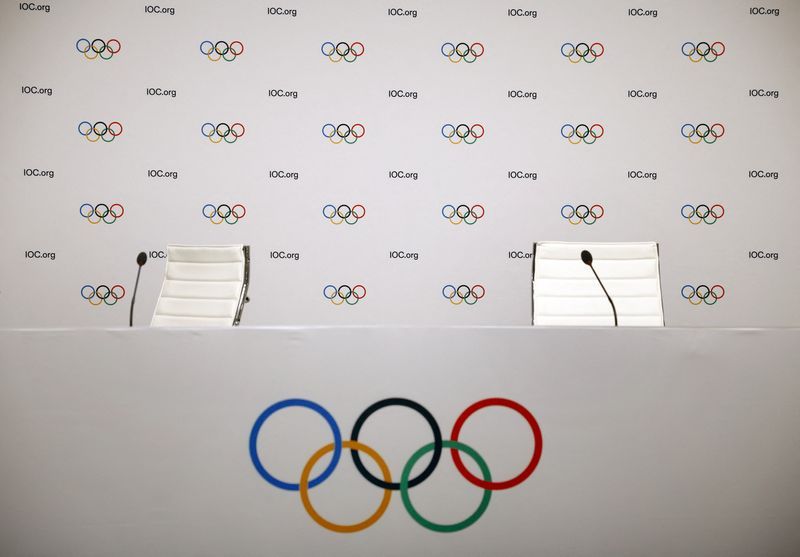
The International Olympic Committee is poised to revisit the Olympic Charter with proposed amendments that would strengthen language around the political neutrality of sport, a development that carries significant implications for Russia's long-contested path back into the international sporting fold. The changes, set for consideration on Wednesday in Geneva, would emphasise that the IOC must protect Olympic neutrality "at all times, free from governmental, cultural, societal or economic pressure," according to the IOC's stated rationale. While the Olympic body frames these reforms as necessary safeguards against external interference and the weaponisation of sporting events for political purposes, observers have raised concerns that the reworded Charter could inadvertently—or perhaps deliberately—create an opening for Russian athletes to compete under their national flag once more.
The broader context surrounding these proposed amendments reveals a complex geopolitical calculus that extends well beyond the sporting arena. Russia has endured a cascading series of restrictions stemming from multiple violations of Olympic principles and international norms. The country's athletic programme was tainted by a state-sponsored doping scandal that emerged from the 2014 Sochi Winter Games, fundamentally undermining the credibility of competition and athlete safety. Following Russia's invasion of Ukraine in February 2022, the IOC initially recommended that Russian and Belarusian athletes face outright bans from international competitions. The situation deteriorated further when the Russian Olympic Committee itself was suspended in October 2023 after recognising regional Olympic councils in Russian-occupied Ukrainian territories, an action the IOC deemed a direct violation of both the Olympic Charter and Ukraine's territorial integrity.
Yet despite these seemingly intractable barriers, the IOC has begun a gradualist approach toward easing restrictions, a progression that has accelerated over recent months. In December, the IOC announced that Russian and Belarusian youth athletes would be permitted to return to international competitions without restrictions, marking a symbolic softening of the hardline stance adopted just months earlier. That decision was followed in May by the complete lifting of all restrictions on Belarusian athletes, effectively clearing the path for their participation in upcoming international events and Olympic qualifiers for the 2028 Los Angeles Games. Notably, when the IOC made its announcement regarding Belarusian athletes, it explicitly stated that similar relief would not extend to Russian competitors. However, the qualification reflects growing speculation within sports governance circles that a parallel decision affecting Russia may be imminent, particularly given the trajectory of recent policy shifts.
Critics of the proposed Charter amendments view the timing and substance of these changes with considerable alarm. Rob Koehler, director general of Global Athlete, an influential advocacy organisation representing athlete interests, characterised the potential outcome in stark terms. He argued that the reformed Charter language would send a deeply troubling message to the international sporting community, effectively signalling that military aggression, systematic doping conspiracies, and repeated breaches of Olympic principles no longer constitute disqualifying factors for full participation. The concern extends beyond symbolic messaging; observers worry that stripped-down neutrality language could eliminate the explicit political and ethical grounds upon which sanctions currently rest, leaving the IOC vulnerable to legal challenges from Russian officials seeking reinstatement.
The Russian authorities, for their part, have been actively lobbying for restoration of their status. Mikhail Degtyarev, who holds the dual position of Russian sports minister and chairman of the Russian Olympic Committee, declared in April that his ministry and the Committee were undertaking everything within their power to secure the full return of the Russian national team to international competitions, specifically under the Russian flag rather than as neutral athletes. President Vladimir Putin himself reportedly expressed optimism in April about the prospect of receiving a more accommodating reception from the IOC's recently reconstituted leadership. These statements reveal a coordinated diplomatic effort to capitalise on what Moscow evidently perceives as a window of opportunity within the Olympic movement's institutional hierarchy.
The IOC's May announcement regarding its legal affairs commission reviewing information about the Russian Olympic Committee while simultaneously examining its anti-doping systems suggests that technical compliance mechanisms remain under scrutiny. The World Anti-Doping Agency continues to conduct ongoing investigations into Russian sporting institutions, representing a residual obstacle to complete reinstatement. Nevertheless, the IOC's decision to compartmentalise these review processes—rather than conditioning reinstatement decisions on their completion—indicates a pragmatic willingness to decouple questions of Russian participation from the resolution of doping inquiries. This sequencing is precisely what concerns advocates like Koehler, who fear that administrative momentum toward normalisation will eventually overtake substantive concerns about compliance and accountability.
For regional observers in Southeast Asia, the implications of Russian reinstatement merit careful attention. The Olympic movement's handling of the Russia question will shape how international sporting bodies approach future geopolitical crises, sanctions regimes, and the relationship between athletic competition and state conduct. Malaysia and other ASEAN nations have historically maintained pragmatic positions on international sports governance, often seeking to preserve inclusive participation while managing political sensitivities. However, the precedent established by how the IOC resolves the Russian situation will directly influence how similar dilemmas are addressed in the future—whether involving other sanctioned nations or circumstances where sporting neutrality is invoked to override legitimate concerns about governance, doping, or state aggression.
The proposed Charter amendments also encompass a secondary but significant reform: removing the fixed list of international federations from the Olympic document, thereby granting the IOC greater discretionary authority to curate the Olympic programme based on cost considerations, logistical feasibility, and global commercial appeal. This change reflects broader trends toward flexibility and cost-efficiency in Olympic hosting, issues of considerable importance to developing nations and emerging economic powers that may harbour aspirations of hosting future Games. The decoupling of traditional Olympic sport lists from Charter provisions could accelerate the inclusion or exclusion of sports based on market considerations rather than historical precedent, with potential consequences for global sport development patterns and athlete career pathways.
The timing of these Charter discussions occurs amid broader questions about the IOC's institutional direction under its current leadership. The organisation faces pressure from multiple quarters: athletes demanding stronger anti-doping protections, human rights advocates insisting on accountability for state misconduct, and host nations seeking greater flexibility in Olympic programme design and cost management. The Charter amendments represent an attempt to thread these competing needles, framing flexibility around political neutrality in terms that appeal to sporting purists while simultaneously enabling pragmatic accommodations with powerful stakeholders. Whether this approach ultimately strengthens or compromises the Olympic movement's integrity remains the central question animating this week's deliberations.