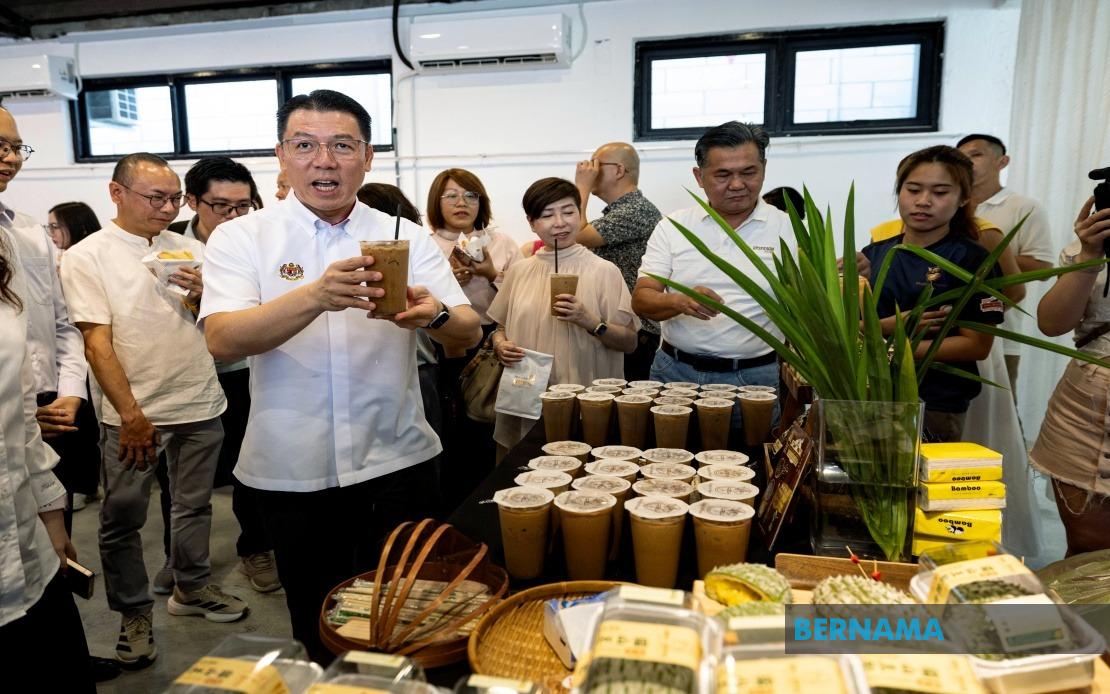
Malaysia's culinary landscape stands as one of the nation's most powerful unifying forces, transcending racial and cultural boundaries to create shared experiences across communities. This recognition has prompted Ipoh's Kepayang constituency to organise the Jom Makan Ipoh Expo 2026, a comprehensive platform designed to celebrate the city's gastronomic identity while reinforcing social cohesion through food heritage. Minister of Housing and Local Government Nga Kor Ming unveiled the pre-launch initiative here, emphasising that the three-day festival scheduled for August 28 to 30 represents far more than a commercial food event—it embodies Malaysia's multicultural identity and the promise of shared nationhood.
The expo's strategic timing during Merdeka Month underscores its symbolic importance in the national narrative. By positioning food as a catalyst for unity rather than merely a consumer product, organisers aim to demonstrate how culinary traditions rooted in different communities can coexist and complement one another. Nga articulated this vision clearly, noting that food transcends the typical tourism commodity classification to become an instrument of national integration. This perspective aligns with the broader "Malaysia, Truly Asia" messaging, positioning the country as a cultural crossroads where diverse traditions remain not just intact but celebrated and mutually enriching.
The festival programme reflects meticulous curation of Ipoh's culinary landscape. Hosted at Palo 101 from 5 pm to 11 pm across three evenings, the expo will feature more than 50 stalls dedicated to food and agricultural products. The focus centres on twelve signature Ipoh specialties, ranging from the internationally recognised Ipoh White Coffee to heritage dishes like Laksa Buyong, nasi ayam taugeh, and puding taufu. This selection represents a deliberate balance between iconic dishes with established reputations and lesser-known offerings that deserve broader recognition. Street food vendors will also participate, creating an authentic marketplace atmosphere that captures the informal dining culture characterising the city.
Beyond the commercial stall component, organisers have developed an educational framework through six dedicated Ipoh Food Culture Galleries. These galleries trace the historical evolution of local cuisine, contextualising dishes within broader social and economic narratives. The tin mining era food culture gallery, for instance, will illuminate how industrial development shaped local eating habits and agricultural practices. Similarly, galleries exploring Ipoh White Coffee, kacang putih, Sambal & Ulam, and other culinary heritages provide visitors with narrative depth, transforming the expo from a consumer event into a repository of cultural memory. This educational approach particularly resonates with younger Malaysians seeking to understand their local heritage.
Enhancing the experiential dimension, the festival incorporates a robust programme of cultural performances representing various ethnic communities. These live presentations will reinforce the expo's central thesis—that food culture functions as a shared language enabling different groups to express identity while fostering appreciation across communities. Additionally, "Food Talks Ipoh" sessions will feature discussions among culinary historians, chefs, and community leaders, facilitating dialogue about food's role in shaping urban identity and social fabric. The launch of an Ipoh QR Digital Food Map introduces technological innovation, allowing visitors to explore the city's broader gastronomic ecosystem beyond the expo grounds.
Projected attendance figures suggest significant community engagement and broader regional interest. Organisers anticipate welcoming more than 20,000 visitors across the three-day period, a figure that positions this as a substantial cultural event capable of generating meaningful economic activity for local food vendors and hospitality sectors. This scale of participation reflects growing consumer appetite for culturally meaningful tourism experiences that extend beyond conventional attractions. For Ipoh specifically, the expo addresses a strategic need to strengthen the city's identity as a culinary destination, potentially establishing foundations for sustained food tourism positioning.
The expo's collaborative structure, involving the Kepayang constituency service centre and multiple strategic partners, demonstrates how government initiatives can facilitate community-driven cultural programming. This partnership approach distributes responsibility while leveraging diverse expertise and networks. Local food entrepreneurs, agricultural producers, and cultural organisations each contribute distinctive elements, creating a more comprehensive and authentic representation of Ipoh's food ecosystem than any single entity could produce. This model potentially offers replicable frameworks for other Malaysian constituencies seeking to mobilise cultural assets for community development.
From a broader Southeast Asian perspective, Ipoh's initiative aligns with regional trends emphasising culinary tourism as both economic driver and soft power instrument. Countries throughout the region increasingly recognise that food narratives strengthen national and local brands while creating employment across agricultural, hospitality, and service sectors. By investing in infrastructure and programming around food heritage, Ipoh positions itself competitively within regional tourism markets dominated by cities like Bangkok, Penang, and Singapore, each of which has successfully leveraged culinary reputation into international recognition.
The expo's implications extend beyond immediate tourism considerations. By consciously framing food as a unity mechanism during Merdeka Month, organisers articulate a counter-narrative to divisive political messaging. Rather than emphasising what separates Malaysian communities, the festival demonstrates interdependence and mutual appreciation. Laksa Buyong represents contributions from multiple ethnic groups; kacang putih vendors emerged from specific immigrant communities yet now transcend those origins; nasi ayam taugeh evolved through intercommunal culinary exchange. These dishes embody hybrid identities reflecting Malaysia's actual social reality more authentically than politically reductive discourse often permits.
Looking forward, the Jom Makan Ipoh Expo 2026 signals potential for sustained programming around food culture. If successful, similar initiatives could proliferate across Malaysian cities, each celebrating local specialties while reinforcing national unity narratives. This cultural programming strategy proves particularly valuable in contemporary Malaysia, where political polarisation intensifies around divisive issues. Food offers neutral terrain where positive emotions, shared enjoyment, and communal participation create experiences transcending partisan calculation. The combination of commerce, education, entertainment, and cultural celebration creates multifaceted value extending well beyond the immediate three-day window.

