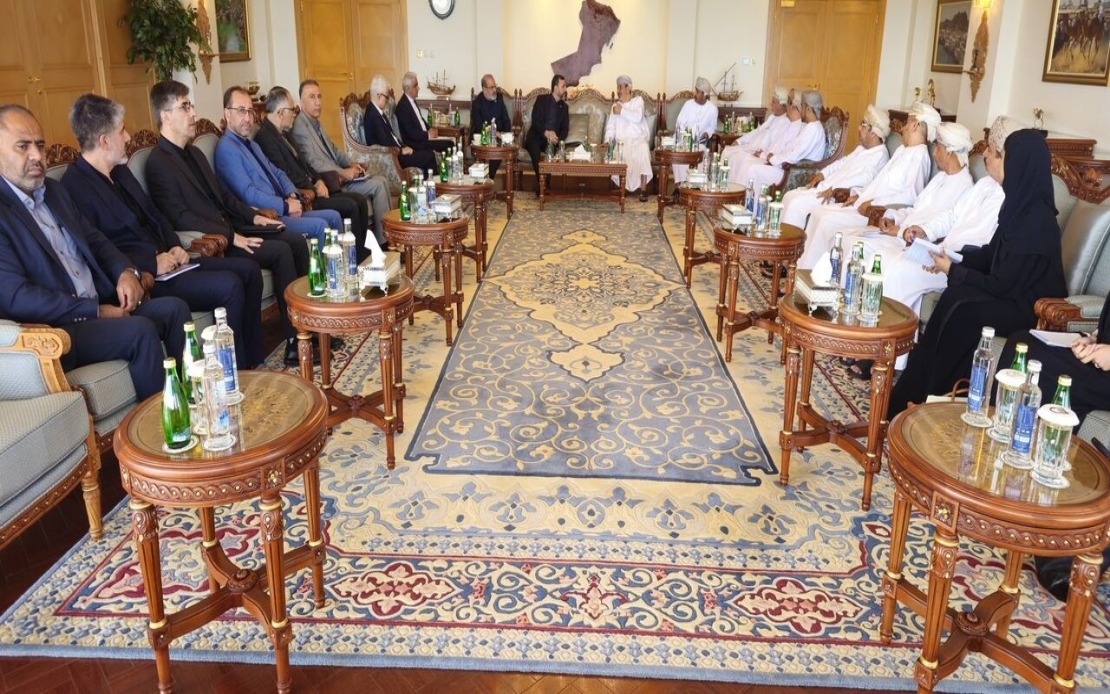
Iran and Oman have taken a significant diplomatic step by convening the inaugural meeting of their Joint Hormuz Committee, marking a new institutional approach to managing one of the world's most strategically vital waterways. Iranian Deputy Foreign Minister for Legal and International Affairs Kazem Gharibabadi announced the development following his visit to Muscat on Monday, where he met with Oman's Ambassador-at-Large Abdulaziz Al Hinai to formally establish the committee's operational framework. The initiative represents an attempt by the two littoral states to create a structured dialogue mechanism for addressing shared interests in the Strait of Hormuz, through which approximately one-third of all maritime-traded oil passes globally.
The establishment of this joint committee reflects broader regional efforts to stabilize one of Asia's most contested maritime zones. Rather than unilateral action, both nations have opted for multilateral negotiation grounded in international maritime law and the principle of coastal state sovereignty. During the inaugural session, officials reviewed pressing contemporary challenges affecting the Strait while simultaneously discussing its long-term governance architecture. This measured diplomatic approach contrasts sharply with the volatile nature of regional maritime tensions, where military incidents and restrictions on shipping have periodically disrupted global energy supplies and raised international concerns about freedom of navigation.
The committee's mandate draws explicitly from Paragraph 5 of the Islamabad Memorandum of Understanding, a foundational text establishing principles for maritime cooperation among Indian Ocean littoral states. By anchoring their discussions in this international framework, Iran and Oman are signalling their commitment to rules-based governance rather than unilateral control. The inclusion of sovereignty considerations underscores both nations' determination to assert their rights as Strait states while simultaneously cooperating on matters of common concern. This balancing act carries particular importance given historical regional disputes over maritime boundaries and resource rights.
The initiative follows immediately from high-level diplomatic engagement between Tehran and Muscat. On June 23, both governments issued a joint statement following visits by Iranian Foreign Minister Abbas Araghchi and negotiating head Mohammad Bagher Ghalibaf. That declaration explicitly emphasized that any arrangements governing the Strait must fully respect the sovereignty and inherent rights of all littoral states—a position that underscores Iran's core concern about protecting its maritime interests against external interference. The sequential nature of these engagements suggests deliberate strategic planning rather than ad-hoc diplomacy, indicating that both capitals have invested considerable preparation in establishing this institutional framework.
For Malaysian readers and Southeast Asian observers, this development carries important implications for regional maritime security and the broader architecture of Indian Ocean governance. The Strait of Hormuz remains critical to global energy security and international commerce, with disruptions affecting markets far beyond the Gulf region. Malaysia, as a significant maritime trading nation and ASEAN member, maintains substantial interests in ensuring freedom of navigation through international waterways and the stability of global shipping lanes. The establishment of formal bilateral mechanisms to manage the Strait offers potential benefits for global maritime predictability, though observers remain attentive to whether such cooperation can withstand geopolitical pressures or military escalation.
The newly formed committee has been tasked with pursuing substantive negotiations on future governance arrangements for maritime shipping within the Strait. These discussions encompass the practical dimensions of service provision—including pilotage, maintenance, and safety infrastructure—as well as the financial mechanisms for supporting such services. By framing these conversations within international standards and maritime best practices, the committee aims to move beyond ideological positions toward technical solutions that benefit all users of this critical shipping corridor. Such an approach potentially offers models applicable to other disputed maritime regions in Asia where competing claims and strategic tensions complicate cooperative governance.
The committee represents a recognition by both Iran and Oman that unilateral approaches to Strait management generate uncertainty and provoke international responses that ultimately disadvantage regional actors. By establishing a joint decision-making body anchored in international law and principle-based negotiation, both nations create space for addressing grievances and coordinating policies without triggering the security dilemmas that characterize zero-sum military competition. The emphasis on sovereignty protection addresses Iran's long-standing concerns about external powers imposing arrangements without regional consultation, while the commitment to international standards reassures the global community that navigation rights will be respected.
Oman's role as the neutral, facilitating power deserves particular emphasis. The sultanate has historically positioned itself as a bridge between Iran and its neighbours, and between the Gulf region and the broader Indian Ocean community. Oman's diplomatic tradition and geographic position make it a natural location for hosting such negotiations. As a nation deeply invested in regional stability and international commerce, Oman brings credibility to multilateral maritime initiatives. Its participation signals to the international community that Gulf maritime arrangements can emerge through dialogue rather than coercion, offering pathways for addressing tensions that might otherwise escalate unpredictably.
The committee's focus on reaching consensus specifically demonstrates awareness that sustainable governance requires genuine agreement among stakeholders rather than imposed arrangements. This consensus-seeking approach aligns with diplomatic best practices for managing shared resources and contested zones. By prioritising agreement-building, Iran and Oman position themselves as responsible maritime actors committed to stability, a positioning that carries diplomatic weight in international forums and potentially strengthens their negotiating leverage on other regional issues. For Southeast Asian nations watching these developments, the model of institutionalized dialogue offers instructive lessons for managing maritime disputes through mechanisms that preserve sovereignty while enabling practical cooperation.
Looking forward, the committee's success will depend on whether it can maintain momentum through substantive negotiations and whether geopolitical developments permit the space for this cooperation to flourish. International attention will focus on whether these discussions produce concrete agreements on shipping protocols, safety mechanisms, and dispute resolution procedures. Should the committee demonstrate effectiveness, it could establish important precedents for maritime cooperation in other strategically sensitive regions. Conversely, if external pressures or internal disputes derail these negotiations, it would confirm the difficulty of sustaining institutional arrangements in zones characterised by strategic competition and historical mistrust.

