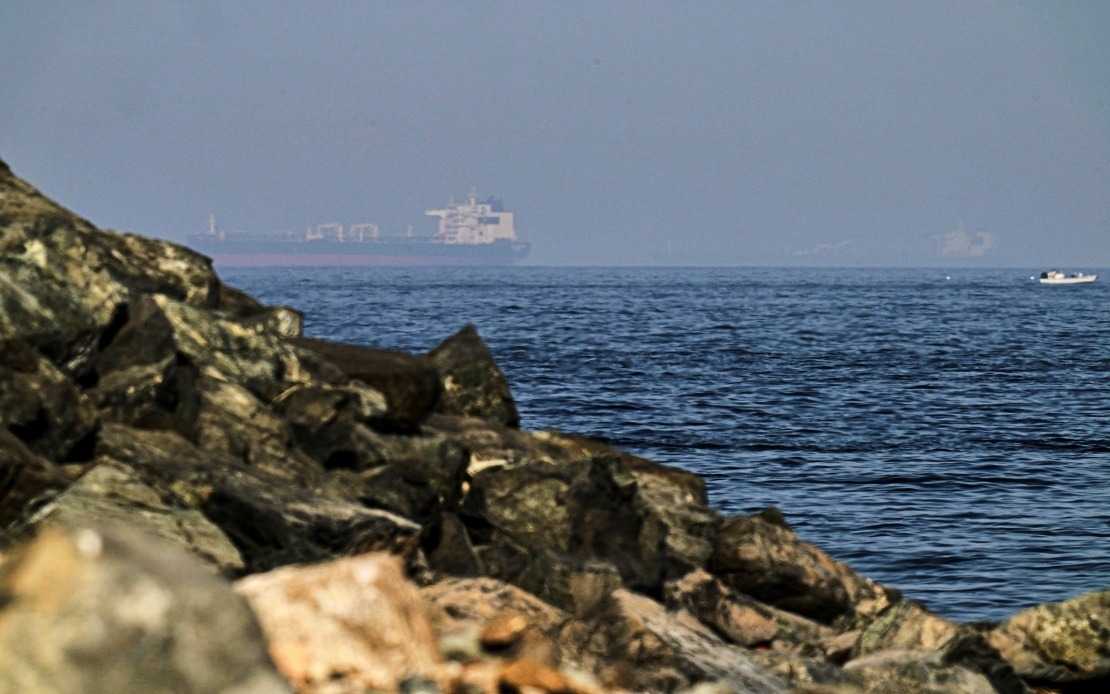
Iran and Oman have reached an agreement to establish a temporary maritime corridor through the Strait of Hormuz, according to Major General Mohsen Rezaei, the Secretary of Iran's Supreme National Security Council. In remarks delivered to Al-Manar television, Rezaei outlined the parameters of the arrangement, which appears designed to maintain minimal commercial traffic while leveraging the strategically vital waterway as part of broader regional negotiations with Washington.
The proposed corridor traverses the centre of the Strait, with one section running through Iranian territorial waters and the other through Omani jurisdiction. The mechanism involves joint management by both nations for vessel transit, representing a carefully calibrated approach to one of the world's most critical shipping lanes. Rezaei emphasized that the corridor's location has been precisely demarcated, providing clarity on the operational framework that would govern maritime movement through this arrangement.
Crucially, Rezaei framed the temporary corridor as a preliminary measure rather than a permanent solution. He explicitly conditioned the full reopening of the Strait to American acceptance and implementation of Iranian prerequisites. Among the most significant of these demands is a cessation of active conflicts across West Asia, particularly the wars in Lebanon and Gaza. This linkage reveals Iran's strategy of treating regional security as an interconnected system where progress in one area must accompany progress in others. The approach suggests that maritime commerce through Hormuz cannot be divorced from Tehran's broader geopolitical objectives in the region.
Iran has compiled a comprehensive list of conditions to present to Washington, which extends beyond simply restoring shipping routes. The demands include the withdrawal of Israeli forces from Lebanese territory, termination of hostilities in Gaza, and an end to Israeli military operations against Syria. This expansive scope indicates that Iran views the Hormuz question as inseparable from the constellation of conflicts destabilizing the Middle East. Rezaei's insistence that the United States must demonstrate seriousness in honouring such commitments reflects deep mutual mistrust between Tehran and Washington, a chasm he acknowledged has accumulated over decades of antagonism.
The situation carries significant implications for Malaysia and Southeast Asian economies heavily dependent on Hormuz transit. Approximately one-third of all seaborne traded oil passes through the Strait, making any disruption a matter of acute concern for energy-importing nations in the region. Malaysia's own oil and gas sector, along with its position as a major shipping hub, means that instability at Hormuz directly threatens economic stability across Southeast Asia. The temporary corridor, while limited, at least acknowledges the economic necessity of maintaining some level of commercial traffic through these waters.
Rezaei's comments also reveal a shift in Iran's tactical approach to confrontation. He detailed how Iranian responses have evolved incrementally, initially avoiding targets in Persian Gulf states before expanding operations to include American military installations across other territories. This graduated strategy, according to Rezaei, was designed to maintain humanitarian considerations and build regional and international support for Iranian actions. The framing suggests a conscious effort by Tehran to manage its military posture while maximizing political legitimacy—a calculation that differs markedly from the rhetoric of unrestrained confrontation often attributed to Iran in Western media.
On economic dimensions, Rezaei signalled that Iran considers Washington's pivot toward economic pressure a tacit acknowledgment that military force alone has proven insufficient for achieving American objectives. He warned that Tehran would respond to any economic escalation with targeted measures against American economic interests throughout the region. This threat suggests Iran views economic coercion and military resistance as complementary tools rather than alternatives, positioning itself to impose costs on American interests across multiple dimensions should tensions intensify further.
Rezaei's emphasis on Turkey's role as a potential trade corridor merits attention for regional observers. By highlighting Ankara's historical function as an economic lifeline during the Iran-Iraq War of the 1980s, Rezaei appears to be signalling confidence in Turkey's continued willingness to maintain commercial relationships with Iran despite American sanctions pressure. This reference also underscores the regional network of relationships upon which Iran depends to mitigate isolation—a network that remains contested and fragile given competing interests of regional actors.
On the military front, Rezaei claimed that Israeli forces lack the capacity to advance toward Beirut or its southern suburbs, attributing this constraint to Hezbollah's operational successes over recent months and the broader deterrent effect of Iranian military capabilities. These assertions, while requiring independent verification, reflect Iran's perception that its proxy networks and direct military posture have achieved meaningful deterrence against Israeli operations. However, the characterization of any "Iranian threat" remains contested, with differing assessments of Iran's actual military capacity and willingness to escalate direct confrontation.
The temporary corridor arrangement ultimately represents a tactical holding pattern rather than a resolution. By offering limited maritime passage while tying comprehensive reopening to broader regional settlements, Iran attempts to maintain pressure on American policymakers while demonstrating that some level of pragmatism governs its decision-making. For Malaysia and the region, this development suggests that Hormuz will remain unpredictable for the foreseeable future, reinforcing the strategic importance of diversifying shipping routes and energy sources to insulate against recurring disruptions to this vital waterway. The outcome will largely depend on whether American and Iranian positions on regional conflicts, particularly Gaza and Lebanon, show any movement toward convergence—a prospect that currently appears remote.

