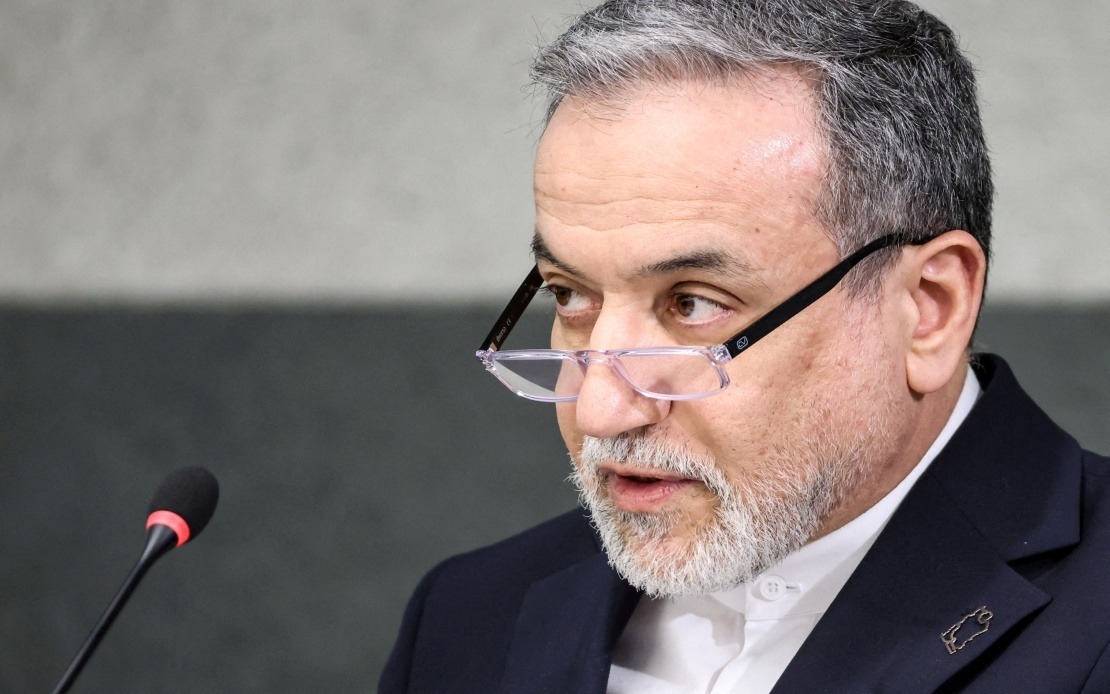
Iran's Foreign Minister Abbas Araghchi has doubled down on Tehran's assertion of control over the Strait of Hormuz, responding pointedly to US President Donald Trump's announcement that Washington will impose a 20 per cent fee on commercial shipping through the strategic chokepoint. Speaking via social media on Monday, Araghchi adopted a measured tone while defending Iran's historic claim to stewardship of one of the world's most economically vital maritime passages, through which roughly one-third of global seaborne trade flows.
Araghchi's remarks constitute a carefully calibrated diplomatic response that acknowledges the principle of compensation for security provision while rejecting the specific toll rate proposed by the Trump administration. His assertion that "whoever provides secure and safe passage of commercial vessels through the Strait of Hormuz should be compensated for this service" represents a rhetorical pivot that accepts the underlying logic of Trump's position before immediately contesting its application. This rhetorical manoeuvre allows Iran to position itself as a reasonable actor willing to engage with the concept of fee-based transit arrangements whilst simultaneously establishing itself as the legitimate authority capable of guaranteeing such passage.
The Strait of Hormuz, separating Iran from Oman and measuring just 21 nautical miles at its narrowest point, represents a critical artery for global energy markets. The waterway's strategic importance derives from its role as the gateway through which approximately 30 per cent of world petroleum and liquefied natural gas exports transit. For Malaysia and other Southeast Asian economies heavily dependent on Middle Eastern energy supplies, disruptions to traffic through the strait carry immediate consequences for fuel costs and supply security. Any escalation in tensions between Washington and Tehran risks constraining the flow of energy products to the region, potentially driving up prices across consumer and industrial sectors.
Trump's announcement of a blockade coupled with the 20 per cent toll represents an unprecedented assertion of US control over a waterway that sits outside American territorial waters and lies at the heart of Iran's maritime domain. The proposal conflicts with established international maritime law principles, particularly the United Nations Convention on the Law of the Sea, which guarantees freedom of navigation through international straits. Araghchi's rejoinder that 20 per cent "is of course too much" and his pledge that Iran "will be fair" suggests Tehran may be open to negotiating a lower fee arrangement, though his statement remains deliberately vague about what constitutes fairness in this context.
The escalating rhetoric and counter-proposals underscore the profound deterioration in US-Iran relations under Trump's renewed presidency. Despite earlier attempts to de-escalate tensions, including a Pakistani-mediated memorandum of understanding intended to establish a framework for peaceful resolution and lasting agreement, the two powers continue exchanging hostile moves and increasingly provocative declarations. This cycle of confrontation creates dangerous unpredictability in a region already volatile, where miscalculation could rapidly spiral into military confrontation with catastrophic implications for global shipping and energy markets.
For Malaysia specifically, the stakes extend beyond energy economics to maritime commerce and strategic stability. As a major international trading nation and a state with significant maritime interests, Malaysia depends fundamentally on freedom of navigation and the security of sea lanes. Any scenario in which the Strait of Hormuz becomes contested territory or subject to unilateral toll regimes threatens the predictability and cost-effectiveness of Southeast Asian trade flows. Malaysian shipping companies, energy importers, and manufacturers relying on supply chains passing through Middle Eastern waters face potential disruption and increased operational costs.
Iran's reassertion of itself as the "guardian" of the strait, whether capitalized for rhetorical emphasis or not, reflects Tehran's determination to maintain its geopolitical relevance in the face of US pressure. The language of guardianship carries historical weight, evoking Iran's geographic position and strategic proximity to the waterway whilst implicitly rejecting the legitimacy of external powers dictating terms for transit. However, Iran lacks the naval capacity to physically enforce exclusive control over the passage, making its guardianship claim more aspirational than operational. This gap between rhetoric and capability creates space for continued American posturing and potential confrontation.
The broader context involves complex regional dynamics where multiple powers hold stakes in Strait security. Saudi Arabia, the United Arab Emirates, and other Gulf states depend on the waterway's openness for their own energy exports, making them resistant to arrangements that favour either Tehran or Washington exclusively. Malaysia and other ASEAN nations similarly have compelling interests in maintaining international order and predictable access to the strait regardless of which regional or global power attempts to assert dominance. This multifaceted stakeholder landscape complicates any unilateral efforts by either Washington or Tehran to impose new rules governing transit.
Economically, the proposed American toll would represent a novel and destabilising assertion of extraterritorial jurisdiction over a critical maritime commons. If implemented, such a regime could establish a precedent encouraging other regional powers to assert control over strategically important passages, potentially fragmenting the global maritime system that underpins international commerce. For Malaysian importers purchasing oil and liquefied natural gas from the Gulf, effective increases in shipping costs translate directly into higher consumer energy prices and reduced economic competitiveness for energy-intensive industries.
Araghchi's careful rhetorical positioning suggests Iran recognises the limits of its ability to physically challenge the US Navy's technological superiority in the waterway. Instead, Tehran appears to be pursuing a diplomatic strategy of establishing its moral authority and legal standing as guardian whilst signalling willingness to negotiate reasonable fee arrangements. Whether such negotiation remains possible depends on whether the Trump administration views its toll proposal as a starting position for bargaining or as an ultimatum requiring unconditional acceptance. Given the adversarial tone characterising current US-Iran relations, productive negotiation appears unlikely in the near term.

