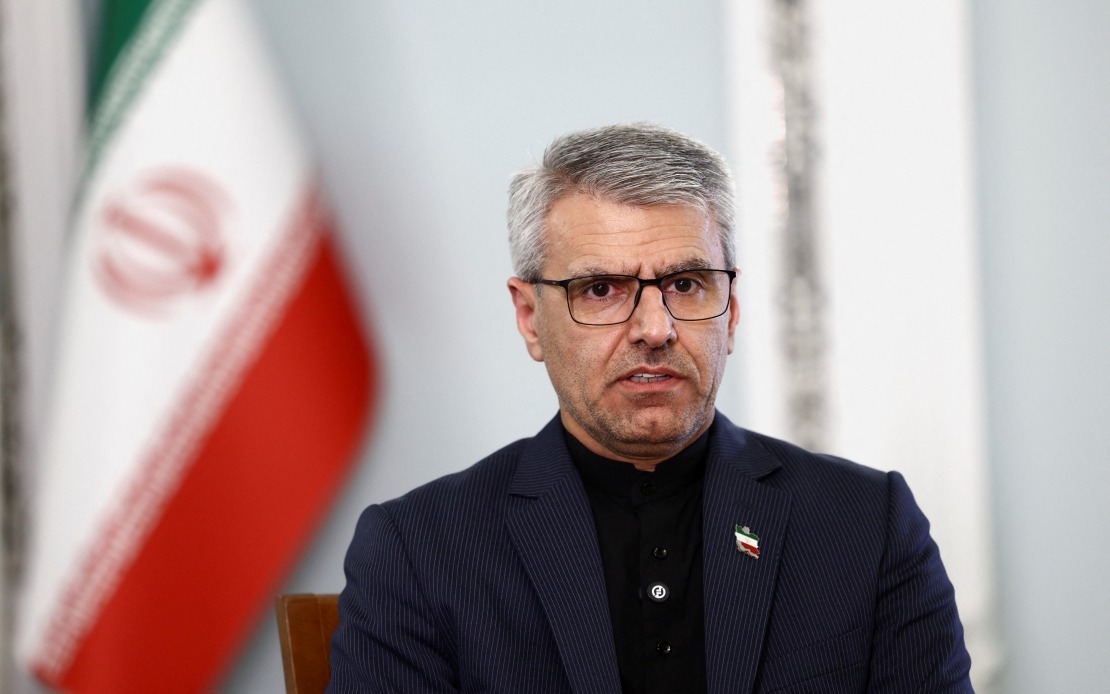
Iran's Foreign Ministry claimed substantial headway in negotiations with the United States following a critical round of talks held in Burgenstock, Switzerland on Monday, signalling that diplomatic pathways remain open despite longstanding tensions between Tehran and Washington. Speaking to reporters after the four-party discussions, Foreign Ministry spokesman Esmaeil Baghaei characterised the deliberations as yielding what he termed "important steps" designed to create conditions for formal negotiations toward a comprehensive final agreement. His measured optimism reflected Iran's traditional diplomatic language when discussing sensitive international negotiations, though he pointedly expressed hope that "the other side" would demonstrate genuine commitment during implementation phases.
A central outcome of the Switzerland meeting involved establishing what negotiators termed a "deconfliction cell," a monitoring mechanism intended to maintain oversight of ceasefire arrangements and prevent renewed hostilities, with particular emphasis on stabilising the situation in Lebanon. This institutional framework represents a practical approach to managing the volatile regional environment where multiple actors hold competing interests. The creation of such mechanisms typically signals that negotiating parties have moved beyond preliminary exchanges and begun constructing operational frameworks that would govern compliance with any eventual agreement. For Southeast Asian observers monitoring Middle Eastern developments, such structural arrangements indicate that international powers are attempting to institutionalise peace processes rather than relying solely on political commitments.
Through the Switzerland discussions, both delegations engaged substantively on concrete economic matters affecting Iran's international standing and financial position. Baghaei reported that negotiations covered licensing provisions for Iranian petroleum sales, an issue central to Iran's economic recovery and international reintegration. Additionally, deliberations addressed the status of Iran's frozen or restricted financial assets held abroad, a matter of considerable importance to Tehran's development objectives. According to Iran's official account, meaningful progress occurred on both fronts, though the spokesman refrained from detailing specific figures or implementation timelines. These economic dimensions carry particular significance for regional stability, as Iran's access to international markets and asset mobilisation directly influence its capacity to sustain domestic stability and maintain regional influence.
A critical agreement concerned maritime security arrangements in the Strait of Hormuz, one of global trade's most strategically important waterways through which approximately one-third of seaborne petroleum transits. The negotiations produced consensus on establishing mechanisms designed to ensure unimpeded passage and prevent the militarised confrontations that have periodically threatened this critical chokepoint. For Malaysia and other Southeast Asian maritime trading nations, ensuring predictable conditions in the Strait of Hormuz carries profound economic implications, as disruptions to shipping through this vital corridor would ripple across regional commerce and potentially elevate energy costs across the region. The agreement to establish formal mechanisms for maritime coordination therefore extends beyond Iranian-American bilateral concerns to affect broader international shipping security.
The negotiating framework envisioned continued technical-level discussions on implementation details, with specialist teams assigned responsibility for working through the complex operational specifications required for translating agreed principles into functioning arrangements. Baghaei's reference to ongoing technical work suggests that while political agreement had been reached on broad objectives, substantial labour remained in translating these into precise protocols and enforcement mechanisms. This phased approach, where political leadership achieves framework agreement before technical experts develop detailed implementation plans, represents standard international negotiating practice, though it also creates opportunities for subsequent complications if technical teams encounter unforeseen compatibility issues.
Mediator states Qatar and Pakistan jointly announced that talks at the Lake Lucerne Summit had produced significant momentum, with both sides agreeing upon a roadmap designed to produce final peace settlements within sixty days. The involvement of Qatar and Pakistan as mediating parties underscores the international dimensions of these negotiations and the role that respected regional intermediaries play in facilitating dialogue between adversarial powers. Qatar's established position as a diplomatic hub with connections to both Iranian and American leadership circles has historically enabled it to convene discussions that direct talks between principals might not easily accomplish. Pakistan's parallel involvement reflects broader regional interests in achieving stability outcomes that would diminish conflicts affecting South and Central Asian security environments.
The negotiating framework was grounded in a memorandum of understanding signed the previous week, itself a significant diplomatic development indicating that parties had achieved sufficient common ground to formalise procedures and commitments. The fact that these agreements emerged within the context of addressing consequences from conflicts initiated on 28 February situates these negotiations within response mechanisms to ongoing regional instability. For Malaysian policymakers and analysts, the progression from conflict management toward longer-term settlement discussions represents a positive trajectory, though the sixty-day timeframe for achieving final agreements suggests ambitious targets that negotiations may struggle to meet given historical complexities in Iranian-American relations.
The Switzerland talks represented an unusually intensive diplomatic engagement, with four-party participation indicating that negotiations involved not only principal parties but also formal mediator representation within the negotiating room itself. This configuration typically enhances third-party capacity to identify compromise positions and prevent negotiating deadlocks, though it also can complicate discussions by introducing additional voices and perspectives requiring accommodation. The public positioning adopted by Iranian officials, emphasising steps taken rather than ultimate destinations achieved, reflects diplomatic practice where negotiators avoid over-committing to specific outcomes before technical teams have validated feasibility.
For Southeast Asian regional interests, the outcomes of these Iran-US negotiations carry implications extending beyond bilateral Iranian-American relations. Regional stability, energy market conditions, maritime security, and the broader international order architecture all become affected by whether Tehran and Washington successfully negotiate comprehensive agreements or whether negotiations ultimately collapse. Malaysia's substantial trade relationships across both Middle Eastern and Western markets mean that instability affecting either party or the broader region directly impacts Malaysian economic interests. Additionally, the diplomatic mechanisms being constructed through these negotiations establish precedents for how international disputes involving powerful asymmetric parties might be managed through mediation and structured dialogue frameworks.
The establishment of deconfliction mechanisms and maritime security arrangements suggests that negotiators have learned from previous failed diplomatic attempts, incorporating institutional safeguards and enforcement procedures designed to prevent agreement violations. These technical innovations in diplomatic architecture may themselves constitute valuable outcomes regardless of whether broader agreement negotiations ultimately succeed. The commitment to continuing technical discussions indicates that while headline political agreements attract public attention, the detailed implementation work continues in less visible channels where specialists resolve operational complexities that political agreements necessarily leave undetermined.