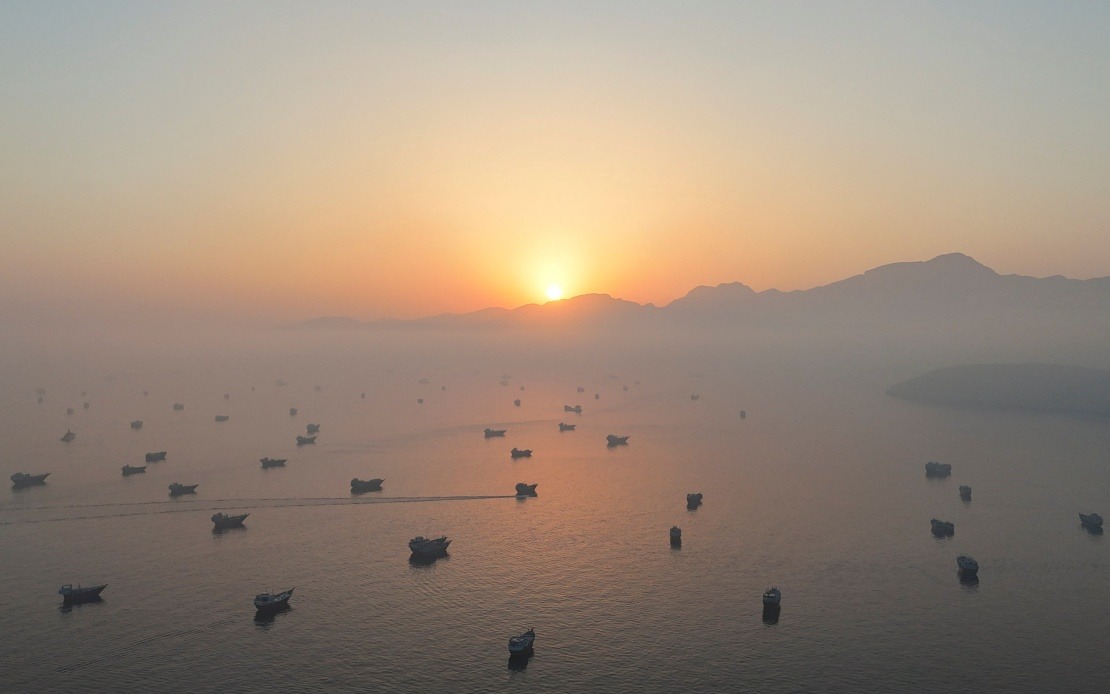
Iran's Foreign Minister Abbas Araghchi declared in Baghdad on June 28 that Tehran will exercise sole administrative authority over the Strait of Hormuz for the coming 30 days, signalling a dramatic escalation as the tenuous ceasefire between Iran and the United States unravels. The announcement, made at a press conference in the Iraqi capital, represents a significant hardening of Tehran's position on one of the world's most strategically critical maritime passages, through which roughly one-fifth of global oil trade flows daily.
The reinstatement of Iranian control comes after a period of heightened tensions marked by tit-for-tat military strikes between Tehran and Washington. What had briefly appeared to be a negotiated settlement between the two adversaries has deteriorated rapidly, with both sides trading accusations of aggression. Araghchi's statement underscores Iran's willingness to weaponise control of the strait as a pressure point in broader geopolitical negotiations, a tactic Tehran has employed before with devastating consequences for international shipping and energy markets.
Araghchi was emphatic that Iran's authority over the waterway is non-negotiable and exclusive. He warned that external parties, particularly the United States, must not attempt to establish competing administrative structures or exert influence over maritime operations in the strait. Such interventions, he argued, would destabilise the region further, inflame existing tensions, and postpone any meaningful resolution to the underlying conflict. This language suggests Iran views any international presence or coordination in the strait as a direct challenge to its sovereignty.
The backdrop to these declarations lies in February, when Israeli and American military operations against Iranian targets prompted Tehran to weaponise its geographic advantage. Iran essentially throttled shipping traffic through the strait using a combination of direct attacks on vessels, threats against commercial shipping, and strategic interdiction. This move proved highly effective as leverage, forcing both Washington and regional partners to acknowledge Iran's ability to disrupt global energy supplies. The manoeuvre demonstrated that control of the strait remained Tehran's most potent negotiating tool in its confrontation with the West.
A provisional framework agreed between the United States and Iran just weeks ago hinged on reopening the Strait of Hormuz to unimpeded international commerce. The accord represented a significant diplomatic achievement, suggesting both sides recognised the unsustainability of prolonged disruption to global shipping. However, the framework now appears in jeopardy as the underlying security situation deteriorates. The agreement explicitly prohibited Iran from levying transit fees or charges on passing vessels during the initial 60-day negotiation period, a constraint aimed at ensuring the strait remained a public good rather than an Iranian revenue source.
The sustainability of any agreement on the strait's status will likely hinge on thorny questions about fees and charges. Analysts anticipate that once the initial 60-day moratorium expires, Iran may seek compensation for providing secure passage, citing precedents for straits-monitoring fees and the costs of maintaining maritime security infrastructure. This potential disputes over fees represents a latent flashpoint that could derail negotiations, particularly as international maritime law remains ambiguous on whether coastal states may charge for transit through strategically important waterways. The tension between Iran's desire for revenue and international expectations of free passage could prove intractable.
Iran has signalled its intention to engage Oman in consultations regarding the future status and operation of the strait. Oman, which sits directly across from Iran and maintains relatively balanced relationships with both Tehran and Western powers, could serve as an intermediary or guarantor. However, any arrangement will need to comply with established international maritime law, which generally prohibits arbitrary impediments to innocent passage. Iran's insistence on coordinating with neighbouring states suggests a preference for regional solutions rather than international oversight, reflecting Tehran's broader suspicion of Western involvement in Gulf security affairs.
For Malaysia and other Southeast Asian trading nations, the implications are substantial. The Strait of Hormuz handles critical energy supplies destined for Asian markets, and any prolonged disruption would immediately translate into higher oil prices and shipping costs regionally. Malaysian energy security, already sensitive to global oil price fluctuations, would face direct pressure if Iran maintains the strait under restricted conditions. Additionally, Malaysian shipping companies operating in the region face elevated insurance costs and operational risks whenever the strait's security situation deteriorates.
The broader regional context matters significantly. Any Iranian assertion of exclusive control invites countermeasures from the United States and its allies, potentially leading to a renewed cycle of military posturing. The precedent of February's mutual strikes suggests that escalation could spiral quickly once formal diplomatic channels break down. The international community, particularly energy-dependent Asian economies, has strong incentives to facilitate a durable settlement, yet Iran's latest pronouncement suggests those incentives may be insufficient to overcome the underlying security dilemma.
The 30-day timeline announced by Araghchi carries symbolic weight, suggesting Iran retains flexibility to modify its stance if negotiations progress. However, the declaration also serves as a public commitment that may constrain Iranian decision-makers' room for compromise. As the clock begins on this declared period of exclusive Iranian control, the critical question becomes whether diplomatic channels can reopen quickly enough to prevent further deterioration. The stakes could hardly be higher, given the strait's indispensable role in global energy markets and Asian economic security.

