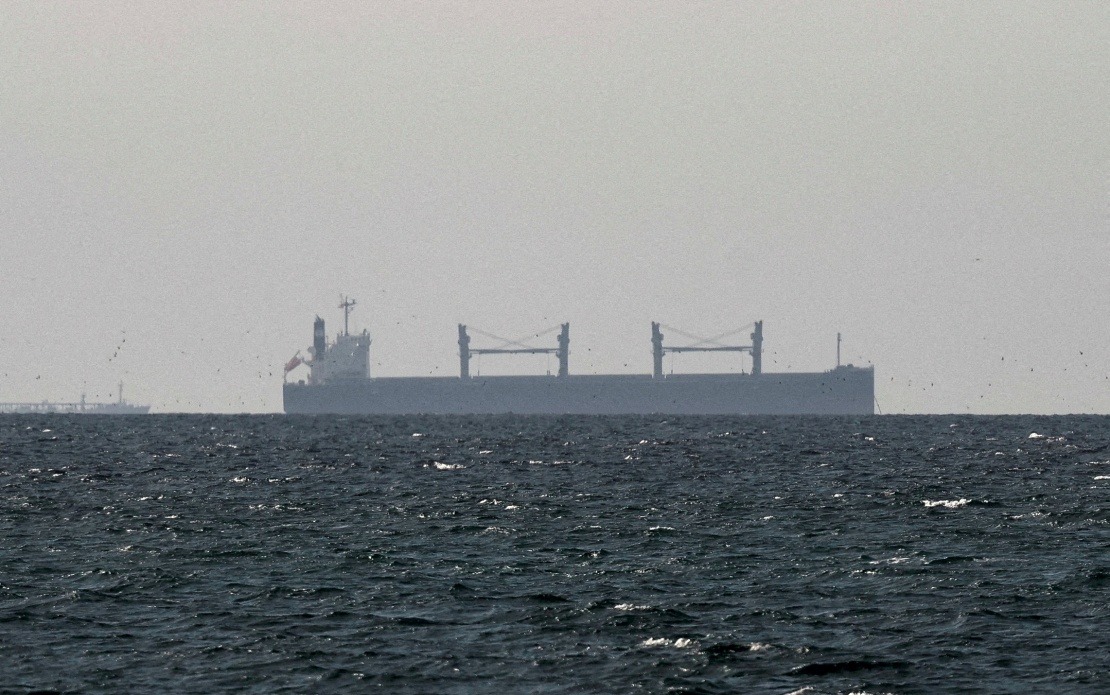
Iran's Islamic Revolutionary Guard Corps (IRGC) asserted on Friday that two commercial oil tankers had been damaged in explosions after encountering a minefield while transiting the southern Strait of Hormuz, according to reports from state-affiliated media outlets. The military body, through a statement distributed by Fars News Agency, alleged that the incident stemmed from earlier encouragement by American intelligence services that had directed the vessels toward the disputed waterway. However, the IRGC did not furnish the identity of the affected tankers, details regarding any potential injuries or fatalities, or information about their respective flags and operators, leaving the claim without independent verification from international observers or maritime authorities.
The timing of the alleged incident comes as a significant worry for global energy markets. The Strait of Hormuz functions as one of the world's most strategically vital maritime passages, serving as the gateway through which crude oil and liquefied natural gas originating from the Persian Gulf must traverse to reach international waters and eventually global markets. Analysts estimate that roughly one-fifth of the planet's traded petroleum flows through this narrow chokepoint annually, making any disruption to shipping lanes an immediate concern for energy-dependent economies worldwide, including those throughout Southeast Asia.
In its statement, the IRGC Navy escalated rhetoric by declaring the Strait of Hormuz "extremely unsafe" and "completely closed," suggesting that maritime commerce in the region faced severe restrictions. The military organisation warned that restrictions on petroleum, natural gas, and chemical fertiliser shipments originating from the Persian Gulf region would persist indefinitely until what it characterised as American military operations in the area came to an end. This declaration effectively positioned Iran's actions as defensive responses to external military presence rather than unilateral blockade measures, a framing consistent with Tehran's broader narrative about foreign interference in regional affairs.
The IRGC took the additional step of publicly cautioning all commercial shipping operators against attempting passage through the disputed waters, explicitly warning that vessels venturing into the area faced substantial risks of physical damage and potential loss of crew members. Such warnings, whether backed by actual mine-laying operations or merely rhetorical posturing, carry significant weight in maritime insurance and shipping markets, as vessel operators must weigh the costs of insurance premiums, rerouting, and potential losses against the time and expense savings offered by the shorter route through the Strait.
The latest allegations emerge against a backdrop of deteriorating relations between Washington and Tehran that has persisted despite recent diplomatic efforts. Regional observers had noted that a Pakistan-brokered memorandum of understanding, signed in the preceding month, was intended to provide a framework for de-escalation and long-term peace. Yet the continued cycle of accusations and counter-accusations between the two powers suggests that underlying strategic tensions remain fundamentally unresolved, with neither side appearing willing to unilaterally reduce military posturing or aggressive rhetoric.
For Malaysia and other Southeast Asian trading nations, the implications of prolonged Strait of Hormuz instability carry direct economic consequences. A substantial portion of regional energy imports transits through this waterway, and shipping companies based in or operating from Malaysia face elevated operational costs and insurance premiums whenever geopolitical friction in the Middle East rises. Additionally, Malaysian petrochemical industries that depend on stable crude oil pricing face uncertainty when supply-route tensions threaten to disrupt global markets, creating ripple effects across manufacturing and export-oriented sectors throughout the region.
The IRGC's framing of the incident as a response to American intelligence manipulation introduces an element designed to shift international blame away from Tehran and toward Washington. By suggesting that US agencies actively encouraged tankers to enter a minefield, the statement attempts to reposition Iran as responding to foreign provocation rather than initiating hostile action. This narrative strategy reflects the broader information warfare dimension of the US-Iran confrontation, wherein both parties compete for international sympathy and third-party support through competing interpretations of events.
The absence of independent verification raises legitimate questions about the veracity of the IRGC's claims. Satellite imagery, shipping company reports, insurance declarations, and neutral maritime observers typically confirm major incidents in the Strait within hours. The lack of corroborating evidence from these sources suggests either that the incident occurred differently than described, or that claims may have been exaggerated for domestic political consumption and international signalling purposes. Regional powers and international maritime authorities will likely demand concrete evidence before accepting the Iranian narrative at face value.
The broader pattern of escalation in the Strait reflects the absence of effective diplomatic mechanisms to manage competition between regional and external powers. Unlike Cold War analogues that eventually produced rules of engagement and de-confliction protocols, the current Middle Eastern security environment lacks institutionalised channels through which rival parties can negotiate limits on confrontation. This structural gap increases the likelihood of miscalculation or unintended incidents triggering broader conflicts, a risk that extends far beyond the immediate region to affect global energy security and international commerce.

