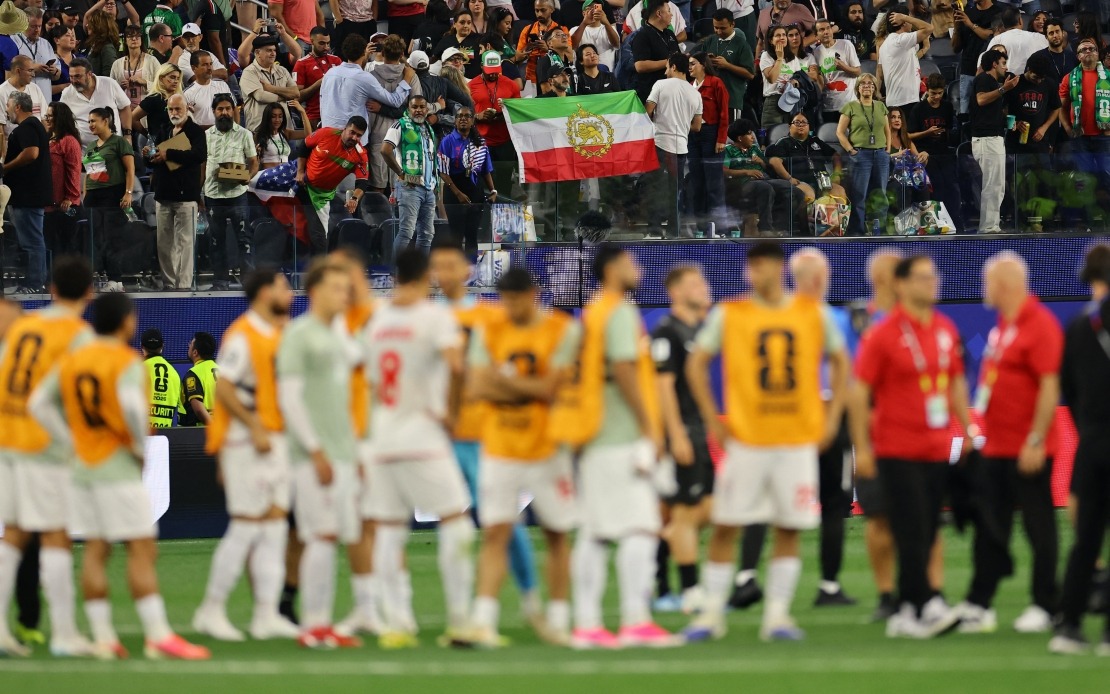
Iran's national football team faced unexpected upheaval during the opening stages of the World Cup when manager Amir Ghalenoei revealed that his squad received orders to evacuate their Los Angeles training base shortly after their Monday evening match against New Zealand. The sudden departure marked a stark reversal of the team's original plans, which had factored in an overnight stay in California to allow players proper recovery time before resuming preparation activities.
Ghalenoei characterized his team as the "most repressed team in the whole World Cup," highlighting the logistical challenges and restrictions that have hampered Iran's preparation and participation in the tournament. In comments relayed through an interpreter to US sports media outlet ESPN, the manager expressed frustration at the constant travel demands imposed on his players, emphasizing that the extended hours spent in transit prevented adequate rest and physical rehabilitation between matches. The decision to order immediate departure meant abandoning recovery protocols that would normally follow such an intense fixture.
While Ghalenoei declined to specify which authority had mandated the team's sudden relocation, the timing and nature of the directive raised questions about the decision-making processes at play. The Iranian delegation subsequently relocated to their alternative training base in Tijuana, Mexico, a facility they had established months earlier after encountering significant administrative hurdles in the United States.
Iranian captain Mehdi Taremi offered additional perspective on the team's circumstances, referencing a locker room visit by FIFA President Gianni Infantino following Monday's match. Taremi's comments suggested that broader geopolitical considerations might be influencing how Iran's participation was being managed within the tournament framework. His cryptic reference to "other things" and acknowledgment that "everyone knows it" appeared to allude to the longstanding diplomatic tensions between the United States and Iran, matters that extend far beyond sporting competition.
The captain's measured but pointed remarks reflected the delicate position Iran occupies as a participant in an international tournament hosted by an adversary nation with whom relations remain historically fraught. Taremi indicated that he deliberately avoided explicitly articulating these geopolitical dimensions, suggesting that the underlying issues were self-evident to observers. His statement conveyed frustration at conditions that appeared to disadvantage his team while acknowledging the complicated context in which Iranian athletes compete on the global stage.
Iran's journey to establishing their current tournament base reflected months of logistical complications that preceded their World Cup participation. The team had originally planned to base their operations in Tucson, Arizona, but encountered persistent visa and administrative obstacles that forced a change of plans in late May. This shift to Tijuana represented a significant disruption to preparation schedules and training continuity, requiring the squad to reorganize accommodation, facility access, and travel arrangements with limited notice.
The Tucson relocation would have positioned Iran within the continental United States, providing geographic proximity to matches and minimizing travel time between fixtures and training sessions. However, the documentation and access challenges that emerged complicated this arrangement, necessitating the shift southward to Mexico. This relocation itself consumed substantial preparation time and resources, setting the stage for the subsequent complications regarding their Los Angeles base.
For Southeast Asian football observers and journalists, Iran's experience offers a window into the complex intersection of sports administration and international relations. The situation illustrates how political tensions can manifest within tournament structures despite FIFA's stated commitments to neutrality and equal treatment of all participating nations. The implications extend beyond Iran's immediate World Cup performance, potentially affecting how multinational sporting events manage participation from nations with contentious international relationships.
The treatment Iran has received throughout the tournament preparation phase raises broader questions about the obligations of tournament hosts to provide equitable accommodations and logistical support to all participating teams, regardless of diplomatic circumstances. The principle of fair competition presumes that all squads operate under comparable conditions, yet the evidence suggests that Iran faced distinct constraints not imposed upon other competitors. The frequency of travel, accommodation disruptions, and sudden scheduling changes may affect player fitness, mental preparation, and overall performance in ways that extend beyond normal competitive variation.
Iran's World Cup participation occurs amid a significant thaw in international tensions, with reports indicating that protracted hostilities between the United States and Iran are approaching resolution through diplomatic channels. Yet the simultaneous treatment of the Iranian football team suggests that institutional arrangements and organizational protocols have not fully adapted to these evolving political circumstances. The gap between official diplomatic progress and the practical realities experienced by Iranian athletes highlights the complexity of implementing substantive policy changes across multiple institutional levels.
The broader context of World Cup organization in host nations raises questions that will likely influence future tournament planning and site selection. Tournament organizers face inherent challenges when hosting nations with geopolitical rivalries among participating teams, and the Iran situation demonstrates how logistical and administrative decisions can become entangled with diplomatic considerations. Whether these constraints result from explicit political direction, institutional caution, or operational inefficiency remains unclear, but the impact on Iranian athletes and their competitive environment appears demonstrable.
As Iran continues their World Cup campaign, Ghalenoei's public statements have established a record of the circumstances his team navigates. These accounts provide important documentation for future analysis of how tournament structures accommodate or disadvantage participants based on political factors. The intersection of sports and geopolitics remains inherently complex, yet the principles of fair competition and equitable treatment deserve consistent prioritization regardless of the diplomatic relationships among participating nations.