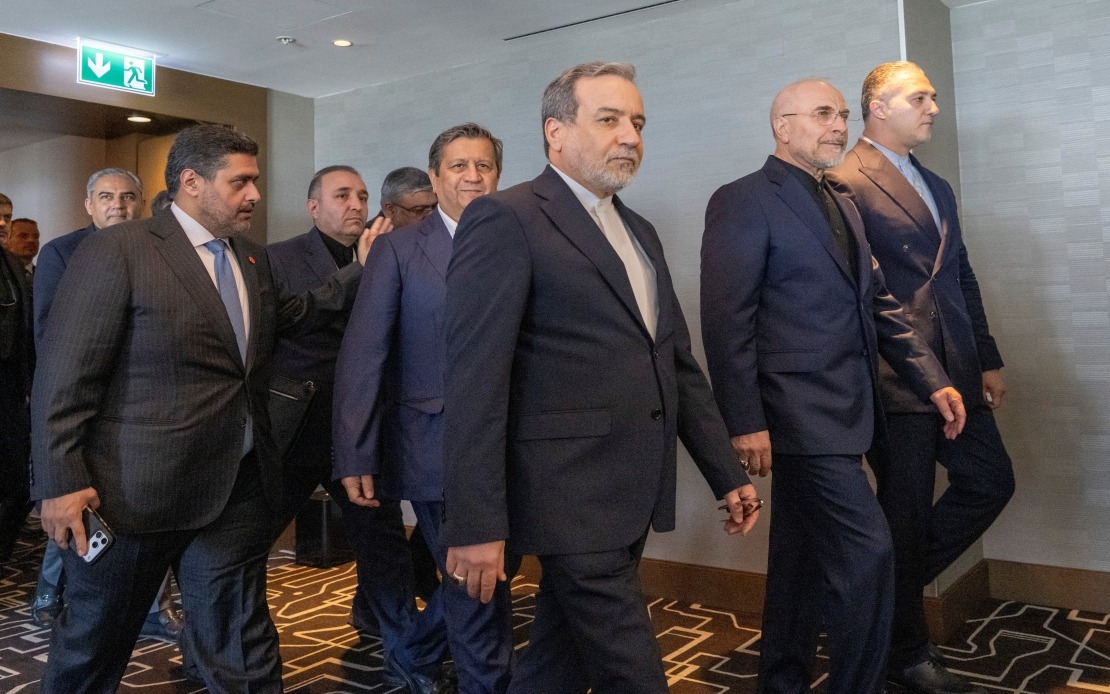
Iran's parliamentary delegation, led by Speaker Mohammad Bagher Qalibaf, departed Switzerland on Monday following a marathon 18-hour negotiation session with United States representatives at the Lake Lucerne Summit held in Burgenstock. The exit of the Iranian team marked a significant moment in what mediating nations Qatar and Pakistan characterised as substantive diplomatic engagement, with both sides reportedly working through key issues that have long stalled the broader nuclear agreement framework.
The talks themselves unfolded in what the mediators described as a collaborative environment, with both parties demonstrating a willingness to explore pathways toward resolution. Qatar and Pakistan, acting in their capacity as neutral facilitators, reported that the discussions generated momentum through the identification of shared mechanisms and procedural agreements. This characterisation as positive and constructive carries weight given the historical tensions and previous breakdown of direct engagement between Tehran and Washington.
Central to the outcome of these deliberations was the establishment of several institutional frameworks designed to sustain momentum. The parties agreed to create a high-level committee that would oversee the broader negotiation process, ensuring that senior officials from both sides maintain direct communication channels. Complementing this was the decision to establish technical working groups tasked with examining specific substantive issues that require detailed expertise and coordination. These mechanisms suggest both delegations recognised that progress depends on maintaining structured dialogue across multiple levels simultaneously.
Perhaps most concretely, the delegations agreed upon a 60-day roadmap explicitly targeting a final agreement. This timeline establishes a clear benchmark against which progress can be measured and creates internal pressure on both parties to maintain negotiating momentum. Such roadmaps serve a dual function: they demonstrate to domestic audiences that talks are moving forward with purpose, while also providing a realistic window for resolving outstanding technical and political complications that invariably arise in nuclear negotiations.
For Malaysia and Southeast Asia more broadly, the significance of these discussions extends beyond the immediate bilateral relationship between Iran and the United States. Developments in Iran's nuclear programme carry implications for regional stability and maritime security across shipping routes through the Strait of Hormuz, through which approximately one-third of global seaborne petroleum passes. Any escalation in Iranian-Western tensions risks disrupting energy supplies and increasing insurance costs for vessels transiting these waters, consequences that ripple directly into Malaysian commerce and energy security.
The resumption of structured negotiations also reflects broader shifts in regional diplomacy. The involvement of Qatar and Pakistan as mediators underscores how smaller nations and regional powers have assumed roles as bridge-builders on international disputes. Pakistan's participation is particularly noteworthy given its own strategic location and historical relationships across South Asia and the Middle East. For Malaysia, which has sought to maintain balanced relationships across different international power blocs, the success of mediation efforts demonstrates the continued relevance of dialogue-based conflict resolution.
The continuation of technical talks scheduled for later in the week suggests the delegations have identified sufficient common ground to justify sustained engagement. These lower-level discussions typically address the granular details of verification protocols, sanctions architecture, and implementation timelines. The fact that both sides have committed to continued technical engagement indicates neither party views the relationship as fundamentally broken, even if significant disagreements persist on core issues.
From a Malaysian perspective, successful nuclear negotiations involving Iran matter for several reasons. A stable framework reduces the risk of military confrontation that could disrupt global markets and regional equilibrium. Additionally, Malaysia has maintained economic and diplomatic ties with Iran despite broader Western sanctions, positioning itself to benefit from any easing of international restrictions on Iranian trade. Lower international tensions also provide space for regional cooperation mechanisms in which Malaysia participates, from ASEAN forums to broader Asian dialogue platforms.
The departure of Iran's delegation for Tehran now enters a critical phase where the negotiating team must brief political leadership and secure domestic consensus for potential compromises. Mohammad Bagher Qalibaf's role as both Parliament Speaker and chief negotiator reflects Iran's intention to align legislative and executive branches behind negotiations, though such alignment is never guaranteed in Tehran's complex political ecosystem. The extent to which the Iranian government endorses the preliminary agreements reached in Burgenstock will significantly shape whether the 60-day roadmap translates into an actual accord.
The United States side will similarly need to manage domestic political considerations, particularly regarding Congressional oversight of any nuclear agreement and concerns from regional allies about Iran's ballistic missile programmes and regional activities beyond the nuclear domain. The technical working groups provide a mechanism for addressing these ancillary concerns that extend beyond the core nuclear question.
As these talks progress, Malaysian observers should note that the success or failure of these negotiations carries consequences for energy markets, maritime security, and the international legal framework governing nuclear technology. A resolution that increases international confidence in Iran's nuclear intentions could gradually reintegrate Iranian oil into global markets and moderate energy prices. Conversely, renewed deadlock risks repeating previous cycles of escalation, sanctions, and regional tension that ultimately destabilise the rules-based international order on which Malaysia's own development and prosperity depend.