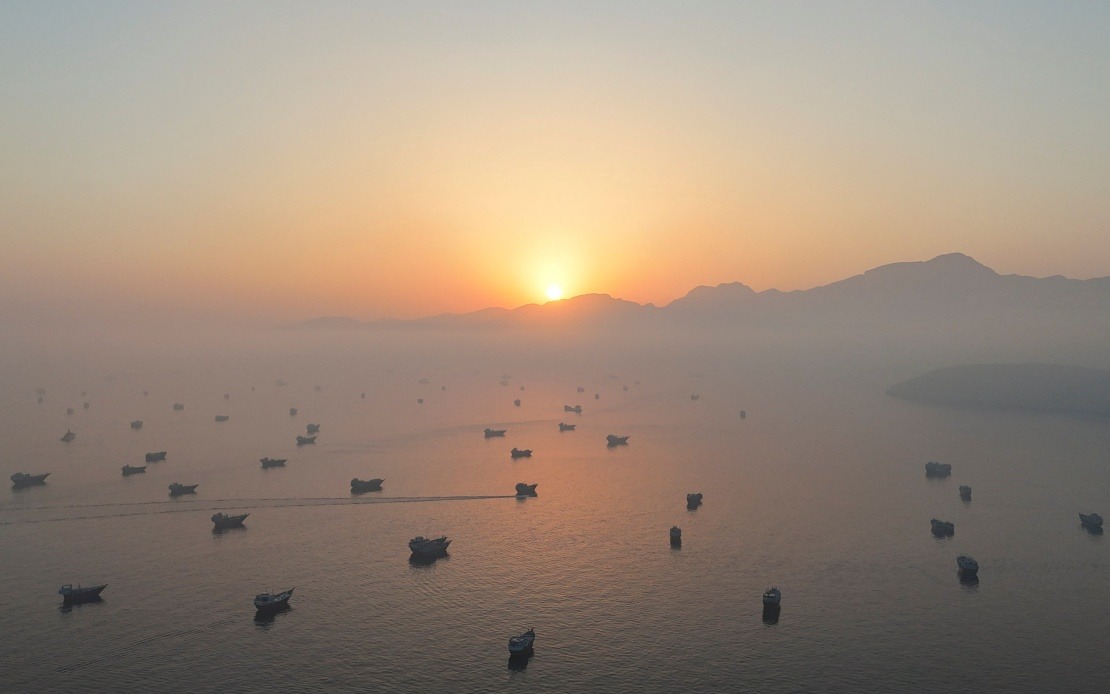
Iran's military leadership has escalated its control of one of the world's most critical shipping corridors, with the Islamic Revolutionary Guard Corps announcing strict new requirements for maritime passage through the Strait of Hormuz. The declaration came after the IRGC reported that two vessels experienced incidents in the waterway on Sunday, attributing the confrontations to non-compliance with Iranian navigation protocols. The assertion underscores deepening tensions in the Persian Gulf region as shipping companies face mounting uncertainty about safe passage through waters that carry roughly one-third of globally traded oil.
The IRGC's statement explicitly warned that no petroleum, liquefied natural gas, or fertiliser shipments would be permitted transit without direct coordination and approval from Iranian authorities. This blanket proclamation represents a significant hardening of Iran's approach to maritime governance in the Strait, moving beyond previous warnings to establish what amounts to a formal permit system. The military body claimed absolute dominion over the waterway and insisted that only routes designated by Iran could be considered safe for international shipping, effectively positioning Tehran as the sole arbiter of passage rights in waters recognised internationally as a critical global chokepoint.
According to Iranian military accounts, four United States-aligned vessels attempted passage on Sunday by switching off their navigation systems while following what authorities characterised as an unapproved route. The IRGC stated that following interventions by Iranian naval forces, two of these ships halted after incidents occurred, while the remaining pair reversed course and departed the area. The incident details remain contested, with Western sources likely offering alternative interpretations of events. Regardless of the precise circumstances, the episode highlights how quickly maritime encounters in the Strait can escalate from routine navigation challenges into confrontational episodes with significant geopolitical implications.
The timing of Iran's ultimatum reflects broader regional conflict patterns that have intensified throughout July. Beginning July 8, the United States military launched multiple coordinated strikes against Iranian targets, with American Central Command justifying these operations as responses to what Washington characterises as Iranian aggression against commercial vessels transiting the Strait. Tehran subsequently retaliated with missile and drone strikes targeting American military installations across several West Asian nations, creating a tit-for-tat dynamic that shows no immediate signs of de-escalation. This cycle of action and reaction has progressively raised tensions and created conditions where even routine maritime activity becomes fraught with diplomatic and security implications.
For regional economies, particularly those in Southeast Asia, Iran's new stance presents significant challenges to shipping routes and energy security. Malaysia, as a major trading nation with substantial petroleum imports and extensive maritime commerce, faces direct consequences from any disruption to Hormuz transit. The Strait remains irreplaceable for energy-dependent economies across Asia, and attempts to impose unilateral permit systems threaten the freedom of navigation principles that international law has traditionally upheld. Malaysian businesses and consumers ultimately bear the costs of such instability through higher energy prices and supply chain uncertainties.
The Iranian position fundamentally challenges the international legal framework governing maritime transit through straits used for international navigation. While coastal states possess legitimate interests in ensuring maritime safety and environmental protection, blanket permit requirements for passage approach restrictions that would require explicit international agreement or enforcement through the United Nations. Iran's assertion that it holds unilateral authority to grant or deny passage rights represents a contestation of norms that have governed international shipping for decades. The practical implementation of such a system would require Iranian inspection capabilities far exceeding current capacity, suggesting the declaration functions as much as political posturing as operational policy.
Shipping companies operating in the region now confront acute risks and mounting insurance costs. The prospect of mandatory Iranian permits introduces bureaucratic delays, potential arbitrary denial of passage, and heightened exposure to naval encounters during transit. Some vessel operators are already considering alternative routes around the Cape of Good Hope, despite the enormous time and fuel penalties such detours impose. This dynamic effectively grants Iran leverage over global energy markets and shipping patterns without requiring formal international recognition of its claimed authority. Insurers have responded by substantially increasing premiums for vessels transiting the Strait, costs ultimately borne by consumers and businesses dependent on Middle Eastern energy sources.
The confrontation reflects Iran's broader strategic objective of asserting regional dominance and complicating American military operations in the Persian Gulf. By controlling access through the Strait, Tehran gains leverage in ongoing negotiations and disputes with Washington while demonstrating resolve to its domestic audience. The strategy carries substantial risks, however, as sustained restrictions could trigger international intervention or broader military escalation that might exceed Iranian capacity to control. The delicate balance between deterrence and provocation remains precarious, with miscalculation on either side capable of triggering wider conflict.
International shipping and energy markets have demonstrated resilience to previous Hormuz disruptions, but the current situation's duration remains uncertain. If tensions persist, market mechanisms will begin pricing in permanent capacity reductions and longer transit times, effectively raising the cost of doing business in the region. Governments with interests in maintaining freedom of navigation have begun discussing potential coordinated responses, including possible escorts for commercial vessels or alternative security arrangements. Any such interventions risk further escalating the cycle of confrontation that has characterised recent weeks.
For Malaysian policymakers and business leaders, the Iranian declaration underscores the urgent importance of energy diversification and supply chain resilience. While the immediate risk of complete Hormuz closure remains low, the trajectory of regional tension suggests policymakers should accelerate development of non-Middle Eastern energy sources and strengthen relationships with alternative suppliers. The incident demonstrates how geopolitical conflicts thousands of kilometres away directly impact prosperity and economic stability in Southeast Asia, making regional peace and maritime stability matters of vital national interest.

