Tensions over implementation of a freshly signed US-Iran memorandum intensified on Sunday as Tehran insisted Washington must compel Israel to vacate occupied Lebanese soil on a predetermined schedule. The demand signals growing friction between the two countries even as they attempt to move forward with a broader 14-point understanding reached after weeks of military escalation and intensive diplomatic work. For Southeast Asian observers, the dispute underscores how regional Middle Eastern conflicts remain entangled with great-power competition, with implications for global stability and international shipping through contested waters.
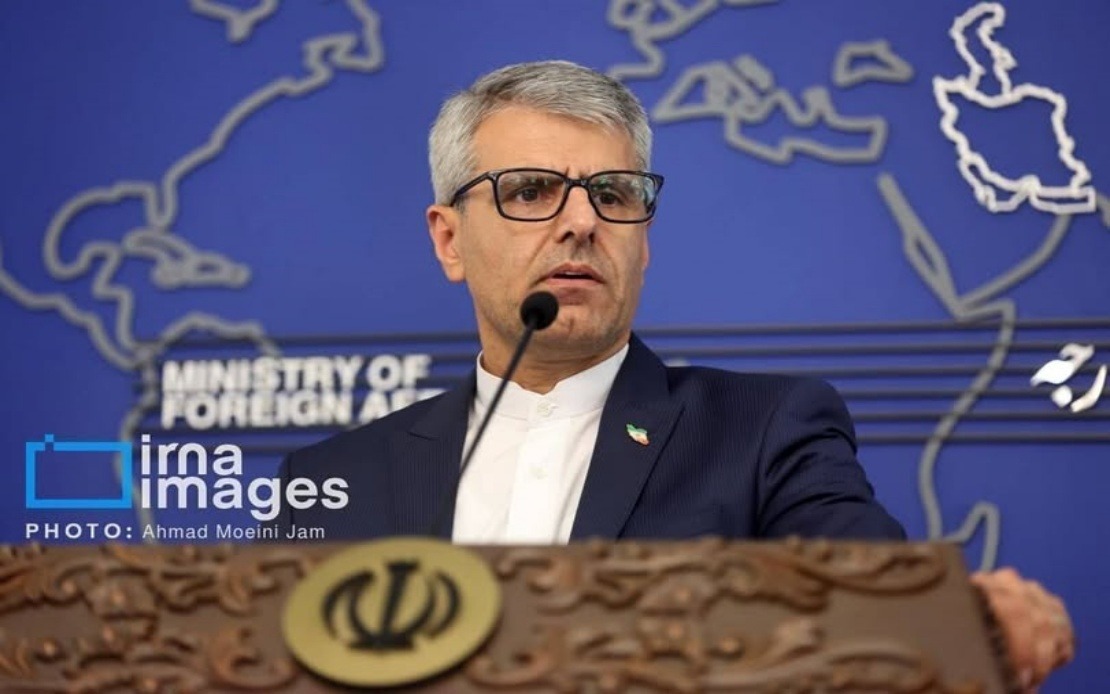
Spokesperson Esmaeil Baqaei articulated Iran's position at a news briefing, emphasizing that ending Israeli military operations and restoring Lebanon's full sovereignty represent non-negotiable preconditions for any lasting settlement. The Foreign Ministry official framed these demands not as negotiable talking points but as existential requirements for establishing durable peace in a region already fractured by decades of conflict. This hardline stance suggests Tehran sees the Lebanese question as central to its broader strategic interests, rather than a secondary issue that might be traded away in wider negotiations with Washington.
Baqaei's rhetoric deployed the language of legitimacy and moral obligation, arguing that preserving Lebanese territorial integrity and protecting the dignity of Lebanese civilians form the bedrock upon which any agreement must rest. By coupling these demands with explicit references to the April ceasefire understanding and the June 18 memorandum, Iran created a narrative suggesting that Washington has repeatedly committed to these principles and must now deliver on those promises. The spokesperson further contended that Tehran expects the United States to shoulder responsibility for ensuring Israeli compliance, effectively placing accountability squarely on American shoulders rather than acknowledging the complexities of Washington's actual influence over Israeli military decision-making.
The Iranian position reflects a pattern of escalating demands that tracks closely with the timeline of recent negotiations. Officials placed "ending the war and military operations against Lebanon" alongside "ending the war against Iran" as twin pillars of their requirements, suggesting Tehran views the two conflicts as interconnected rather than separate problems requiring distinct solutions. This linkage carries strategic weight, implying that progress on one front becomes impossible without progress on the other, thereby restricting Washington's room for manoeuvre and forcing a more holistic approach to regional diplomacy.
Meanwhile, Parliament Speaker Mohammad Bagher Qalibaf, who serves as chief negotiator, engaged in separate discussions with Lebanese Parliament Speaker Nabih Berri to reinforce Tehran's commitment to ending the Lebanese conflict. Qalibaf's communication emphasized that Iran pursues the cessation of hostilities in Lebanon seriously, framing it as a central preoccupation rather than a peripheral concern. By speaking directly to the Lebanese leadership, Iran attempted to cultivate diplomatic leverage and demonstrate to Beirut that its interests receive priority consideration in Tehran's overall strategic calculus.
Qalibaf provided details about last week's negotiations with the US in Switzerland, revealing that ending the Lebanese war and restoring Lebanese sovereignty featured prominently in those discussions. The Parliament Speaker identified the Lebanese question as forming the substance of the first clause within what Iranian sources refer to as the Islamabad memorandum, suggesting this provision occupies paramount importance within the broader agreement structure. This revelation indicates that the memorandum addresses the Lebanon situation explicitly rather than leaving it to separate channels or future protocols.
When Iran raised objections about alleged American violations of provisions concerning Lebanon, the two sides agreed to establish a conflict-control unit comprising representatives from Iran, the United States, and Lebanon itself. This mechanism ostensibly provides a forum for monitoring implementation and addressing complaints about non-compliance. The establishment of such a trilateral body represents a significant structural commitment, though its effectiveness depends entirely on whether all three participants genuinely prioritize resolving disputes rather than accumulating grievances.
Qalibaf articulated Tehran's objectives with crystalline clarity: terminating the Lebanese war, facilitating the return of displaced populations to their homes, concluding the occupation, and securing the departure of Israeli forces from Lebanese territory. The sequential nature of these goals implies that achieving one precondition should logically lead to the next, creating a domino effect where progress becomes self-reinforcing. Yet this logic assumes actors share identical definitions of terms like "war's end" and "occupation," assumptions that recent Middle Eastern history repeatedly contradicts.
The Iranian push for an explicit withdrawal timetable takes on particular significance in light of Middle Eastern history, where vague agreements frequently permit indefinite military presence by occupying powers. By demanding "swift determination of a timetable for unconditional withdrawal," Iran attempts to close loopholes that might otherwise permit Israel to maintain forces under alternative nomenclatures or security justifications. The specification of "unconditional" withdrawal explicitly rejects any Israeli claims that remaining forces serve protective or peacekeeping functions.
For Malaysia and other Southeast Asian states, these developments carry indirect but meaningful implications. Regional shipping through chokepoints like the Strait of Malacca faces constant risk should Middle Eastern instability worsen, potentially disrupting trade flows that depend on predictable passage through contested waters. Furthermore, Malaysia's substantial Muslim population and its historical role as a bridge between the Islamic world and the international community position the country as a stakeholder in regional stability even when direct territorial interests appear absent.
The broader US-Iran memorandum remains under intense scrutiny as both Washington and Tehran attempt implementation while managing sharply conflicting interpretations of its meaning and obligations. Iran's increasingly assertive demands regarding Lebanese withdrawal suggest the agreement may prove more fragile than initial optimistic rhetoric suggested. The insertion of a specific Lebanese withdrawal requirement into what was likely a more general framework indicates that both sides wrestled extensively over this provision, ultimately formalizing it as a binding component rather than permitting ambiguity.
The emerging dispute over implementation reveals how quickly initial agreements can fracture when parties focus on translating abstract commitments into concrete actions with timelines and metrics. Iran's insistence that Washington force Israeli compliance reflects both strategic priority-setting and acknowledgement of American diplomatic leverage with Israel, even while friction characterizes the broader US-Israel relationship. The success or failure of these specific Lebanese negotiations may determine whether the larger 14-point memorandum survives beyond the announcement phase into sustained operational reality.

