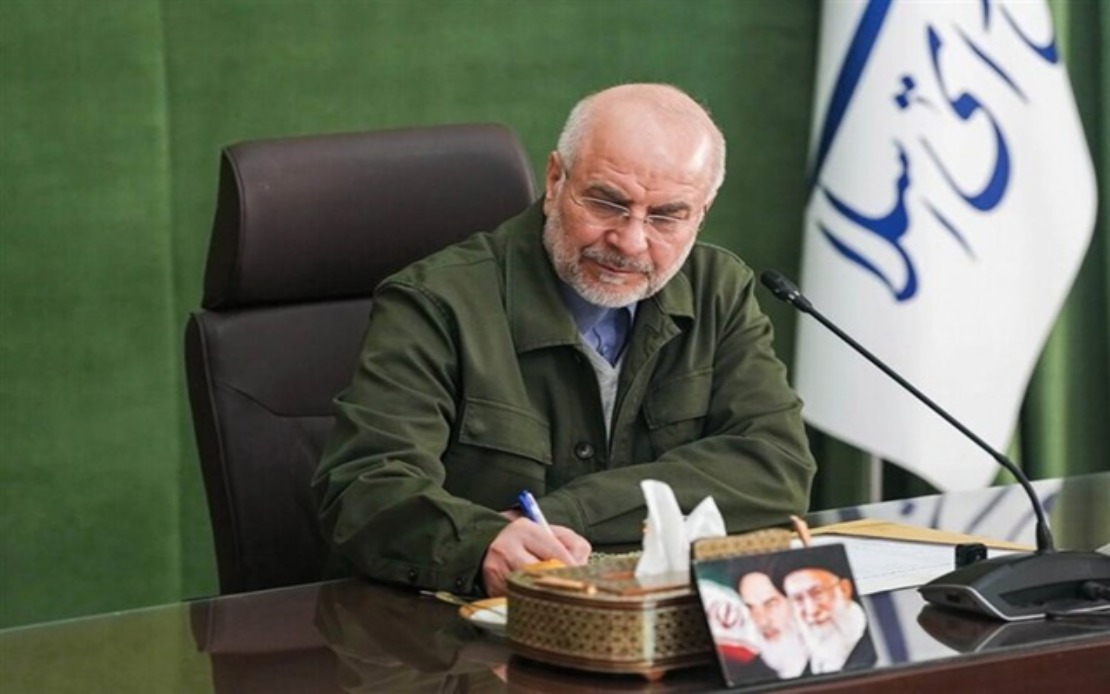
The dispute over Iran's unfrozen assets has escalated into a public relations confrontation between Tehran and Washington, with Iranian officials flatly denying assertions from American leadership about how the released funds will be deployed. On Thursday, Mohammad Bagher Ghalibaf, who serves as both Parliamentary Speaker and a principal figure in Iran's negotiating team, took to social media to rebut contentions from the Trump administration regarding the allocation of these resources. His statement reflected a broader Iranian position that the country retains complete autonomy in determining how its own capital should be invested, free from external conditions or restrictions.
The immediate trigger for Ghalibaf's rebuttal came from recent pronouncements by top US officials. Vice President JD Vance had suggested on Monday that Iran might channel the unfrozen assets toward purchasing American agricultural commodities including soybeans, corn, and wheat. President Donald Trump subsequently amplified this position on Tuesday, asserting not only that such agricultural and medical purchases would occur but that the funds themselves would be held in an American-controlled escrow arrangement to ensure compliance with these spending parameters. These statements appeared designed to frame the sanctions relief as benefiting American farmers and producers while maintaining Washington's supervisory authority over how Tehran deploys the capital.
Iranian officials have responded with a unified and emphatic rejection of any conditions on the use of these assets. The Ministry of Foreign Affairs issued clarification through spokesperson Esmaeil Baghaei on Tuesday, establishing that Iran considers itself entirely free to utilise the unfrozen resources according to its own strategic priorities and without any externally imposed limitations. Baghaei further emphasised that any procurement decisions would be made purely on the basis of competitive pricing and product quality, the conventional metrics that any rational actor would apply when making purchasing determinations. This framing positions Iran's position as entirely reasonable and in keeping with standard international commercial practice.
Central Bank Governor Abdolnaser Hemmati provided additional nuance to the Iranian position while maintaining its fundamental assertion of autonomy. Although Hemmati acknowledged that Iran carries no legal or political obligation to purchase American agricultural goods, he stopped short of ruling out such acquisitions entirely. Instead, he anchored the possibility of US purchases to market conditions, suggesting that Iranian entities would remain open to buying American products provided they offered competitive value. This measured stance differs subtly from outright rejection whilst still firmly resisting any notion of predetermined purchasing allocations or external control mechanisms.
Ghalibaf's social media intervention carried particular symbolic weight given his dual role as a senior negotiator and legislative leader. His statement employed pointed rhetoric that transcended the specific dispute over agricultural purchases, invoking what he characterised as decades of accumulated mistrust between the two nations. By framing the American assertions as fundamentally false and contrasting them with historical grievances, Ghalibaf signalled that Iranian resistance to these conditions reflects deeper tensions rooted in the bilateral relationship's troubled history. The metaphor he employed—that Iran harvests only what America has planted through extended mistrust—served to contextualise the immediate disagreement within a lengthier narrative of bilateral antagonism.
The broader context for this confrontation involves a recently established framework for renewed diplomatic engagement. On June 18, both nations signed a memorandum of understanding that established parameters for a sixty-day period of intensive negotiations focused on Iran's nuclear programme and the removal of economic sanctions. This MoU theoretically provides a structured pathway toward resolving the fundamental issues that have separated the two countries for decades. The most recent round of substantive discussions occurred in Switzerland over the weekend and Monday, suggesting that negotiations continue despite the public disagreements over asset usage.
The divergence over unfrozen assets illustrates the profound structural challenges that persist even when both sides ostensibly commit to dialogue. These disagreements extend beyond technical details regarding commercial transactions; they reflect fundamentally opposed perspectives on sovereignty, trust, and the permissible scope of conditions that one party may attach to sanctions relief. For American negotiators, maintaining some form of oversight mechanism represents a mechanism for ensuring that sanctions relief actually serves broader American policy objectives. For Iranian officials, acceptance of such conditions would constitute an unacceptable diminution of national sovereignty and would perpetuate the asymmetric power dynamics that characterised previous sanctions regimes.
For regional observers and Southeast Asian stakeholders, these disputes carry practical implications for the probability of successful negotiation. The sixty-day timeframe established by the MoU provides limited opportunity to resolve disagreements of this magnitude. Should the two sides prove unable to bridge fundamental differences regarding asset usage and the principles underlying sanctions relief, the likelihood of achieving a comprehensive agreement diminishes considerably. Previous attempts at negotiating Iran's nuclear programme have repeatedly foundered on precisely these categories of disagreement—questions about verification, oversight mechanisms, and the conditions under which sanctions relief takes effect.
The agricultural component of the dispute, while seemingly prosaic, actually encompasses broader economic considerations. American agricultural exports have faced significant challenges in recent years due to trade tensions and market realignment. The Trump administration's explicit interest in directing Iranian spending toward American farm products suggests an intention to leverage sanctions relief as a mechanism for supporting domestic agricultural constituencies. Iranian resistance to predetermined purchasing allocations reflects not merely abstract principles of sovereignty but concrete concerns that such arrangements would subordinate Iranian economic decision-making to American commercial interests.
For Malaysia and other Southeast Asian nations that maintain significant trade relationships with Iran, the trajectory of these negotiations carries relevance beyond the bilateral Iran-US dynamic. Should negotiations collapse or progress only incrementally, sanctions or sanctions-like conditions may persist, constraining Iran's ability to engage in international commerce and complicating trading relationships throughout the region. Conversely, successful resolution of these disputes could open significant new opportunities for regional commercial engagement with Tehran.
The fundamental question underlying this dispute concerns the nature of sanctions relief itself. The Iranian interpretation suggests that removing sanctions should restore Iran to the status of an unconstrained economic actor, free to allocate its resources as its leadership deems appropriate. The American position, at least as articulated by Vance and Trump, appears to treat sanctions removal as a conditional privilege that Washington can structure to advance particular policy objectives. Bridging this conceptual gap will require both sides to accept formulations that neither fully endorses, a capacity that their current public posturing does not readily demonstrate.
Looking forward, the sixty-day negotiating window will test whether these rhetorical positions admit of pragmatic compromise. The technical complexities involved in verifying nuclear compliance, establishing credible mechanisms for permanent sanctions relief, and creating structures that both sides consider legitimate all require sustained good faith engagement. The public disputes over asset usage suggest that such good faith remains elusive, though both sides continue formal diplomatic channels. The coming weeks will reveal whether these disagreements represent negotiating postures susceptible to eventual resolution or fundamental obstacles to any comprehensive agreement.

