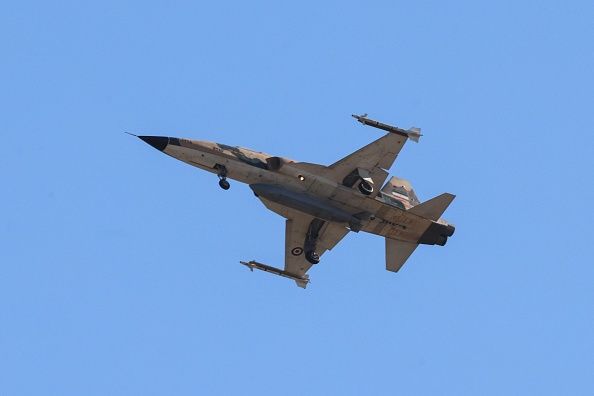
Iran's armed forces have initiated a formal challenge to accounts provided by Qatar and Kuwait regarding detained Iranian military personnel, signalling an escalation in tensions with two critical Gulf neighbours at a time of broader regional instability. Mohammad Baqerzadeh, who heads the Committee for the Search for Missing Persons within Iran's Armed Forces General Staff, has rejected Qatar's explanation of an incident involving Iranian aircraft that allegedly violated Qatari airspace in March, and is demanding that Tehran's own investigation team be permitted immediate entry into the country to determine the actual fate of the pilots involved.
The dispute centres on fundamentally conflicting narratives about what transpired following the March airspace violation. Qatar's account, released on Saturday, contends that its search and rescue teams discovered human remains belonging to one pilot after Iranian aircraft entered its airspace without responding to radio warnings. The emirate maintains it has since attempted to coordinate with Tehran for the return of these remains and has formally invited Iranian officials to examine the details and documentation of its search operations. However, Doha stated that despite these overtures, it has received no substantive response from the Iranian government.
Baqerzadeh's counter-position, as reported through the semi-official Tasnim news agency, directly contradicts Qatar's version of events and introduces a new dimension to the dispute. He asserts that an Iranian Air Force technical expert and a dedicated fact-finding delegation have been attempting to gain access to Qatar for investigation purposes over a period of months, only to encounter repeated obstruction and delays from Qatari authorities. The Iranian official further alleges that Doha is actively preventing the pilots' repatriation to Iran, a claim that transforms the incident from a tragic accident into a potential case of wrongful detention.
The escalation reflects broader patterns of mistrust between Tehran and its Gulf Arab neighbours, who have experienced significant diplomatic friction over regional security concerns and competing strategic interests. For Malaysia and other Southeast Asian nations, this dispute underscores the fragility of Gulf cooperation mechanisms and the potential for isolated incidents to metastasise into prolonged diplomatic crises. The region's role as a critical energy supplier to Asia-Pacific markets means that any sustained escalation could have implications for regional stability and economic flows.
Adding another layer to the crisis, Baqerzadeh simultaneously levelled accusations against Kuwait regarding four Iranian nationals whom Tehran describes as Revolutionary Guards personnel. According to Iran's account, these four individuals were conducting routine maritime patrol operations when navigation disruptions caused them to inadvertently enter Kuwaiti territorial waters in May. Kuwait, by contrast, has characterised the four as individuals suspected of planning hostile operations against the state, a characterisation that transforms their status from accidental trespassers to security threats. This fundamental disagreement over the circumstances of their detention and the intent behind their presence in Kuwaiti waters represents a serious point of contention.
The Iranian military official's invocation of the International Committee of the Red Cross signals an attempt to internationalise the disputes and place them under third-party scrutiny. By calling for urgent Red Cross engagement, Baqerzadeh is essentially requesting that an internationally respected humanitarian organisation verify Iran's claims and establish whether the detained personnel are being held in accordance with international humanitarian law. This move carries implicit criticism of both Qatar and Kuwait for allegedly failing to respond adequately to previous Iranian requests for information and access.
Qatar's position that it has extended an invitation for Iranian review of search and rescue operations stands in sharp contrast to Baqerzadeh's assertion that access has been systematically denied. This discrepancy suggests either a significant breakdown in diplomatic communication between the two countries or, alternatively, that Iran regards Qatar's proposed terms of access as insufficient for conducting an independent investigation. The absence of any Iranian response to Doha's stated invitations, which Qatar specifically noted, raises questions about whether Tehran has engaged with the Qatari overtures or whether other obstacles have prevented Iranian teams from travelling to the emirate.
The timing of these complaints is noteworthy given the broader regional context. The Gulf Cooperation Council states have been navigating shifting alliances and security arrangements, with Qatar itself having recently normalised relations with other regional powers after a period of significant isolation. The emergence of these personnel disputes at this juncture complicates efforts to build broader regional consensus on security matters and suggests that underlying grievances between Iran and its Gulf neighbours remain unresolved despite superficial diplomatic progress elsewhere.
For Malaysia's foreign policy establishment, these developments warrant careful attention. The country maintains diplomatic relations with all parties involved and has consistently advocated for ASEAN principles of non-interference and peaceful dispute resolution. However, the unfolding situation also illustrates the challenges that emerge when states have fundamentally incompatible narratives about factual events and lack sufficient mechanisms for independent verification. The failure to establish agreement on basic facts—whether the pilots were captured, whether the four Iranians are security threats, or whether investigation teams have been denied access—suggests that technical solutions or humanitarian appeals alone may prove insufficient for resolution.
The broader implications extend to questions about credibility and trust in international relations within and beyond the Gulf region. When military and security matters are involved, and when official accounts from different governments directly contradict one another, third-party verification becomes essential. The ICRC's potential involvement, should Tehran's request be granted, could establish neutral facts on the ground. However, the willingness of Qatar and Kuwait to cooperate with such verification, and Iran's acceptance of whatever findings emerge, will ultimately determine whether these disputes can be resolved diplomatically or whether they continue to fester as sources of bilateral tension.

