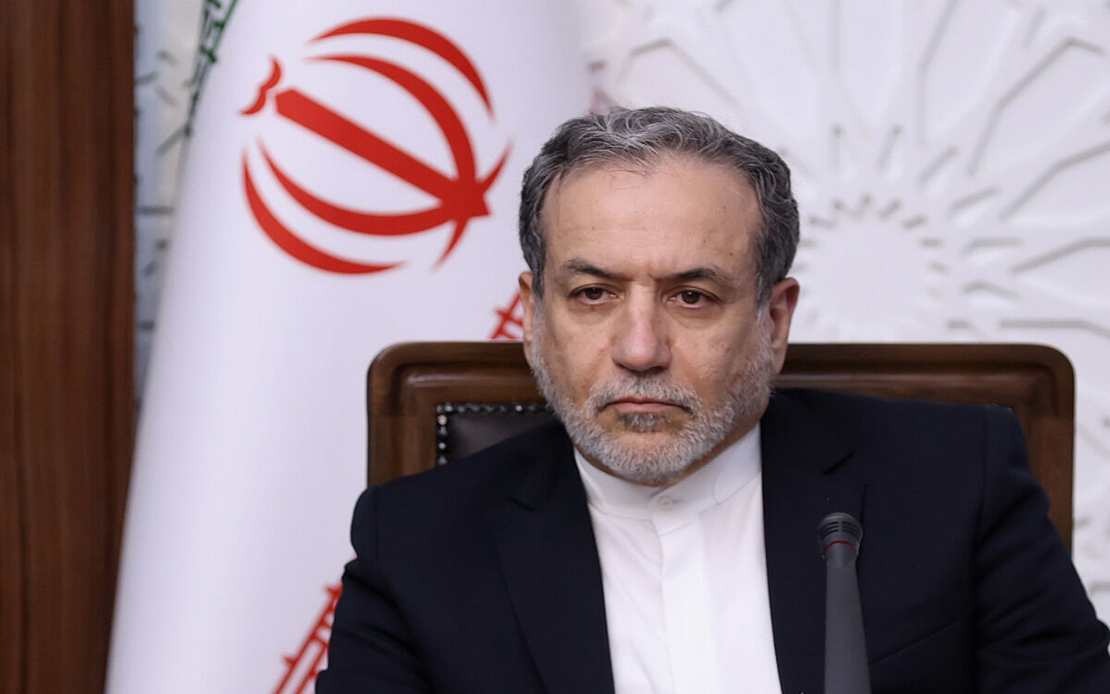
Tehran is intensifying diplomatic outreach to build consensus on de-escalation measures, with Foreign Minister Abbas Araghchi conducting high-level phone conversations on Tuesday with Pakistan's Army Chief Field Marshal Asim Munir and Qatari Foreign Minister Mohammed bin Abdulrahman Al Thani. The flurry of diplomatic activity reflects Iran's determination to forge a coalition of regional actors committed to easing tensions that have escalated markedly over the past eighteen months, particularly following cycles of direct military confrontation involving the United States and Israel.
During his exchange with Munir, Araghchi emphasised the imperative of sustained bilateral engagement and coordinated initiatives to establish durable peace and security arrangements across the Middle East and South Asia. Pakistan, as a nuclear-armed nation with deep economic and security ties to both Iran and Gulf Arab states, occupies a crucial position in any regional stability framework. Islamabad's willingness to remain engaged in mediation efforts signals its commitment to preventing further militarization of regional disputes that could destabilize trade routes and energy supplies critical to Asian economies, including Malaysia.
The conversation with Qatar's foreign minister focused on leveraging formal diplomatic channels and institutional coordination to arrest the momentum toward further escalation. Doha has emerged as a significant diplomatic broker in the region, hosting ongoing negotiations and maintaining channels with multiple stakeholders. Qatar's emphasis on preventing additional confrontation aligns with broader international efforts to contain conflicts that threaten global maritime commerce and energy security.
A parallel and potentially more consequential development emerged from separate talks between Iran and Oman, which announced a provisional framework for establishing a temporary maritime corridor through the Strait of Hormuz and conducting joint mine-clearing operations in the waterway. This agreement, discussed between Omani Foreign Minister Badr Albusaidi and Araghchi in Tehran, represents a tangible step toward addressing one of the region's most contentious issues. The Strait of Hormuz remains the world's most strategically vital chokepoint for global oil shipments, with roughly one-third of all seaborne traded petroleum passing through its narrow channels annually.
Qatar underscored its full backing for diplomatic initiatives and collaborative mechanisms designed to achieve freedom of maritime navigation while establishing the groundwork for a comprehensive regional settlement guaranteeing sustainable stability. The Qatari position notably emphasises the interconnection between resolving immediate shipping corridor disputes and achieving broader political accommodation across the Middle East. This framing suggests that Doha views the maritime access question not as an isolated technical problem but as integral to a wider architecture of regional security.
The timing of these announcements coincided with assertions by United States President Donald Trump that American naval forces had successfully neutralized all mines from international waters of the Strait of Hormuz through removal or detonation. Washington maintains that the strait constitutes an open international waterway where vessels possess unrestricted rights of passage, and it explicitly opposes any arrangement granting Iran formal authority over maritime traffic management or the imposition of tolls on transiting ships. The American position reflects deep skepticism toward any mechanism that might expand Iranian influence over one of the world's most economically critical maritime passages.
The United States strategy prioritizes routing shipping traffic through alternative southern channels bordering Omani territory while maintaining comprehensive economic sanctions against Iran and enforcing a de facto naval blockade of Iranian ports. This approach seeks to constrain Iranian economic capacity without establishing formal agreements that might legitimize Tehran's claims to regional authority. However, the existence of alternative shipping routes does not eliminate the political sensitivity surrounding the primary strait passage, where approximately 20 percent of global oil trade ordinarily flows.
The current diplomatic efforts unfold against a backdrop of cyclical military escalation that has punctuated the past eighteen months. In late February, coordinated United States and Israeli military strikes against Iranian targets prompted Tehran to launch retaliatory drone and missile attacks against both Israeli and American military installations distributed across multiple Middle Eastern locations. These exchange cycles demonstrated both powers' willingness to engage in direct military action despite the risks such confrontation poses to regional stability and global commerce.
Efforts to establish structured agreements have repeatedly foundered on implementation disagreements. In mid-June, the United States and Iran negotiated a memorandum of understanding, with Pakistan and Qatar serving as mediating parties, yet differences concerning control and management of Strait of Hormuz shipping ultimately prevented the deal from advancing toward operational implementation. Subsequently, in late July, the United States resumed military operations against Iranian targets, with Iran responding through strikes on American military assets stationed in allied Arab nations. This pattern of failed agreement followed by renewed military action illustrates the structural obstacles facing any durable settlement.
For Southeast Asian nations, including Malaysia, the persistence of these tensions carries direct economic implications. Malaysian shipping companies, refineries, and energy importers depend substantially on stable access to petroleum supplies flowing through the Strait of Hormuz. Regional nations also maintain complex commercial and security relationships with both United States-aligned Gulf states and Iran, requiring careful diplomatic balance. The success or failure of current de-escalation initiatives will significantly influence shipping insurance costs, energy price volatility, and the broader operating environment for regional economies deeply integrated into global commerce chains.
The diplomatic activity involving Pakistan and Qatar reflects recognition among regional actors that military solutions remain insufficient without political accommodation addressing underlying grievances and security concerns. Pakistan's involvement is particularly notable given its historical experience mediating between Iran and Gulf Arab monarchies, while Qatar's role underscores how smaller but diplomatically sophisticated Gulf states can exercise influence disproportionate to their military capacity. These efforts suggest that even amid profound strategic disagreements, channels remain open for dialogue and incremental confidence-building measures.
The proposed Strait of Hormuz shipping corridor and joint mine-clearance initiative, while modest in scope, potentially establish precedents for Iranian-Western cooperation on technical maritime management divorced from broader political disputes. Such compartmentalization of issues has succeeded in other historical contexts where comprehensive settlements proved elusive. However, skepticism regarding American willingness to accept Iranian participation in formal maritime governance mechanisms remains substantial, potentially constraining the ambition of any framework that emerges from ongoing negotiations.
The trajectory of these discussions will determine whether the region experiences genuine stabilization or merely temporary pauses in confrontation cycles. Regional powers, particularly Pakistan and Qatar, appear committed to maintaining diplomatic momentum despite historical setbacks. For international observers including Southeast Asian policymakers, the outcome carries implications extending well beyond Middle Eastern geopolitics into the broader question of whether multipolar regional systems can develop governance mechanisms preventing military escalation in strategically critical zones.

