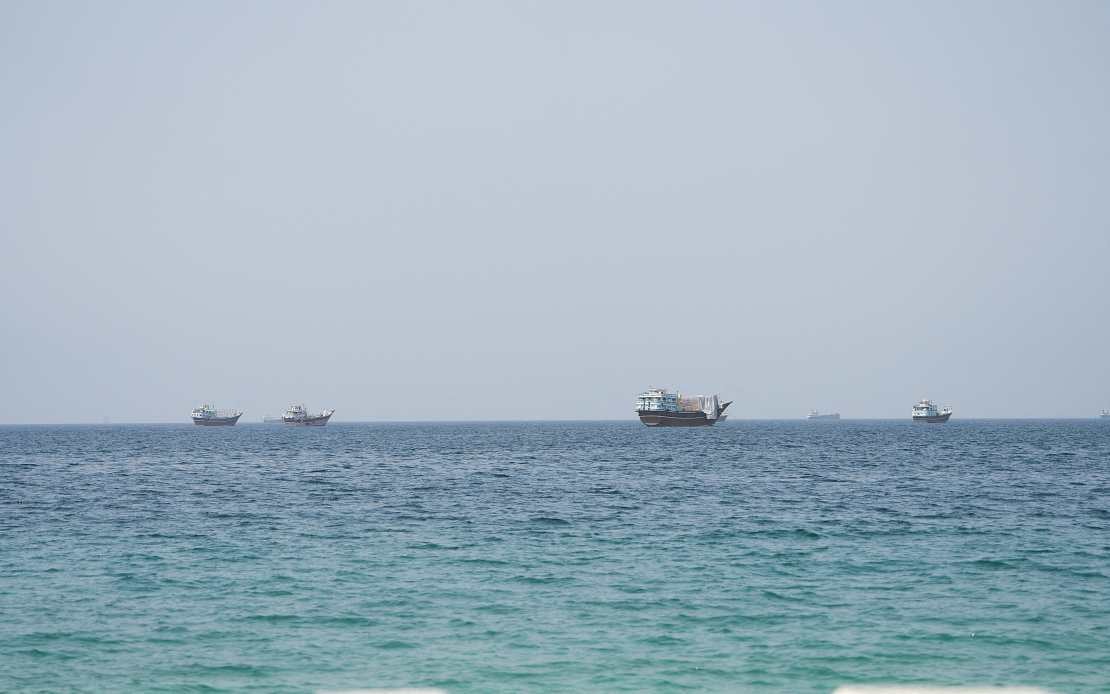
Diplomatic efforts to resolve navigation issues in the Strait of Hormuz are gaining traction, with Iran reporting substantial progress in negotiations with Oman. Speaking at a weekly news conference in Istanbul on Monday, Iranian Foreign Ministry spokesman Esmaeil Baqaei told reporters that discussions between Tehran and Muscat are proceeding in what he characterised as a "smooth and constructive" manner, signalling optimism about resolving one of the region's most strategically sensitive waterways. The talks represent a rare instance of bilateral cooperation amid broader geopolitical tensions that have roiled the Persian Gulf for years.
According to Baqaei's remarks, negotiators have already reached preliminary consensus on the routing of international shipping traffic through the strategically vital waterway, which handles approximately one-third of global maritime trade. The two nations are now working to refine technical details that will form the backbone of a joint statement expected to formalise their understanding. This incremental progress suggests that both Tehran and Muscat view the establishment of agreed shipping corridors as achievable in the near term, potentially reducing the risk of maritime incidents that have repeatedly threatened regional stability.
The framework being negotiated extends beyond simple route designation. Iranian officials have emphasized that the arrangement will create formal mechanisms designed to safeguard vessels transiting the strait, with particular attention to environmental protection and combating maritime crime. These operational protocols reflect international maritime law principles and suggest that the two countries are seeking to create an orderly, regulated system of traffic flow rather than ad hoc or contentious transit arrangements. For Malaysia and other Southeast Asian nations that depend on Hormuz passage, such clarity and predictability in navigation rules would provide welcome reassurance.
A significant aspect of the negotiations concerns cost structures and service provision. Baqaei stressed that fees and charges related to maritime services provided to vessels will be clearly stipulated and transparently administered. This emphasis on financial transparency indicates that Iran and Oman wish to establish a legitimate, commercially viable system rather than one perceived as arbitrary or punitive. The specification of fees suggests both parties are moving toward formalising transit arrangements similar to established international norms, which would reduce friction and foster compliance among shipping operators.
Iranian officials have characterised the Oman talks explicitly as a bilateral process divorced from wider political disputes. Baqaei's statement that discussions are purely about determining safe international shipping routes and "have nothing to do with political differences" appears designed to insulate the negotiations from contamination by Iran-United States tensions or other regional conflicts. This framing allows both nations to focus narrowly on maritime security and commercial interests while leaving broader diplomatic quarrels unresolved. However, this compartmentalisation remains fragile, dependent on maintaining political will from both sides.
The overarching objective articulated by Iranian representatives is achieving a "lasting understanding that ensures complete security in the strait." This language reflects recognition that temporary arrangements or unstable agreements have failed to provide the durable framework needed for reliable international commerce. The emphasis on permanence suggests Iran and Oman are attempting to construct institutional mechanisms that can survive changes in political leadership or temporary bilateral friction. For regional and international shipping, the difference between temporary accommodations and lasting structures represents the distinction between chronic uncertainty and genuine stability.
Yet the broader context reveals significant complications. Iran has explicitly linked the reopening of the strait to American policy changes, specifically demanding an end to what it characterises as a United States naval blockade of Iranian ports. This conditional linkage demonstrates that while bilateral Oman-Iran talks proceed constructively, the fundamental international dimensions remain unresolved. Until the United States and Iran resolve their core disputes, the sustainability of any Oman-mediated arrangement remains questionable, as it exists within a larger framework of American-Iranian hostility that could unravel at any moment.
The history of previous diplomatic efforts underscores the fragility of such arrangements. In June, Iran and the United States concluded a memorandum of understanding facilitated by Pakistani and Qatari intermediaries, which envisioned gradual restoration of commercial navigation through the strait. That agreement proved short-lived, with both capitals subsequently accusing the other of violations, and implementation stalled entirely. The failure of that more comprehensive American-Iranian arrangement cautions against excessive optimism about the more limited bilateral Oman-Iran talks, despite their current constructive trajectory.
For Malaysian maritime interests and those of other Southeast Asian nations, the Hormuz situation carries profound implications. Disruption or uncertainty in this critical chokepoint directly affects shipping costs, insurance premiums, and supply chain reliability for economies dependent on Middle Eastern energy resources and Asian manufacturing exports. Malaysia's position as a major shipping hub and trading nation means that Hormuz volatility creates ripple effects throughout the region's maritime sector. Any genuine progress toward stabilising the strait deserves attention and support from ASEAN and other maritime stakeholders.
The Iranian Foreign Ministry's statement that additional decisions regarding Tehran's delegation to the September United Nations General Assembly would be announced within weeks suggests diplomatic channels remain active and engagement with the international community continues despite tensions. This attendance at the UN gathering provides an opportunity for Iran to articulate its position on various disputes, including those affecting navigation and maritime security. The composition and level of representation Iran sends may signal the seriousness with which it views multilateral engagement on regional issues.
Moving forward, the trajectory of Oman-Iran negotiations will bear close monitoring. Success in establishing functioning maritime protocols and transparent cost structures could demonstrate that bilateral cooperation remains possible even amid larger geopolitical conflicts. Conversely, should these talks stall or collapse, the renewed conviction would spread that the Gulf's fundamental disputes remain intractable without broader political settlements. For Malaysia and other maritime trading nations, the outcome will either reinforce confidence in regional waterway security or amplify concerns about depending on passages controlled by hostile powers locked in unresolved confrontation.

