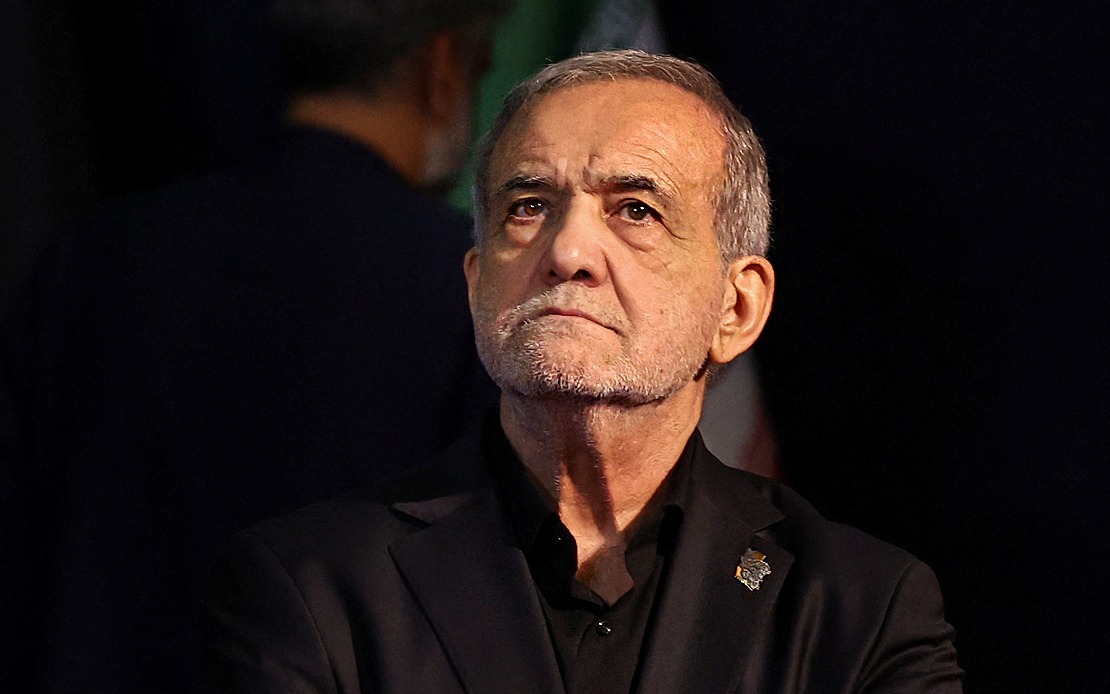
Iranian President Masoud Pezeshkian has escalated calls for international accountability, demanding that competent global organisations pursue legal action against the United States for sustained damage to Iran's transport and logistics infrastructure. The assertion, made during a ministerial visit on Sunday, reflects Tehran's determination to document and litigate what it characterises as systematic attacks on civilian facilities, framing such actions within the legal framework of war crimes under international humanitarian law.
Pezeshkian's visit to the Ministry of Roads and Urban Development marked an extension of his broader field monitoring programme, allowing him to assess the accumulated damage inflicted during what Iranian officials describe as unprovoked US military operations. The inspection encompassed detailed briefings on the operational status of border terminals, port facilities, road networks, rail infrastructure, maritime logistics, and aviation services, as well as supply chains critical to distributing essential goods across the country. This comprehensive assessment underscores the breadth of the damage sustained across multiple transport systems fundamental to Iran's economic functioning.
Roads and Urban Development Minister Farzaneh Sadegh presented detailed documentation of destruction affecting ports, border crossing facilities, bridges, roads, railway networks, and logistics hubs classified as strategic infrastructure. The documentation serves dual purposes: it provides an administrative record for reconstruction planning and establishes an evidentiary foundation for potential international legal proceedings. This dual approach reflects Iranian strategy to pursue both operational recovery and diplomatic-legal remedies simultaneously.
In response to the damage assessment, Pezeshkian issued directives mandating accelerated reconstruction of compromised infrastructure, activation of alternative transport corridors to maintain supply continuity, and systematic measures to enhance the resilience of transport networks against future disruptions. These operational instructions signal that while Iran pursues legal avenues, it simultaneously prepares practical contingencies to minimise economic vulnerability. The emphasis on alternative routing reflects lessons learned from the disruptions caused by concentrated targeting of primary transport arteries.
The president commended ministry staff for sustaining transport operations throughout the crisis period, attributing operational continuity to professional competence and public resilience. Pezeshkian framed ongoing government efforts and societal support as mechanisms capable of defeating adversarial attempts to destabilise Iran's critical infrastructure. This messaging reinforces a narrative of national unity and capability that extends beyond immediate reconstruction to encompass broader strategic resilience.
Pezeshkian's legal demands emerge following a deescalation in immediate military tensions. A roughly two-week period of intensive air operations targeted Iranian bridges, roads, and transport facilities in southern regions before ceasing following what Iranian authorities characterise as decisive retaliatory military operations by the Iranian Armed Forces against American positions throughout the broader region. The cessation of fresh attacks appears to have prompted Iran's pivot toward legal and diplomatic channels for addressing accumulated damage.
The invocation of war crime classification carries significant implications within international law frameworks. Such designations, if substantiated through formal proceedings before bodies such as the International Court of Justice or other competent international mechanisms, could establish legal liability and potentially trigger requirements for reparations. However, the practical feasibility of pursuing such actions depends substantially on international political alignments and the willingness of international bodies to investigate claims involving major military powers.
For Southeast Asian observers, the Iranian case illustrates broader patterns of infrastructure vulnerability in geopolitical conflict zones and raises questions about how smaller regional powers might protect critical systems during international disputes. Malaysia and neighbouring nations maintain extensive transport infrastructure connecting their economies to global trade networks, making the strategic implications of infrastructure targeting relevant to regional security calculations. The Iranian experience demonstrates that modern conflicts increasingly target civilian logistical systems rather than concentrating exclusively on military installations.
The emphasis on legal accountability also reflects Tehran's calculation that military deterrence through retaliatory capability requires supplementation with international legal pressure to establish prohibitions against future attacks. By documenting damage comprehensively and demanding international legal action, Iran attempts to establish precedent and diplomatic costs for infrastructure targeting, potentially influencing adversarial decision-making in future confrontations. This multi-track approach combines deterrence, reconstruction, and legal accountability into a coordinated response strategy.
The broader geopolitical context involves ongoing tensions between Iran and the United States, complicated by regional proxy conflicts and international sanctions regimes. Infrastructure damage accumulates significant economic costs that extend beyond immediate repairs to encompass disrupted commerce, delayed supply deliveries, and reduced economic productivity. For a nation subject to extensive international sanctions, infrastructure destruction compounds economic pressures by degrading already-constrained logistical capacity.
Pezeshkian's ministerial visit and subsequent pronouncements serve additional domestic political purposes, demonstrating government responsiveness to damage caused by external military actions and reassuring Iranian citizens that authorities are documenting injuries and pursuing remedies through available international mechanisms. This visibility of government action addresses public concerns about uncompensated losses and reinforces perceptions of state capacity to protect national interests through diplomatic and legal channels when military options prove limited.
The international legal strategy outlined by Pezeshkian reflects recognition that while Iran possesses retaliatory military capabilities, sustainable resolution of grievances requires engagement with international institutions and frameworks. The emphasis on competent international organisations suggests Iran may pursue complaints through multiple venues simultaneously, potentially including the United Nations and specialised bodies addressing armed conflict impacts on civilian populations. Such multi-institutional approaches increase visibility and potential accountability even when individual forums prove ineffective.

