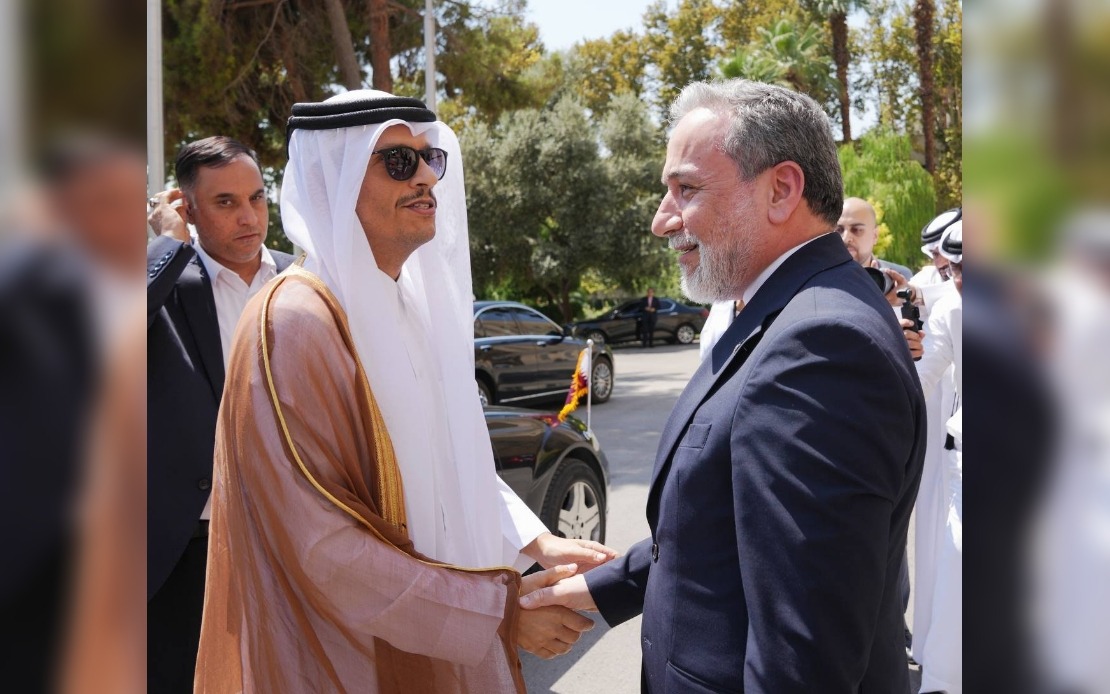
Iran's top diplomat has indicated that mending fractured relations with the United States remains within reach, provided Washington adjusts its approach to negotiations. Speaking on social media following talks with Qatar's leadership in Tehran on Thursday, Foreign Minister Abbas Araghchi struck an unexpectedly conciliatory tone, describing recent discussions with Qatari Foreign Minister Sheikh Mohammed bin Abdulrahman bin Jassim Al Thani as "creative" and suggesting a pathway exists for diplomatic resumption. The statement represents a notable rhetorical shift in Tehran's messaging toward Washington, even as underlying tensions in the Gulf region remain elevated.
Araghchi's core message to American policymakers centres on a rejection of coercive strategies. He pointedly asserted that pressure—the traditional lever employed by Washington in its dealings with Tehran—fundamentally fails as a negotiating tactic with Iran. This framing attempts to reposition the diplomatic initiative: rather than portraying Iran as capitulating to American demands, Tehran suggests that mutual respect and recognition of Iranian sovereignty form the actual foundation for any meaningful dialogue. The emphasis on pressure's ineffectiveness reflects Iran's historical resistance to external coercion and underscores persistent grievances about past Western interventions in Iranian affairs.
The conditions Araghchi outlined for renewed engagement expose the substantive gap between Tehran and Washington. Beyond rejecting pressure tactics, he called for the United States to rebuild trust through respectful communication, acknowledge Iran's legitimate rights and regional interests, and demonstrate commitment to honouring international agreements. This last point carries particular significance given Iran's longstanding accusations that the US unilaterally abandoned the 2015 nuclear accord in 2018, a decision that destabilised regional dynamics and precipitated successive rounds of heightened tensions. For Iran, any restoration of diplomatic channels must therefore include American acceptance of responsibility for that rupture and willingness to re-engage multilaterally.
Qatar's role as mediator underscores the small Gulf state's continuing importance as a diplomatic bridge in the region. Sheikh Mohammed's visit to Tehran marked his first journey to Iran since February's escalation of hostilities, when coordinated US and Israeli military strikes against Iranian targets dramatically raised regional tensions. By undertaking this mission, Doha positioned itself as a neutral party genuinely invested in de-escalation, a stance that reflects Qatar's broader regional interests in stability and its historical cultivation of relationships across Gulf divides. The fact that the Qatari foreign minister met with multiple senior Iranian officials—including President Masoud Pezeshkian, Parliament Speaker Mohammad Bagher Qalibaf, and Secretary of Iran's Supreme National Security Council Mohsen Rezaei—suggests the depth of Doha's diplomatic investment in this initiative.
The substance of Qatari-Iranian discussions extended beyond rhetorical positioning into concrete operational proposals. Negotiations reportedly explored mechanisms for creating conditions conducive to resumed dialogue, a somewhat abstract formulation that likely encompassed confidence-building measures and de-escalatory protocols. More tangibly, discussions addressed proposals for establishing a temporary joint navigational corridor through the Strait of Hormuz, one of the world's most strategically critical maritime chokepoints through which roughly one-third of seaborne oil passes globally. Such an arrangement would theoretically reduce the risk of accidental confrontation between Iranian and US-aligned naval forces. Additionally, Doha raised the possibility of coordinated mine-clearing operations in the strait, a practical step that would enhance freedom of navigation and stabilise commercial shipping.
For Malaysia and the broader Southeast Asian region, the stakes in Iran-US tensions extend beyond Middle Eastern politics. Any escalation affecting the Strait of Hormuz directly threatens regional energy security and global supply chains on which ASEAN economies depend. Malaysian shipping interests, substantial petrochemical imports, and manufacturing sectors reliant on stable commodity prices create tangible vulnerabilities to Persian Gulf instability. Moreover, the precedent set by how Iran and the US navigate diplomatic resolution carries implications for how other regional disputes might be managed, particularly regarding multilateralism and the limits of coercive pressure in international relations.
The February escalation that prompted Qatar's current mediation efforts demonstrated how rapidly calculus can shift in the Gulf. The sequence of US and Israeli strikes provoked Iranian retaliation, creating a cycle of action and reaction that threatened to spiral into outright conflict. That both sides ultimately showed restraint suggested underlying interest in managing rather than escalating the relationship, an opening that Qatar has now attempted to exploit. Iran's current diplomatic signals, while carefully calibrated in their conditions, represent movement away from the rhetorical maximalism that has sometimes characterised Tehran's public statements.
However, translating diplomatic overtures into substantive negotiations requires movement from both parties. The Iranian conditions Araghchi articulated—trust-building, respect, rights recognition, and commitment adherence—represent legitimate political demands from Tehran's perspective but also establish baseline requirements that Washington must accept. The Biden administration's existing posture toward Iran, shaped by the 2018 withdrawal from the nuclear deal and subsequent maximum pressure campaigns, suggests any progress requires significant recalibration of American strategy. Whether incoming or current US leadership possesses political capacity or willingness for such a shift remains uncertain.
Qatar's diplomatic efforts also reflect Doha's broader position within Gulf geopolitics following its reintegration into the regional community after years of isolation triggered by the 2017 blockade. Having emerged from that crisis, Qatar has positioned itself as a stabilising force capable of engaging across traditional divides. The success or failure of this mediation attempt will significantly influence Qatar's credibility in future regional disputes and its standing among both Western and non-aligned powers.
The temporary joint navigational corridor and mine-clearing proposals, if implemented, would constitute meaningful confidence-building measures distinct from the broader political-diplomatic questions. Such operational arrangements establish precedent for cooperation on practical matters even amid broader disagreements, potentially creating pathways toward larger negotiations. Historical examples of arms control and maritime agreements suggest that technical cooperation can gradually build mutual trust and expand into political settlements.
Iran's assertion that diplomatic restoration remains achievable, while conditional upon American behavioural change, signals a leadership willing to explore alternatives to confrontation. Whether this represents genuine strategic shift or tactical manoeuvre designed to manage sanctions pressure remains debatable. Nonetheless, the rhetorical openness creates diplomatic space that previous years of mutual recrimination foreclosed. For ASEAN observers, the outcome of these mediation efforts carries lessons about how persistent antagonists navigate paths toward dialogue and the utility of principled intermediaries in facilitating such processes.

