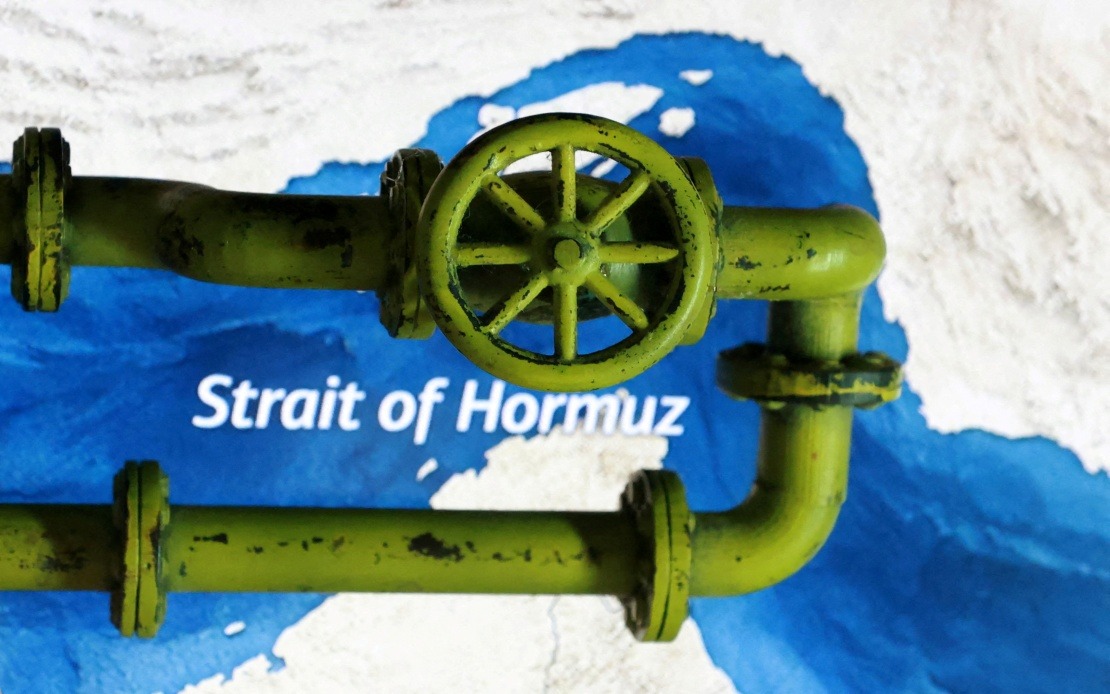
Iran's Central Bank governor Abdolnaser Hemmati delivered grim news this week, confirming that the Islamic Republic's oil exports have completely ceased as a consequence of escalating regional tensions and persistent American sanctions. Speaking during a televised interview, Hemmati acknowledged the severity of Iran's export predicament, noting that neighbouring Iraq and Qatar face similar difficulties with their own petroleum sales grinding to a halt. The collapse of oil revenues strikes at the heart of Iran's economic structure, as hydrocarbon exports have historically provided the nation's primary source of foreign currency and government income.
The Central Bank governor's candid assessment reveals the precarious position Iran occupies within the global energy market. Unlike Iraq and Qatar, which maintain access to substantial central bank reserves that can temporarily cushion the blow of vanished export revenues, Iran finds itself uniquely vulnerable. The United States has implemented a comprehensive freeze on Iran's foreign currency holdings maintained overseas, effectively locking Tehran out of financial reserves that might otherwise provide breathing room during this crisis. This asymmetry between Iran and its regional counterparts underscores how American financial pressure compounds the immediate challenge of lost oil sales, creating a dual revenue squeeze that threatens the government's ability to fund essential services and maintain economic stability.
The situation has been further complicated by stalled negotiations that promised potential relief. Hemmati referenced the Islamabad Memorandum, a framework agreement reached between Tehran and Washington in June that was intended as a stepping stone toward comprehensive normalization. However, the resources that Iran anticipated would be released under this understanding remain frozen, leaving Tehran without the financial reprieve it had factored into its economic planning. This broken expectation represents not merely a disappointment but a fundamental miscalculation in Iran's approach to managing its economic crisis, as officials had apparently prepared budgets and programmes assuming some thaw in international financial restrictions.
Iran's trade relationship with Iraq offers a window into the broader economic devastation unfolding across the region. Before the current hostilities, Iranian exports to Iraq reached approximately $12 billion annually, a figure comprising both government-contracted services such as natural gas and electricity supplies worth $4 billion, and private sector transactions valued at $8 billion. This commercial relationship represented one of Iran's most significant economic partnerships, reflecting decades of geographic proximity and bilateral cooperation. The disruption of this trade flow, combined with Iraq's own revenue problems stemming from the closure of the Strait of Hormuz and declining petroleum income, has severed what might have served as a crucial economic lifeline for Tehran during its current difficulties.
In response to these deteriorating circumstances, Iranian and Iraqi officials have begun exploring unconventional financial mechanisms to maintain some degree of bilateral commerce. Hemmati's recent visit to Baghdad yielded discussions regarding Iranian funds held within Iraqi banking institutions, with Tehran seeking ways to access and deploy these resources despite their frozen status in international markets. The two governments have also agreed to leverage the Trade Bank of Iraq as a mechanism for backing guarantees extended to Iranian contractors working within Iraq. This creative approach reflects the desperation of both nations to maintain functional economic ties while circumventing the international sanctions architecture designed to isolate Iran.
The Iraqi government has acknowledged significant outstanding payments owed to Iran, recognizing a substantial debt accumulated through years of commercial transactions and service provision. However, Iraq itself labours under considerable financial strain, having witnessed its own oil revenues collapse due to regional instability and maritime disruptions. Baghdad's capacity to settle its Iranian obligations remains questionable, particularly when the country simultaneously grapples with infrastructure damage and displaced populations requiring immediate assistance. The agreement that Iraq would work toward addressing these outstanding debts therefore carries primarily symbolic value, representing commitment rather than concrete near-term relief for Iran's immediate cash flow problems.
For Southeast Asian observers, particularly those in Malaysia where energy security and regional trade dependencies hold paramount importance, Iran's predicament offers sobering lessons about economic vulnerability in the face of geopolitical isolation. Malaysia, as a significant oil and gas exporter, understands acutely how quickly energy markets can shift and how political conflict can rapidly transform a nation's economic fortunes. The Iranian case demonstrates the compounding effects of sanctions, frozen assets, and diplomatic breakdown, showing how these forces operating in concert can effectively remove a nation from international commerce regardless of underlying resource wealth or production capacity.
The collapse of Iran's oil exports also carries implications for global energy markets and Southeast Asian energy security strategies. While Iran's production has been largely sidelined from international markets through sanctions enforcement, any sudden reversal of these restrictions could abruptly inject substantial new supply into energy markets, potentially destabilizing prices. Conversely, continued Iranian isolation maintains a permanent supply constraint that elevates global energy prices, affecting import-dependent nations throughout Asia. Malaysia and its neighbours must therefore monitor Iranian developments not merely as geopolitical theatre but as factors directly influencing their own energy costs and economic growth prospects.
The military tensions underlying Iran's economic collapse represent perhaps the most destabilizing element of the current situation. Hemmati's comments regarding renewed hostilities between Iran and the United States, following the breakdown of the June framework agreement, suggest that diplomatic off-ramps have narrowed considerably. When military conflict intensifies, economic negotiations typically recede, meaning Iran's path toward sanctions relief or asset unfreezing appears increasingly distant. This trajectory indicates that Iran's economic crisis will likely deepen rather than stabilize in the coming months, with profound implications not only for the Iranian population but for Iran's regional role and potential for destabilizing behaviour born of desperation.
For Malaysian policymakers and regional analysts, the Iranian Central Bank governor's stark testimony serves as a reminder of the fragility of export-dependent economies when confronted with determined international isolation. The mechanisms through which sanctions operate—freezing assets, severing banking relationships, prohibiting transactions—create cascading economic damage that extends far beyond the direct effect of trade restrictions. Iran's inability to export oil, even if willing buyers existed, demonstrates how financial architecture can be weaponized to render resources economically inaccessible. As Southeast Asia contemplates its own economic resilience and diversification strategies, the Iranian case underscores the importance of maintaining multiple revenue streams, developing domestic demand, and avoiding over-dependence on any single commodity or trading relationship.

