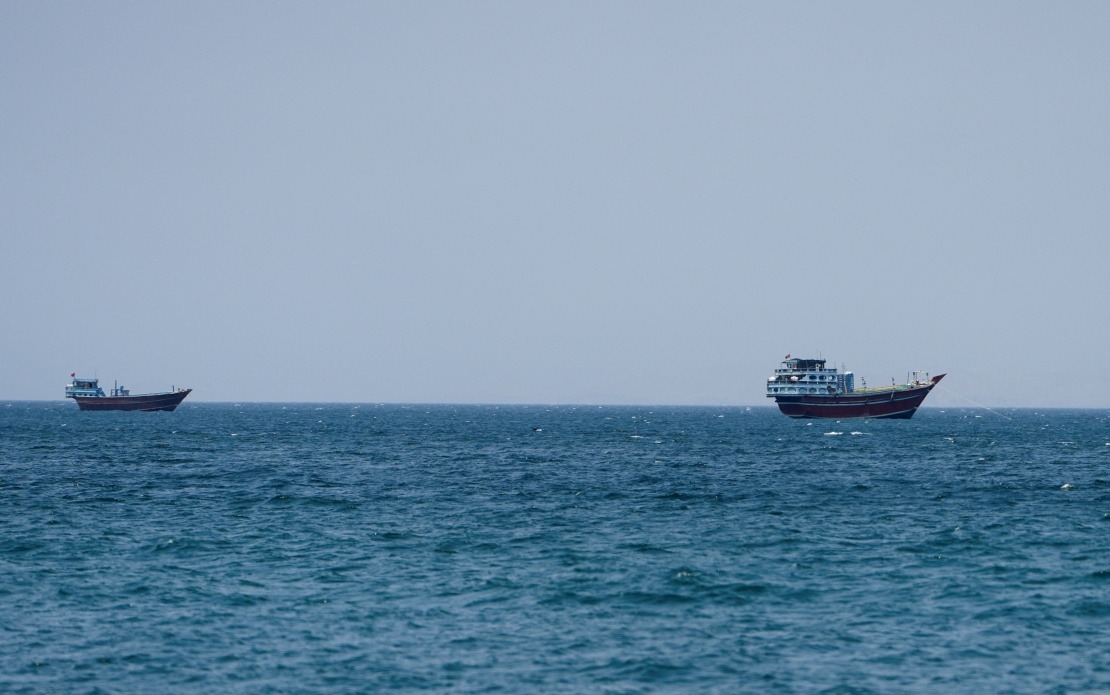
Iran's newly appointed Supreme National Security Council chief Mohsen Rezaei has made clear that the partial closure of the Strait of Hormuz—one of the world's most critical maritime chokepoints—will persist indefinitely unless the United States meets a series of demanding preconditions. Speaking during a Tuesday meeting with China's ambassador to Tehran, Zong Piyu, Rezaei outlined the stringent requirements that Washington must satisfy before Tehran considers fully reopening this strategically vital waterway that separates Iran from Oman and connects the Persian Gulf to the Gulf of Oman and Arabian Sea beyond.
The Strait of Hormuz has served as a flashpoint in regional tensions since March, when Iran began imposing transit restrictions in response to what it characterises as joint American and Israeli military aggression. The waterway's significance cannot be overstated for global energy markets and international commerce—approximately one-third of all seaborne petroleum passes through this narrow passage, making any sustained disruption a matter of concern not just for Middle Eastern states but for energy-dependent economies worldwide, including those across Southeast Asia. Malaysia, as a major energy consumer and maritime trading nation, has a direct stake in the stability and free passage through this crucial corridor.
Rezaei's specific demands centre on three interconnected elements. First, he insisted the United States must terminate military operations targeting Iran and its regional partners. Second, Washington must unlock Iranian assets that remain frozen under international sanctions regimes. Third, Tehran has reportedly communicated additional undisclosed conditions through intermediaries involved in the recent rounds of indirect diplomatic negotiations between the two adversaries. This layered approach suggests Iran is maintaining negotiating flexibility while establishing a minimum threshold of concessions required to shift its current posture.
The Iranian official emphasised that Tehran will not alter course absent fundamental changes in American policy and behaviour. His categorical statement—"As long as the US does not change its behaviour and accept Iran's conditions, the Strait of Hormuz will not be reopened"—represents an unambiguous signal that this is not a temporary tactical measure but rather a sustained leverage point in Iran's broader confrontation with Washington. This distinction matters significantly for businesses and governments planning maritime operations and energy procurement strategies in coming months.
Interestingly, Rezaei also addressed the question of bilateral arrangements involving Oman, the other state bordering the strait. He asserted that any agreement Iran and Oman might reach regarding transit protocols would be entirely separate from and have no bearing on Iran's unilateral decision-making regarding strait closure or reopening. This statement appears designed to preempt any international diplomatic initiative that might seek to isolate Iran's concerns or portray Omani mediation as a solution to the impasse. It underscores Tehran's insistence on maintaining independent control over this strategic asset.
During the same meeting, Rezaei expressed appreciation for China's opposition to what he described as an illegal and anti-Iranian draft resolution that the United States had presented at the UN Security Council during the March escalation. This diplomatic acknowledgment reflects Iran's evident gratitude for Beijing's strategic positioning and implicit support during the recent conflict period. The gesture also highlights how Middle Eastern disputes increasingly intersect with great power competition, with nations like China positioning themselves as counterweights to American influence in the region.
Rezaei further elaborated on the deepening partnership between Iran and China, emphasising their shared membership in significant multilateral institutions including the Shanghai Cooperation Organisation and the BRICS bloc of major developing economies. These organisational ties represent substantial structural elements of an alternative international order that functions partially outside Western institutional frameworks. For Southeast Asian nations like Malaysia that maintain complex relationships with both established powers and rising alternatives, Iran's strategic pivot toward China demonstrates how regional actors are navigating great power dynamics and seeking partnerships that enhance their autonomy and negotiating position.
The elevation of Rezaei to the SNSC leadership represents a significant personnel shift within Iran's security establishment, and his forthright statements about the strait closure suggest the new administration intends to maintain firm stances on regional security matters. His background and approach may signal continuity in Iran's confrontational posture toward the United States, though the precise calculus regarding when and under what circumstances Tehran might genuinely consider reopening the waterway remains opaque to external observers.
For Malaysia and other nations dependent on Persian Gulf oil and global maritime trade, the implications are substantial. Prolonged Strait of Hormuz restrictions would likely push energy prices higher and increase insurance costs for shipping transiting the region, ultimately affecting consumer prices and manufacturing competitiveness across Southeast Asia. The diplomatic impasse thus connects directly to economic realities in the region, making Iranian-American tensions relevant not merely as a distant geopolitical abstraction but as a material factor influencing Malaysian economic prospects and energy security planning.
The broader context reveals deepening polarisation in the Middle East, with Iran cultivating alternative alliances while maintaining a confrontational approach toward the United States. Tehran's strategy appears to combine immediate coercive leverage through the strait closure with longer-term positioning through Chinese and Russian partnerships. Whether this approach ultimately produces negotiations or sustains indefinite tension depends substantially on whether Washington demonstrates willingness to address the preconditions Rezaei has outlined—a calculation unlikely in the near term given current geopolitical alignments.

