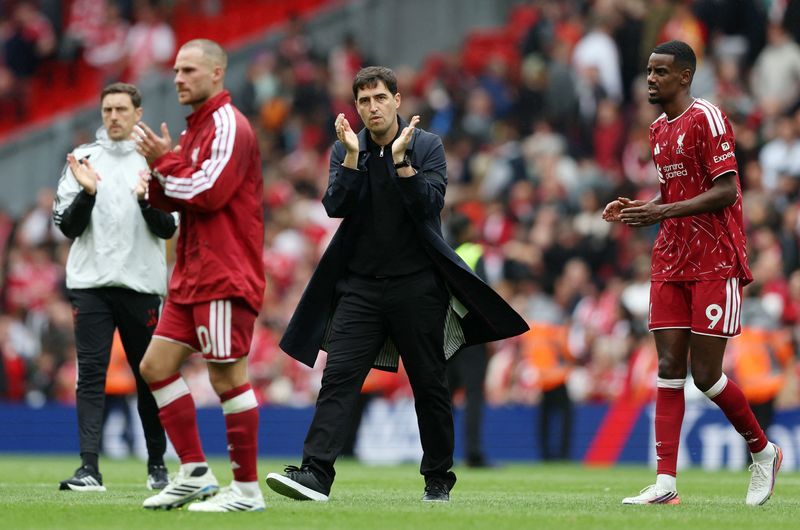
Andoni Iraola has yet to secure a Premier League victory since taking charge at Liverpool this summer, but the Spanish manager believes the 2-2 draw with Nottingham Forest on Saturday demonstrated that his rebuild is moving in the right direction. Having inherited a squad that fell from championship status to fifth place last season despite record transfer spending of £446 million, Iraola was tasked with restoring both the club's competitive edge and the attacking intensity that characterised the Juergen Klopp era at Anfield.
The tactical philosophy Iraola has brought to Merseyside represents a marked departure from the cautious approach of his predecessor. Rather than prioritising defensive solidity or measured possession, the former Bournemouth manager has demanded that Liverpool play with urgency and aggression from the opening whistle, pressing opponents high up the pitch and transitioning rapidly from defence to attack. For supporters accustomed to years of Klopp's high-intensity "heavy-metal football" followed by Arne Slot's more controlled two-year tenure, the shift back towards attacking football should prove energising, though the implementation remains uneven.
The Nottingham Forest encounter illustrated both the promise and the problems inherent in this transition. Liverpool's defending during Dan Ndoye's opening goal exposed the vulnerabilities that emerge when a team commits excessive numbers forward, with the visitors capitalising on a direct counterattack in the opening period. Equally telling was Iraola's assessment of the first 45 minutes, which he described as marked by passivity and insufficient intensity without the ball, allowing Forest periods of comfortable possession that should never have materialised against a side of Liverpool's calibre.
The second-half turnaround, however, gave Iraola genuine reason for optimism. Alexander Isak's equaliser came shortly after the hour mark as Liverpool's tempo increased noticeably, followed by Victor Munoz's late leveller that prevented what would have been a damaging loss. This represented the second consecutive occasion on which Liverpool had recovered from a losing position, with Munoz himself having won a crucial late penalty against Newcastle in the season opener six days earlier. The winger's involvement in both comebacks suggests that Iraola's recruitment strategy is already bearing fruit, with the newcomer's willingness to drive forward and create space proving instrumental in turning matches around.
Munoz's performances have impressed Iraola beyond mere statistics. The winger has combined attacking threat with defensive diligence, embodying the all-action approach that the manager demands from his wide players. Iraola's public praise for Munoz's relentless work rate and his refusal to stop attempting to influence play even when matches seemed to be slipping away hints at the cultural shift the manager is attempting to instil. In a squad that finished fifth despite elite spending, mentality and intensity may prove as important as technical ability.
Yet Iraola has identified a systemic issue that extends beyond individual performances or tactical tweaks. Liverpool's sluggish starts have become habitual, a carryover from last season's disappointing campaign that suggests deep-rooted problems in how the team prepares and executes its gameplan during opening phases. The manager has pinpointed Liverpool's passivity without possession as the core culprit, arguing that excessive distances between players and a general complacency in pressing allows opponents to settle into their rhythm and dictate terms. When Liverpool raised the intensity in the second half against Forest, they dominated the duel count and created more attacking opportunities, validating Iraola's diagnosis.
Understanding these issues and correcting them are separate challenges entirely. Iraola has acknowledged that the tactical transformation he envisages will require time to implement fully, and expecting a squad to master such a fundamentally different system across an entire 90 minutes after just two matches would be unrealistic. The draw at Forest was frustrating because it represented points left on the table rather than genuine evidence of crisis, yet Iraola knows that positive second-half performances mean little if they do not translate into victories. The point secured on Saturday, while welcome, inevitably leaves a new manager seeking to restore a fallen giant feeling disappointed rather than satisfied.
The arrival of reinforcements promises to accelerate the transition. Reports indicate that Liverpool have completed negotiations to sign France winger Bradley Barcola from Paris Saint-Germain, with the 23-year-old's pace and direct running capabilities aligning perfectly with Iraola's high-tempo, attacking system. Barcola's addition would provide Iraola with another attacking outlet capable of playing the aggressive, front-footed football that characterises his tactical vision, potentially allowing the team to sustain intensity across both flanks throughout matches.
Liverpool currently exist in an awkward space between genuine progress and tangible results. The entertainment value has increased, with Iraola's attacking football providing supporters with the kind of compelling encounters that Slot's measured approach sometimes lacked, yet the absence of victories carries psychological weight. For a club accustomed to fighting for titles and managing expectations that come with global reach, a winless start after two matches registers as mere inconvenience rather than crisis, but only if the victories arrive within the coming weeks.
Iraola's perspective on the challenge ahead suggests realistic ambition rather than unfounded optimism. He has stressed that comebacks from losing positions demonstrate character and resilience, qualities that will ultimately prove more valuable than pretty passages of play if they consistently lead to points. However, he has also been clear that individual recovery performances remain insufficient when the goal is sustained dominance and championship football. The work on the training ground, particularly in addressing the first-half intensity deficit that has plagued Liverpool's early season, will ultimately determine whether Iraola's encouraging words about progress translate into the victories that define successful football management.

