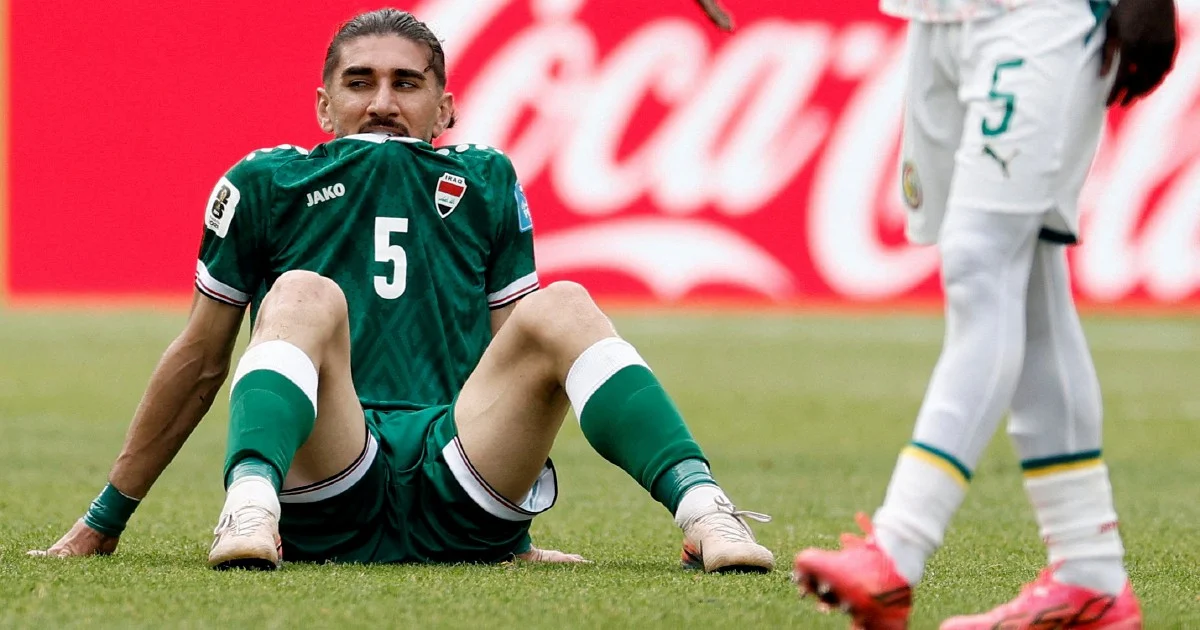
Iraq's football programme faces a comprehensive review following the national team's underwhelming performance at the FIFA World Cup. The Iraqi Olympic Committee announced on Monday that it will conduct a formal investigation into the factors that contributed to the campaign's disappointing results, signalling a serious commitment to understanding where the programme went wrong and implementing corrective measures.
The investigation represents an acknowledgement that Iraq's World Cup showing fell short of expectations and public aspirations. Rather than attributing setbacks to circumstance alone, the Olympic Committee has opted to scrutinise the structural, tactical, and administrative dimensions of the national programme. This approach reflects international best practice, where major football federations typically conduct post-tournament reviews to identify systemic weaknesses and areas requiring intervention.
For Malaysian and Southeast Asian observers, Iraq's experience underscores the heightened expectations surrounding World Cup participation. Qualification itself is a significant achievement for developing football nations, yet the pressure to perform at the tournament level is immense. Iraq's decision to investigate rather than dismiss the results demonstrates that simply reaching the World Cup stage is no longer sufficient—competitive performance has become the benchmark by which national programmes are judged.
The committee has signalled plans to outline concrete measures designed to prevent recurrence of poor results in forthcoming tournaments. These steps are likely to encompass player development pathways, coaching staff evaluation, training methodologies, and possibly even changes to the competitive domestic league structure. Such systemic interventions require sustained investment and coordination across multiple stakeholders within Iraqi football governance.
The investigation also reflects broader challenges facing football in Iraq, where decades of instability have disrupted institutional development. Building a competitive national team requires not only talented players but also reliable infrastructure, consistent funding, professional coaching networks, and a domestic league capable of developing players to international standards. These foundational elements take years to establish and require political stability and sustained government backing.
Regional neighbours will be observing Iraq's reform process closely. Southeast Asian nations face similar challenges in developing elite football programmes with limited resources and competing national priorities. The Iraqi approach—acknowledging failure openly and committing to systematic improvement—offers a model for transparency and institutional accountability that other developing football nations might consider.
World Cup participation carries enormous symbolic weight beyond sport. For Iraq, reaching the finals represents significant national achievement and a point of pride amid broader societal challenges. However, this makes underperformance more keenly felt domestically. The investigation demonstrates that the Olympic Committee recognises its responsibility to maximise the potential of this opportunity and to deliver competitive results that justify the investment and hopes placed in the programme.
The planned overhaul likely involves multiple dimensions of football development. Youth academy systems require strengthening to identify and nurture emerging talent from an early age. Coaching education programmes must ensure that technical expertise reaches clubs throughout the country. Additionally, the federation may need to reassess player selection criteria, tactical approaches, and preparation strategies to ensure the team enters future tournaments in optimal condition.
Financial resources will prove critical to implementation success. Reform programmes in developing football nations often falter when funding commitments prove insufficient or inconsistent. Iraq will need sustained investment to build competitive advantage, particularly if measures involve overseas coaching expertise, modern training facilities, or expanded player development networks.
The timing of the investigation also matters. Beginning the review immediately after the tournament, while details remain fresh, allows the committee to gather comprehensive feedback from players, coaching staff, and technical observers. This momentum can translate into tangible action before attention shifts to other priorities or key personnel move on to new roles.
For Iraqi football stakeholders, the investigation represents both accountability and opportunity. It signals that poor results will not be tolerated or ignored, establishing standards for future performance. Simultaneously, it creates space for constructive dialogue about football's future direction and the structural changes necessary to improve competitive standing.
Looking ahead, Iraq's commitment to reform will be measured by the specific actions undertaken and their implementation timeline. Whether the investigation produces meaningful systemic change or remains largely symbolic will determine whether future World Cup campaigns show genuine improvement. The coming months will reveal the committee's seriousness in pursuing the overhaul it has announced.

