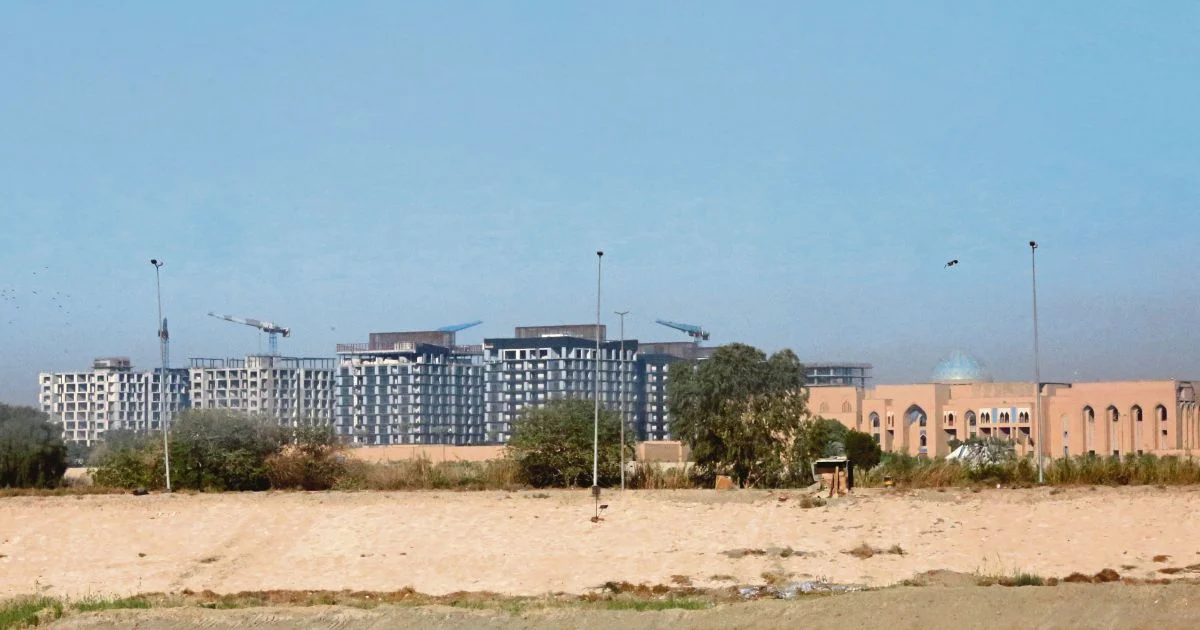
In a dramatic show of force, Iraqi security forces descended on Baghdad's heavily secured Green Zone in the predawn hours of Sunday to detain government officials and parliamentarians implicated in corruption investigations. The coordinated enforcement action represented one of the most visible and aggressive moves yet by authorities to address endemic graft within Iraq's political establishment, with security personnel conducting systematic searches across multiple locations within the compound that houses senior government institutions and diplomatic missions.
The detention of serving MPs alongside civilian officials underscores the widening scope of anti-corruption efforts, extending beyond low-ranking bureaucrats to touch the legislative branch itself. This signals a significant shift in how seriously Iraqi leadership is treating accountability mechanisms, particularly as public frustration over disappearing state resources and dysfunctional governance has intensified across the country. The fact that parliamentarians could be apprehended despite their constitutional immunity in ordinary circumstances suggests either the involvement of high-level political figures in authorizing the operations or the emergence of security apparatuses willing to operate beyond traditional constraints.
Baghdad's Green Zone, administratively separated from the wider capital and protected by concrete barriers, checkpoints, and armed guards, has historically served as a sanctuary for Iraq's political elite. The venue's fortress-like security infrastructure means that extensive raids there are inherently conspicuous, making this operation a deliberate public statement rather than a clandestine enforcement action. The heavy deployment of security personnel visible to observers signalled that authorities intended the intervention to be noticed, likely as a demonstration of commitment to fighting corruption or as a warning to others engaged in illicit enrichment schemes.
Corruption remains one of the most intractable problems plaguing Iraq's post-2003 political order. Transparency International's Corruption Perceptions Index consistently ranks the country among the worst performers globally, while Iraqi analysts estimate that billions of dollars have vanished through embezzlement, misappropriation, and extortion networks spanning security agencies, government ministries, and parliament. The systematic nature of these thefts has drained resources that should have been deployed toward infrastructure reconstruction, healthcare, and education, leaving ordinary Iraqis increasingly dependent on informal networks and patronage systems for basic services.
For Malaysia and Southeast Asian observers, the Baghdad operation illustrates the persistent governance challenges afflicting resource-rich Middle Eastern states where oil revenues should theoretically finance development but instead fuel corruption. The Green Zone raids reflect patterns seen across the region and globally where anti-corruption campaigns often become politically motivated tools wielded selectively against opponents while favoring allies. Malaysia's own experience with major corruption scandals and subsequent accountability drives provides a regional lens through which to evaluate whether Iraq's efforts represent genuine institutional transformation or cyclical crackdowns that ultimately prove ephemeral.
The detention of multiple officials simultaneously suggests that Iraqi authorities may possess intelligence implicating specific networks rather than engaging in scattered enforcement. Prior anti-corruption investigations in Iraq have frequently stalled due to political interference, with suspects disappearing into a judicial system known for delays, questionable evidentiary standards, and outcomes driven by factional considerations. Whether Sunday's operations represent the beginning of transparent prosecutions or merely the first stage of politically calibrated detentions remains uncertain.
The timing of the Green Zone raids may carry political significance. Iraq's parliament has been fragmented among competing ethno-sectarian blocs since the 2021 elections, with government formation proceeding through protracted negotiations. Anti-corruption operations could serve multiple purposes simultaneously—bolstering public confidence in authorities, eliminating rivals, or consolidating power by targeting politicians from competing factions. The involvement of MPs specifically suggests that the campaign extends beyond the executive and toward legislative actors, although whether such actions follow due process remains a critical question for Iraq's democratic development.
Regional stability may be affected by sustained anti-corruption drives that either succeed in rebuilding institutional legitimacy or fail and deepen public alienation from government structures. Iraq's security depends partly on citizen cooperation with authorities, and widespread belief that enforcement is selective or unjust could undermine such cooperation. Conversely, genuine accountability mechanisms that successfully prosecute officials across factional lines could strengthen state capacity and public trust, creating conditions for more effective governance and reduced sectarian tension.
International actors, including the United States and neighboring regional powers, maintain varying stakes in Iraq's institutional development. Some external players may welcome anti-corruption efforts as evidence of governance improvement, while others might view them skeptically if operations appear politically motivated. The outcomes of prosecutions stemming from Sunday's raids will likely be scrutinized internationally, with observers assessing whether Iraqi institutions can finally demonstrate the independence and consistency necessary for legitimate accountability.
The Green Zone sweeps occurring amid Iraq's broader grappling with how to rebuild state capacity following years of conflict against extremist groups. Security sector reform, militia integration, and corruption control remain intertwined challenges, as armed groups have historically exploited administrative weakness and corruption to entrench themselves. Success in prosecuting civilian officials could theoretically create momentum for similar accountability in security institutions, though such outcomes remain uncertain given the political power wielded by armed actors outside formal state structures.

