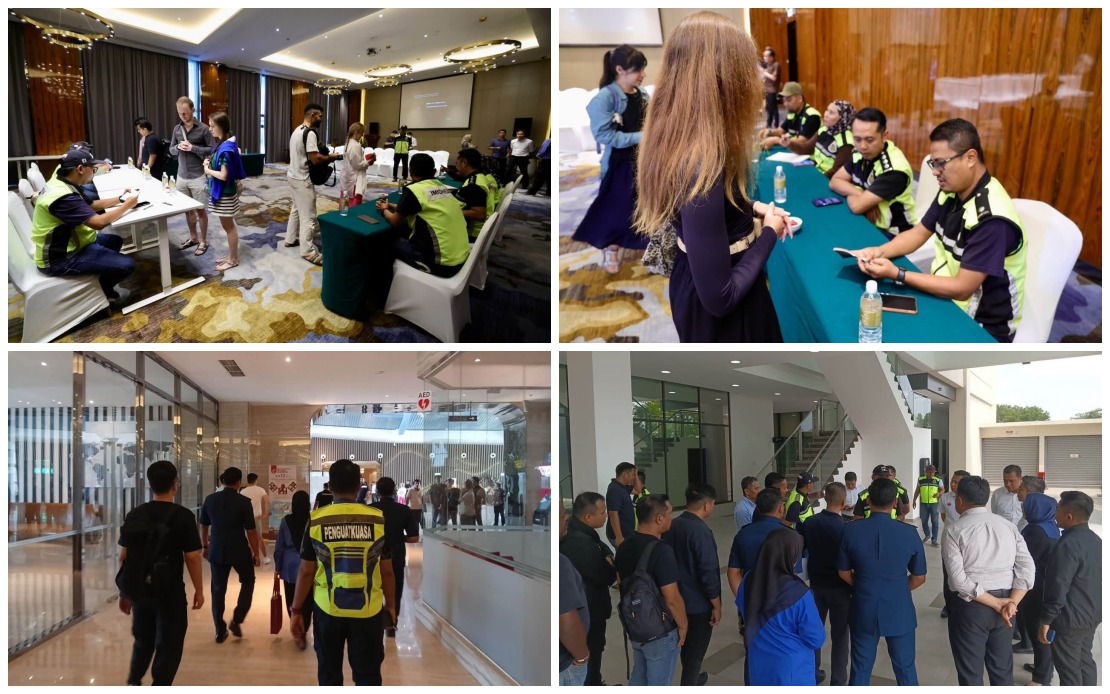
The Iskandar Puteri City Council (MBIP) has moved decisively to shut down educational operations at Network School in Forest City, issuing a formal Stop-Business Notice after discovering the institution operated in breach of its business licence conditions. Johor Menteri Besar Datuk Onn Hafiz Ghazi disclosed the enforcement action on Wednesday, revealing that investigations by the local authority uncovered significant regulatory violations at the school's premises.
The crackdown represents the culmination of a systematic inspection process that exposed the company's use of spaces licensed for office operations to conduct classroom teaching and promotional business activities. According to Onn Hafiz, Network School was spread across two separate locations, creating a fragmented operational structure that sidestepped proper regulatory oversight. One location maintained a valid office business licence, providing legal cover for limited business activities, while the second site operated entirely without MBIP approval—a clear contravention of municipal regulations that require all commercial premises in Forest City to hold appropriate documentation.
A critical breach involved the company's conversion of premises designated for standard office use into active classroom spaces. This misclassification represents more than a mere administrative oversight; it reflects a fundamental departure from the approved land-use category that distinguishes between office-based administrative functions and educational facilities, which carry different safety, infrastructure, and regulatory requirements under Malaysian municipal law. The company had failed to submit the necessary detailed applications seeking permission to modify its premises classification, instead proceeding with classroom operations without formal approval from MBIP.
Beyond the licensing violations, MBIP also identified problems with the school's signage and advertising practices. The council consequently issued an Advertisement Licence Notice under Section 107(2) of the Local Government Act 1976, addressing outdoor signs that failed to comply with established licensing conditions and deviated from the terms stipulated in any approved permit. This secondary enforcement action underscores the comprehensive nature of the regulatory lapses discovered during inspections.
Onn Hafiz emphasised that the Johor state government regards these infractions with considerable seriousness and intends to pursue comprehensive investigations across all matters falling under MBIP's jurisdiction. The statement signals the local authority's commitment to pursuing additional enforcement measures should further violations emerge during its ongoing inquiry. This hardline stance reflects broader concerns about unlicensed operations potentially undermining the regulatory framework designed to protect consumers and maintain standards within Forest City's commercial and educational sectors.
The matter of foreign nationals connected with Network School exists in a separate regulatory domain beyond state authority. Onn Hafiz clarified that questions regarding the immigration status of individuals associated with the institution fall exclusively within the purview of the federal Home Ministry. The state government has formally urged the ministry to render a prompt and definitive determination on the status of the foreign nationals involved and the permissibility of the school's continued operations under current immigration law.
Network School's situation gained prominence after social media posts began circulating allegations linking the institution to undisclosed agendas. These online claims, which have not received official verification or substantiation, speculated about connections to Israeli interests allegedly pursuing a foothold in Malaysia through investment and educational channels. Such claims, lacking credible evidence and government confirmation, illustrate how educational institutions operating at the margins of regulatory compliance become vulnerable to speculation and rumour, which can amplify reputational damage beyond the actual violations documented by authorities.
The enforcement action reflects Malaysia's approach to maintaining municipal licensing standards, particularly in planned developments like Forest City where multiple jurisdictional layers govern commercial activities. MBIP's response demonstrates that regulatory bodies are prepared to deploy their full enforcement arsenal—encompassing stop-business notices, advertisement licensing restrictions, and formal investigations—when institutions circumvent licensing requirements. The precedent established here carries implications for other educational and commercial operators in the Johor region who might consider adapting their premises without securing appropriate municipal approvals.
For Southeast Asian investors and educational entrepreneurs operating across the region, the Network School case underscores the importance of strict compliance with local zoning and licensing regulations. Malaysia's municipal framework, while generally straightforward, does require careful attention to the distinction between approved business categories and actual operational scope. Educational facilities in particular face heightened scrutiny because they implicate child safety, consumer protection standards, and immigration regulations—areas where Malaysian authorities have demonstrated their willingness to enforce regulations vigorously. The convergence of state-level monitoring and federal immigration oversight means that institutions attracting international attention face multi-layered regulatory exposure that can rapidly escalate enforcement actions.

