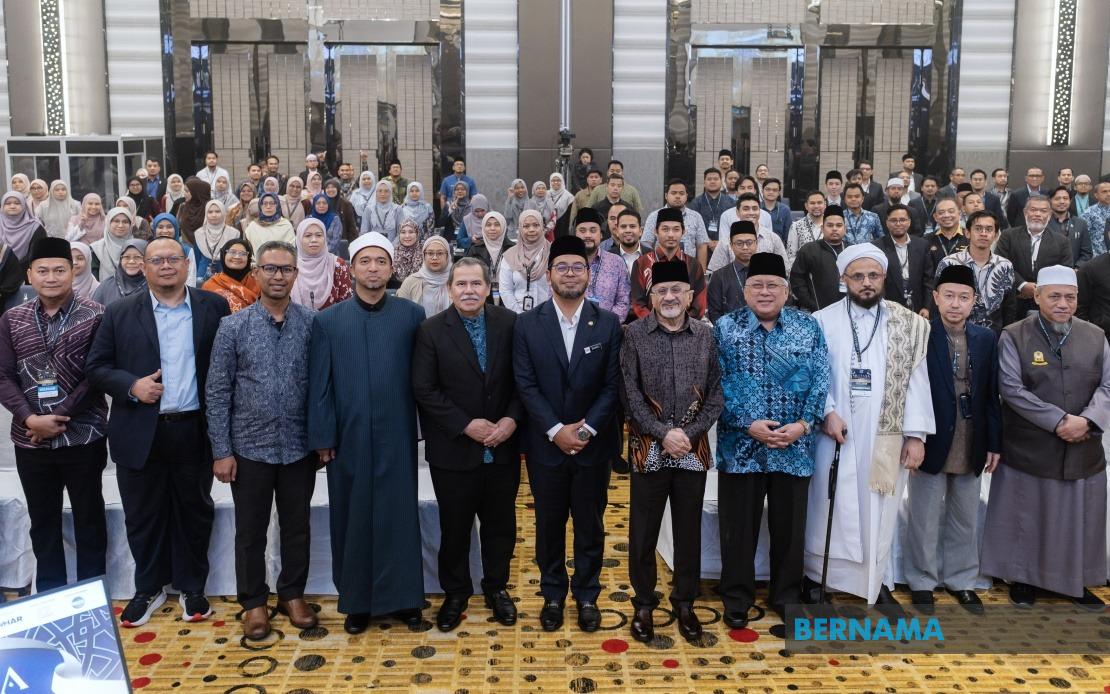
Malaysia's Religious Affairs Minister Dr Zulkifli Hasan has underscored the transformative potential of Islamic social finance as a strategic platform for poverty reduction and broader economic advancement, signalling renewed government commitment to developing this often-overlooked financial segment. Speaking at the MULTAQA SIDR Islamic Social Finance Conference in Kuala Lumpur, Dr Zulkifli outlined how the sector could be repositioned as a major economic driver if properly structured and regulated, positioning it alongside established financial systems to unlock benefits for underserved communities across the nation.
The minister's remarks reflect a strategic pivot in how Malaysia approaches its social welfare agenda, moving beyond traditional charity models towards sustainable, productivity-focused interventions. According to Dr Zulkifli, the government recognises that Islamic social finance encompasses more than conventional zakat and waqf mechanisms; it represents an integrated ecosystem capable of generating long-term economic value for recipients and communities. This reconceptualisation addresses a persistent gap in Malaysia's development strategy, where marginalised populations have historically relied on episodic relief rather than transformative financial instruments.
Central to this vision is the enhanced role of the Department of Waqf, Zakat and Haj, which has been designated as the primary institution responsible for elevating governance standards across Islamic organisations, particularly non-governmental bodies operating in the social welfare space. The appointment signals official recognition that many Islamic NGOs, despite their charitable intentions, lack the institutional infrastructure and professional management frameworks necessary to maximise their social impact. By positioning JAWHAR as a coordinating and regulatory authority, the government aims to eliminate duplicative efforts and create accountability mechanisms that strengthen public trust in Islamic philanthropic institutions.
Collaboration across the sectoral divide emerges as a cornerstone of the government's implementation strategy. Dr Zulkifli emphasised that universities, higher education establishments, and private enterprises must engage substantively with voluntary organisations to modernise operational and governance practices within the Islamic social finance ecosystem. This multi-stakeholder approach recognises that neither government nor civil society alone possesses sufficient expertise; sustainable reform requires knowledge transfer, technical support, and resource sharing among institutions with complementary capabilities. Malaysian universities with established Islamic finance programs, such as INCEIF University, are positioned to provide curricular frameworks and research support that elevate professional standards.
The launch of Malaysia's Islamic Social Finance Report 2026 provides empirical grounding for these policy ambitions. The comprehensive assessment documents the current state of the Islamic social finance sector, identifies structural bottlenecks, and maps emerging opportunities within both the domestic and regional contexts. For policymakers and industry participants, the report functions as a diagnostic tool, highlighting where investments in capacity-building and institutional reform yield the greatest returns. The regional focus is particularly significant, as it positions Malaysia's experience within the broader Southeast Asian landscape, where Islamic finance penetration varies substantially across nations.
Dr Zulkifli introduced a conceptual reframing that deserves scrutiny: positioning Islamic social finance as 'The Third Force' in Malaysia's economic architecture. This terminology suggests a distinct institutional identity separate from both conventional financial systems and traditional government welfare provision. The implications are substantial. If Islamic social finance operates as a genuinely independent force, it could develop innovative poverty-reduction mechanisms responsive to cultural and religious values while maintaining operational rigour equivalent to commercial institutions. Conversely, this independence requires robust self-regulation; without credible internal accountability, the sector risks regulatory capture or decline in donor confidence.
The minister's stern warnings regarding governance integrity reveal anxieties about reputational contagion within the broader Islamic institutional ecosystem. His references to the recent Royal Commission of Inquiry findings concerning Tabung Haji underscore how individual institutional failures can undermine public confidence in entire sectors. When flagship Islamic institutions mismanage funds or breach fiduciary duties, the damage extends beyond immediate victims to affect all organisations claiming Islamic legitimacy. For Malaysian policymakers and international observers, this vulnerability represents both a challenge and an opportunity. Strengthening governance across Islamic organisations simultaneously addresses market failures and preserves the legitimacy upon which trust-dependent institutions depend.
The absence of further comment on proposed additional investigations into Tabung Haji suggests political sensitivity around expanding inquiry mandates. While Dr Zulkifli's refusal to elaborate likely reflects departmental protocol, it leaves unresolved questions about whether existing accountability mechanisms are considered sufficient. For investors, donors, and ordinary Malaysians concerned about institutional integrity, clarity regarding investigation scope and remedial action remains pertinent. The government's focus on prospective governance improvements may address future vulnerabilities, but it does not fully address historical grievances or restore confidence compromised by past breaches.
The convening of diverse institutional representatives—including Federal Territories Islamic Religious Council leadership and prominent university figures—suggests emerging consensus around the necessity for sectoral transformation. The presence of senior officials and academic experts indicates that Islamic social finance development is advancing from niche concern to mainstream policy priority. This institutional buy-in matters because sectoral development depends on sustained commitment across governmental, academic, and commercial actors. Short-term enthusiasm frequently dissipates without institutional mechanisms ensuring continuity beyond individual administrative tenures.
For Southeast Asian observers, Malaysia's trajectory in Islamic social finance holds instructive value. Nations across the region grapple with poverty reduction, financial inclusion, and the integration of religious values into modern economic governance. Malaysia's experience—including both successes in establishing Islamic banking infrastructure and recent challenges involving institutional integrity—provides a complex case study. Regional policymakers can observe how governance reforms, multi-stakeholder collaboration, and conceptual reframing of traditional philanthropic mechanisms interact to strengthen social finance systems.
The practical implications extend to Malaysia's broader development agenda and international positioning. As the nation seeks to enhance its standing within Islamic finance globally and demonstrate sophisticated governance capacity, strengthening the Islamic social finance sector contributes to both objectives. International investors and development partners increasingly evaluate countries not merely on macroeconomic indicators but on institutional quality and social outcomes. By systematically improving governance within Islamic social finance, Malaysia enhances its credibility as a responsible steward of cultural and religious institutions.
Looking forward, implementation will determine whether Dr Zulkifli's vision translates into tangible poverty reduction outcomes. The coordination mechanisms, capacity-building initiatives, and governance reforms outlined require sustained resourcing and political support. Progress requires not only policy pronouncements but consistent allocation of government and private resources towards institutional development. The coming years will reveal whether Islamic social finance emerges as the transformative 'Third Force' envisioned or remains a secondary channel for traditional charitable provision.

