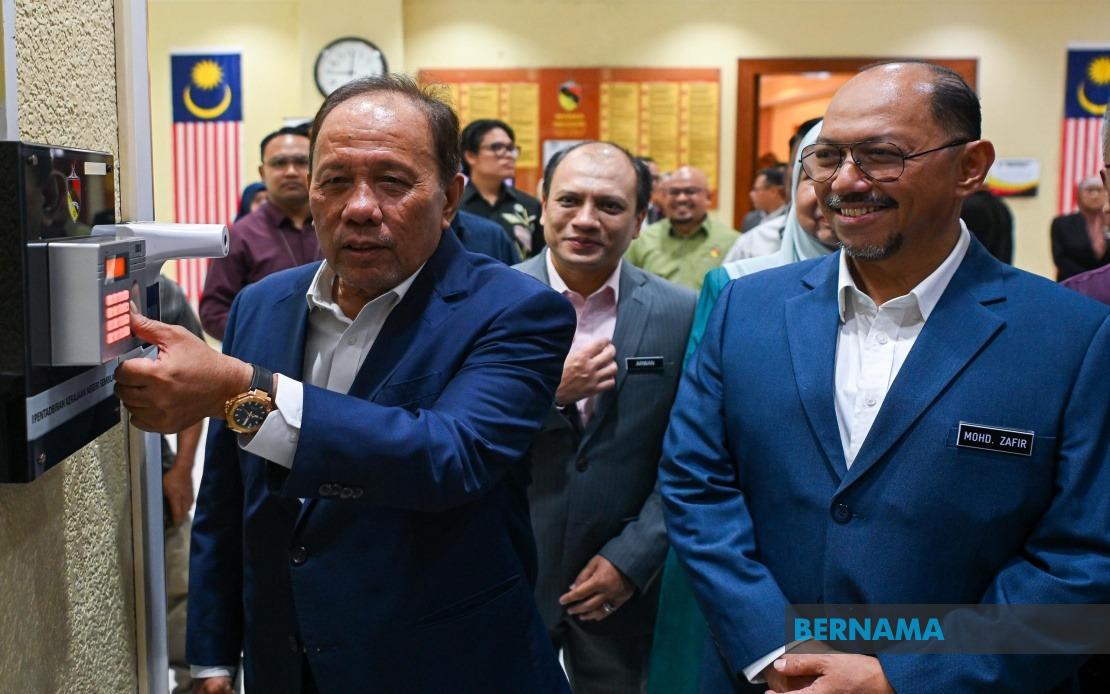
Datuk Ismail Lasim has firmly defended the constitutional validity of his appointment as Negeri Sembilan Menteri Besar, insisting that all prescribed procedures were properly observed. Speaking to journalists at Wisma Negeri in Seremban on Monday, the newly installed chief minister stated his conviction that the appointment machinery operated within established legal and constitutional parameters, effectively dismissing recent public criticism of the process.
Ismail's statement came in direct response to scrutiny initiated by Wawasan chairman Tan Sri Rais Yatim, who had raised concerns about potential breaches of the state's constitutional framework and hinted at what he characterised as improper external influence over state-level administrative affairs. The specific allegations levelled at the appointment process centred on whether customary protocols governing the selection and formal installation of the Menteri Besar had been correctly followed according to Negeri Sembilan's unique constitutional arrangements.
The newly appointed chief minister, who secured the Juasseh state constituency in the recent Negeri Sembilan elections, was formally sworn in before Yang Dipertuan Besar of Negeri Sembilan Tuanku Muhriz Tuanku Munawir at the state palace, Istana Besar Seri Menanti, the preceding Sunday. This ceremonial investiture before the constitutional head of state represented the formal culmination of the appointment process. The invocation of royal authority in the swearing-in ceremony underscores the constitutional dimension that Rais Yatim's questioning had foregrounded.
The recent Negeri Sembilan state election delivered a clear mandate for coalition-based governance, with Barisan Nasional capturing 18 of the 36 available state seats. Perikatan Nasional, the opposing coalition, secured seven seats, leaving both power blocs with sufficient legislative strength to command two-thirds majorities in the state assembly if they chose to govern independently or through selective partnerships. This electoral configuration has created a complex political environment where procedural propriety becomes especially salient, as such majorities can substantially reshape state institutions.
Ismail's public defence of the appointment process gains significance against the backdrop of Malaysia's recent political volatility, where questions about constitutional compliance in senior appointments have recurred across federal and state jurisdictions. The Negeri Sembilan case intersects with broader debates about the role of traditional rulers in state governance, the boundaries between federal and state authority, and whether mechanisms exist for external actors to improperly influence state-level constitutional procedures.
The appointment of a Menteri Besar involves multiple constitutional stakeholders within Negeri Sembilan's system of governance. The Yang Dipertuan Besar retains discretionary authority to appoint the chief minister, typically on the recommendation of the ruling coalition or on grounds that a prospective appointee commands the confidence of the legislative assembly. This dual layer of constitutional discretion creates potential friction points where procedural disputes can emerge, particularly if questions arise about whether the ruler acted independently or responded to external pressure from federal-level actors.
Rais Yatim's specific references to state customs and constitutional provisions appear calculated to invoke Negeri Sembilan's distinctive constitutional heritage. Unlike most Malaysian states, Negeri Sembilan operates under a unique federal structure reflecting its historical evolution as a confederation of nine Minangkabau-based territories. This architectural complexity means that constitutional amendments or interpretive shifts at the state level can carry disproportionate weight in establishing precedents that ripple through Malaysia's federal system.
The timing of Ismail's appointment and the subsequent controversy also intersect with broader dynamics affecting Barisan Nasional's consolidation of power across Malaysian states. As the coalition works to stabilise its position following mixed electoral performances in recent cycles, the procedural integrity of appointments at state level becomes essential to legitimacy. Any taint of constitutional irregularity could furnish ammunition for opposition challenges and potentially undermine public confidence in state governance machinery.
Ismail's assertion that procedures were followed correctly, while brief and non-detailed in his initial remarks, may invite further interrogation from constitutional scholars and opposition figures. Without more granular explanation of which specific procedures were invoked and how, the dismissal of concerns risks appearing defensive rather than clarificatory. The chief minister may face continuing pressure to elaborate on the appointment narrative as political opposition settles in for the state assembly's resumption.
The controversy surrounding Ismail's appointment illuminates underlying tensions in Malaysia's federal system regarding how state autonomy meshes with centralised political power. Federal coalitions possess considerable resources and influence to shape state-level outcomes, yet the formal constitutional machinery nominally preserves state-level discretion. When allegations of federal interference surface, they necessarily implicate this uneasy equilibrium. The resolution of whether Ismail's appointment adhered to constitutional propriety will likely resonate beyond Negeri Sembilan's borders, setting potential precedents for how similar disputes are understood and adjudicated elsewhere in the Malaysian federation.
Moving forward, Ismail's tenure as Menteri Besar will be shadowed by these procedural questions unless he acts proactively to address lingering concerns through transparent governance. By engaging more substantially with critiques rather than issuing brief deflections, the chief minister could help stabilise confidence in state-level constitutional processes. The stakes extend beyond Negeri Sembilan, touching on fundamental questions about how Malaysian democracy functions when coalition interests and constitutional propriety appear to conflict.

